
Louisiana Fiddler Amanda Shaw
Cultural bearer of Cajun music
By Brian D’Ambrosio
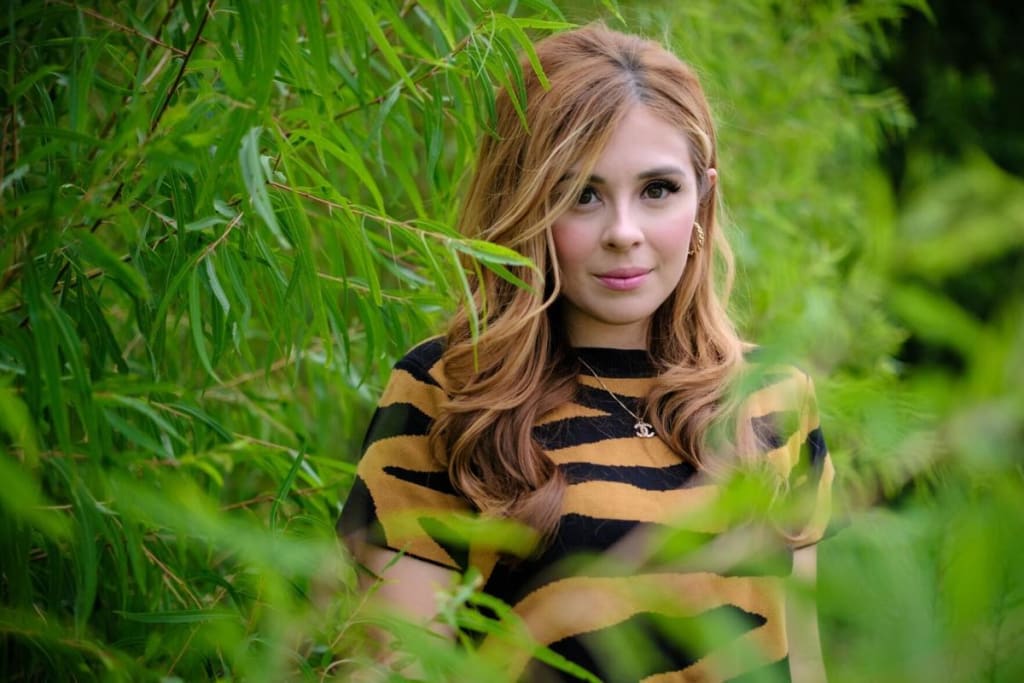
Amanda Shaw grew up entwined in the rich, unique aspects of Louisiana culture and music. She absorbed it and savored it, and has been greeting the world with both arms open wide ever since.
She set out to be an element of the Cajun-Creole-Bayou musical tradition — and the 32-year-old fiddler has succeeded as one of its cultural pulses.
“Things change, but the people of Louisiana are really good about preserving the culture,” Shaw said. “Sometimes I will hear friends from Austin and other music cities, too, who feel as if there are so many people from outside, or as if where they are is not what it used to be. New Orleans has many festivals dedicated to every kind of style, from Cajun to zydeco, and as an adult, I put more importance on it (the preservation of culture) now.
“A lot of the songs are not written down anywhere, so it’s truly a folk tradition. I’m grateful to be a part of a circle of people who are doing it, and if I’m not recording and performing and sharing this folk tradition, I’m not doing my job. If people are not sharing it, the music and the songs die.”
Shaw grew up in Mandeville, Louisiana, located in the New Orleans Metro area, north of Lake Pontchartrain. (As a high school student, she crossed the Causeway Bridge twice daily, a span of 24 miles over Lake Pontchartrain, the longest bridge stretching continuously over water.)
Just a few years after she was able to belt out her first words, she began classical violin instruction at the age of 4.
“No one in my family is musically inclined,” Shaw said. “I was watching TV and saw an orchestra and violin and that struck me. My mom took me to the Community Music School of Southeastern (in Hammond, Louisiana) to take lessons and the head of music department there approached my mom about teaching me violin.”
Though she continued to take violin lessons for several years, Cajun music delivered that special jolt, and she added Cajun fiddling to her repertoire at age 8. Further fanning the desire, her mother would take her to restaurants in New Orleans on the weekends, places such as Michaul’s and Mulates, to listen to Cajun bands and watch Cajun dancers. It engaged all of the senses and informed her later purpose. She was transfixed, especially by the clear exhilaration of the people dancing. Around this time, she met a Cajun-Creole fiddle player named Mitch Reed, who would perform regularly on Sundays at Mulates, and in between the sound check and the performance, he would teach Amanda songs that he had learned in the deepest marshes of the Gulf Coast. Mitch Reed’s father, Bob Reed, was an accordion player in Lafayette and he genetically passed on the same beat of the heart and the burning passion of the Cajun fire.
“Mitch would play a couple notes and I’d play a couple of notes back,” Shaw said. “I had a knack for it — the style, the energy, it really connected with me. Something, too, fascinated me about the origins of the Cajun people, who were expelled from Canada, and were unwanted, and how they ended up in Lafayette, and how they had their own community and were isolated. They sang broken-hearted songs, but at the end of the day, it (the music) was about enjoying your life and having fun. They’d gather in the barns with their instruments and the parents would dance and play all night, and the kids would bring their blankets.”
At age 7, she soloed with the Baton Rouge Symphony Orchestra, but it was a performance on the Rosie O’Donnell Show that ushered in the dawn of a career in the music industry.
“At 7, I always thought that if I was on Rosie’s show, I could die happy and that would be the peak of my life. I made the front page of the paper for the orchestra and my mom mailed the paper into the show. One year later, I was on the show playing Cajun songs, like 'Jambalaya (On the Bayou).'”
She released her first album, Little Black Dog, in 2001 at the age of 11. Five albums and countless hours of jamming later, she regularly performs in and around New Orleans and the surrounding areas with her band and shows annually at the New Orleans Jazz and Heritage Festival.
The results of Shaw’s efforts speak volumes: an artistic imprint of a social legacy and a love for art still going strong. But beyond the simple stories of the people, she is digging deep to evoke the more lasting, genuine beauty to be found in endurance and grit.
“The people of Louisiana are so good at being unapologetically themselves,” Shaw said. “If you are asking for a recommendation for the best place to get gumbo, the answer will be, ‘it’s my momma’s house,’ and they will mean it, and serve it up along with dessert to you. It allows you to be comfortable with yourself and embrace the good and bad that comes with you, and makes it easier to give of yourself.”
Indeed, Cajun music gives the gift of frenetic velocity, like two sticks and a piece of flint, and is all about being squashed, spun, dizzy and thrown like clay on potter’s wheel. She gives it the oomph it demands, mixing in originals with those from the unknown, the passing of one world and the birth of the next.
Full-souled and grateful, she started the Amanda Shaw Foundation to honor the milestone of her 20th year in the music business, launching a scholarship fund for junior high school and high school students who are passionate about developing their creativity, and not just pursuant to the performing arts.
“Fortunately, I have had a lot of good people in my life who have helped champion my talents," she said. "I’ve had great support in my life and not everybody gets that. Not everyone has a family willing to cart them around to lessons, or could afford to. The foundation is a positive way for young people to pursue their dreams.”
Weaving past and present, the emotion of a people and a region, into a bold, illuminated tapestry of sound and feeling, Shaw has discovered ways to funnel the rich store of influences through the experiences of her own life.
Imagination (she cuts a wicked rendition of The Clash’s “Should I Stay or Should I Go") and intuition (in her early 20s, she took time and space away from the music industry after sensing that she needed to address personal objectives) inspire Shaw, but she talks most often about the spirit of the music — how you have to have good thoughts when you play it, how you have to let the music be what it wants to be, how you have to have fun and enjoy what you can about life, no matter how arduous it feels at times. Most of all, she wants others to come experience the rhythm and be warmed by the fire.
“I am lucky to be on this journey,” Shaw said. “I’m a girl with a dream of playing violin. And 20-plus years later I’m playing shows, making records and I hope to continue to do it every day. I hope to wake up tomorrow and still enjoy life the same way that I am enjoying it today. I hope people appreciate the energy and sense of appreciation that I have to be playing it and giving it my own spin.”
© Copyright Brian D'Ambrosio 2022
About the Creator
Brian D'Ambrosio
Brian D'Ambrosio is a seasoned journalist and poet, writing for numerous publications, including for a trove of music publications. He is intently at work on a number of future books. He may be reached at [email protected]
Keep reading
More stories from Brian D'Ambrosio and writers in Beat and other communities.
Sierra Hull interview
By Brian D’Ambrosio On Friday nights in Pickett County, Tennessee—the smallest county in the state, tucked up against the Kentucky border—you could find a young Sierra Hull squeezed into a crowded community center, mandolin in hand. The room smelled of hamburgers and hot dogs from the concession stand, and local bands played while neighbors filled the folding chairs. Hull, barely tall enough to see over the microphone stand, was already a fixture on stage.
By Brian D'Ambrosio 6 months ago in Beat
It's 2026. Songs Turning 10 This Year
In 2016, we saw the rise of short form videos and what would lead to the birth of TikTok. We cannot forget the Snapchat filters no matter how cringe worthy some of them might have been. It was also the year in which the hit series Stranger Things debuted.
By Jasmine Aguilar7 days ago in Beat
Why Actors Like Andreas Szakacs Are Stepping Into Production
From Interpreting Characters to Shaping Stories For many actors, the early years are focused entirely on craft — building emotional range, mastering technique, refining presence. That foundation remains essential. But storytelling decisions often happen long before cameras roll.
By Andreas Szakacs4 days ago in Beat



Comments
There are no comments for this story
Be the first to respond and start the conversation.