
Lawyers, Guns and Money and the Meaning of Some of Our Favorite Classic Rock Songs
Band on the Run, Respectable, Who'll Stop the Rain and Young Americans

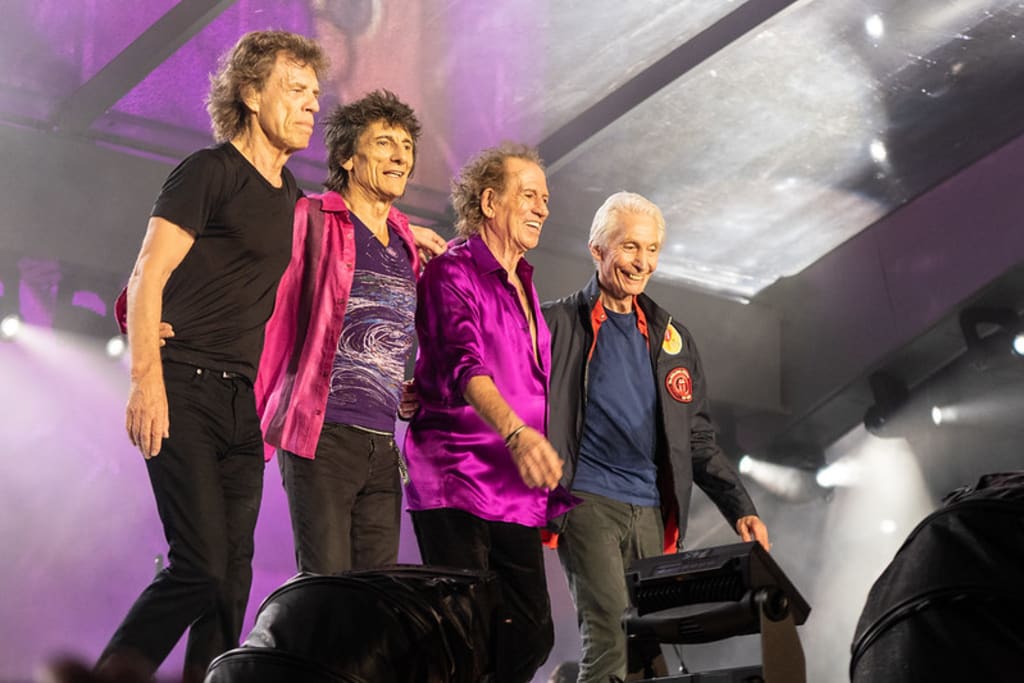
Photo by Paul Jones
If you’re anything like me, you’ve been listening to classic rock songs forever and have no idea what they are about. Let me begin our education…
Octopus's Garden
At the time, the Beatles were having angst, and Ringo had skipped out of a few recording sessions for the White Album. The respite was taken on a boat owned by Peter Sellers, where the very knowledgable captain provided the key inspiration. The drummer learned that the eight leggers traverse the ocean floor and create gardens out of rocks and shiny objects. Hitting the spot, the funny one had the impetus. "I thought this was fabulous, because at the time I just wanted to be under the sea too."
We Didn't Start the Fire
Billy Joel wanted to be a teacher when he was younger, and this song turned out to be the next best thing. In the recording studio one day, the piano man was talking to someone who was about to turn 21. The kid said the world was an unfixable mess, and Billy knew the feeling. “I thought the same things when I was 21," he replied.
His student wasn't quite as well educated. “Yeah, but you grew up in the 50’s, and everybody knows that nothing happened in the 50’s.” So Billy went into teacher mode again. "Didn’t you hear of Korea, the Hungarian freedom fighters or the Suez Crisis?”Deaf ears or not, Joel took stock at 40, and in asking himself what's happened in my life, the three events cited provided the basis for the song, according to ADST.
You Really Got Me
Ray Davies got the idea when he was playing with the Dave Hunt Band in College. He saw a girl on the dance floor and tried to meet her afterwards. She was gone but the line emerged. ‘You Really Got Me’ for her, even though I never met her,” according to American Songwriter
Band on the Run
The song had its origins in a comment George Harrison made as the Beatles were fizzling to an end, according to the reporting of Tyler Golsen in Far Out Magazine. “If I ever got out of here,” the quiet Beatle commented during one tumultuous Apple meeting.
He was saying, “we are all prisoners in one way or another,” according to McCartney, and the desire to escape is universal.
Providing further fuel, McCartney and Denny Laine were robbed in NYC and among the possessions stolen was the early demo of the song. Nonetheless, the song was further inspired by all the legal run-ins McCartney had in regards to marijuana possession. "So I just made up a story about people breaking out of prison,’” McCartney explained.
Respectable
Well, now, we're respected in society/We don't worry about the things that we used to be/We're talking heroin with the president/Yes, there's a problem, sir, but it can't be bent/Ah, yes
In other words, the Stones were once vilified for the anarchy they represented, but now the high and haughty accept the world's greatest rock n roll band as a pillar of society. How hypocritical, Mick insisted in the 1978 song.
Who'll Stop the Rain
The Credence song emerged from Fogerty's experience at Woodstock and crossed over with Vietnam. A deluge coming from the sky, the festival of peace and love turned into a swamp for the revelers. But when the rain stopped after Zeppelin played, Whole Lotta Love, Fogerty saw the clearing skies as a sign, according to Michelle Nash of Old Time Music. "It was as if the music held the power to stop the rain," he explained. In turn, Nash wrote, "The song itself speaks of searching for a savior to stop the rain, making the interpretation of the song multi-layered. It could be a reference to a higher power, a way to hold onto hope, a search for a leader to end the war or the belief that music could bring a sense of normalcy."
Young Americans
The song is a commentary on the actual realities of the American dream. Bowie had just moved to LA and couldn’t miss the disparity between the glamorous Hollywood elite and the poverty that surrounded. In this, Young Americans follows a disenfranchised young man who is lost among the shuffle of materialism and conformity. As such, “Bowie was disillusioned with the idea that hard work and perseverance would lead to success and prosperity. Instead, he saw a society that was rife with inequality, racism, and a pervasive sense of apathy,” according to the reporting of Jennifer Bell in Old Time Music.
That said, the anthem is a call to action for Young Americans, and he believes they could effect change. Hence the line, “They’ve got the guns, but we’ve got the numbers.”
The song is also a rally for LGBTQ+ rights, and calls out Nixon for his opposition to same sex marriage. “Do you remember your President Nixon,” Bowie implores.
And so it continues to go.
Lawyers, Guns and Money
Lawyers, Guns and Money tells the story of a young traveler dating a waitress who was actually connected to the Russian mafia and devolves into gambling debts in Havana and escape to Honduras. So send Lawyers, Guns and... Very Hunter S. Thompson-eque, the song comes up in the ending credits of the documentary, Gonzo: The Life and Work of Dr. Hunter S. Thompson. But the story does inspire from a foray to Hawaii by Zevon. "I went to Kauai in the Hawaiian Islands," Zevon told BBC "And I wrote this song late one night on wet cocktail napkins after a long day of improbable and grotesque mischief."
Hence, "I went home with the waitress, the way I always do / How was I to know, she was with the Russians.
As a result, he swore off vacations forever and according to Allison Rapp of Ultimate Classic Rock, the song's title emerged from what he would have to tell his label boss in a similar event : Send Lawyers, Guns and Money.
https://ultimateclassicrock.com/warren-zevon-lawyers-guns-and-money/
About the Creator
Rich Monetti
I am, I write.
Keep reading
More stories from Rich Monetti and writers in Beat and other communities.
Reservoir Road Brings Community and Music at the Yellow Studio
The Yellow Studio in the Yellow Monkey Village aims to be a place where women can nurture their creative side and showcase the work they produce, according to founder/owner Tina Villaveces. An art gallery, residency and performing space, Reservoir Road got the call on Wednesday August 23, and lead singer Robin Reitzes was on chord with the studio’s mission
By Rich Monetti2 years ago in Beat
Ludacris and Nelly draw backlash over bookings at MAGA-coded music festival
Ludacris and Nelly headlining a mostly right-wing event is good for them. It’s also great for the genre of hip hop. The two rap veterans have showcased their talents on other stages. Why can’t they perform for mostly MAGA folks and grab that bag?
By Skyler Saunders5 days ago in Beat
Anna Christie
Anna Christie" at St. Ann's Warehouse play written by Eugene O'Neil and for the most part is good. The acting by Brian D'Arcy James and Tom Sturridge is excellent; as is Mare Winningham, although she is not on stage for very long in this two hour-thirty minute show.
By Robert M Massimi. ( Broadway Bob).2 days ago in Beat
Wild Card Weekend Recap: What Happens Now?
I think I figured out why I love Wild Card Weekend so much. It's because it's the first playoff anything of the calendar year. The NFL season starts in the fall, and once upon a time, the champion was crowned either on or slightly before New Year's. The evolution of the NFL schedule has resulted in the playoffs starting just into the New Year, and currently, the final week of the season falls on the first weekend of the New Year, with Wild Card Weekend coming a week after that. So yes, chronologically, the NFL's Wild Card Weekend serves as the first playoff anything of the calendar year.
By Clyde E. Dawkins7 days ago in Unbalanced



Comments (1)
Very interesting! Thank you!