
John Lennon recalled
Myth, Legend, icon...
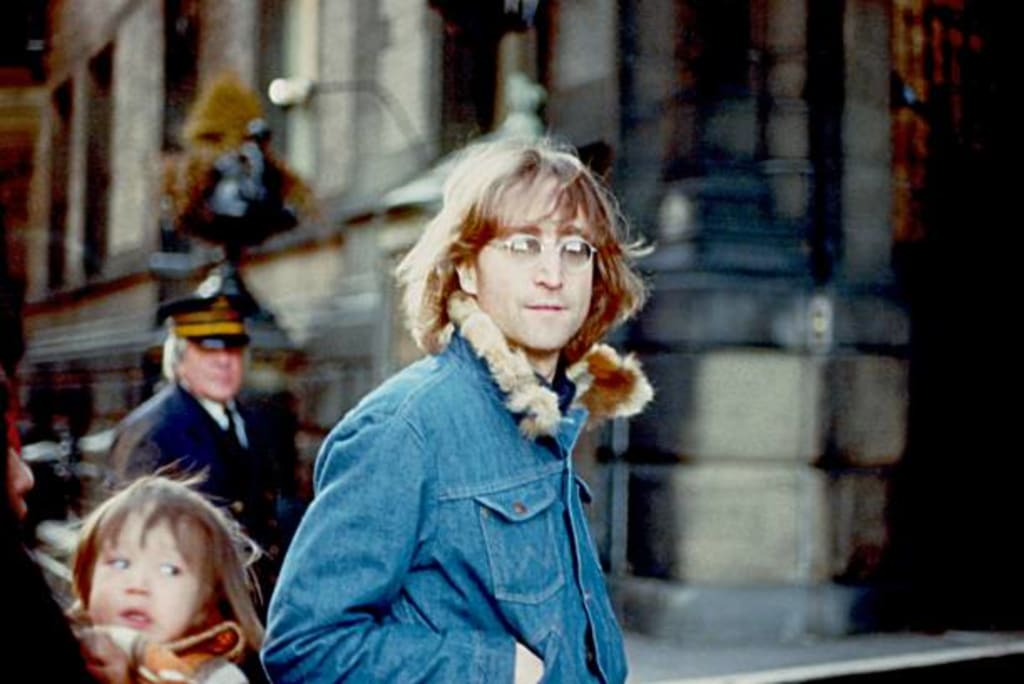
Few figures in 20th-century culture loom as large or as complex as John Lennon. As a founding member of The Beatles, he helped reshape popular music and youth culture, transforming what a pop group could be. As a solo artist, he expanded the boundaries of songwriting into political and personal realms. As an activist, he leveraged celebrity to challenge entrenched power structures. As a symbol, he remains one of the most recognisable and iconic cultural presences—his face, his round glasses, and his messages of peace echoing long after his violent death in 1980. The legacy of John Lennon is multifaceted: musical, social, political, philosophical, and deeply mythologised. To understand it, one must consider not only the man and his work but also the shifting cultural landscape that continues to reinterpret him.
1. Musical Innovation and the Transformation of Popular Music
John Lennon’s most visible, enduring contribution is unquestionably musical. The Beatles were not merely successful; they were revolutionary. And Lennon’s role within the band, though always in partnership with Paul McCartney and alongside George Harrison and Ringo Starr, was foundational to its artistic direction.
Lennon’s early songwriting—such as “Help!,” “You’ve Got to Hide Your Love Away,” “A Hard Day’s Night,” and “Ticket to Ride”—displayed an emotional honesty uncommon in pop music of the early 1960s. His lyrics conveyed insecurity, frustration, vulnerability, and a distinct sense of yearning. Even before the Beatles entered their mid-period experimentation, Lennon had introduced a more introspective, psychologically aware style of writing that would influence generations of musicians.
The Beatles’ progression from pop idols to studio innovators was in part driven by Lennon’s willingness to push boundaries. Songs like “Tomorrow Never Knows,” which relied heavily on tape loops, drone textures, and surreal lyrics lifted from Timothy Leary’s adaptation of The Tibetan Book of the Dead, signalled a dramatic break with rock-and-roll traditions. Lennon’s work encouraged the band toward sonic experimentation, blending Eastern philosophy, avant-garde sensibility, and psychedelia.
On Sgt. Pepper’s Lonely Hearts Club Band, Lennon’s contributions—including “Lucy in the Sky with Diamonds” and “Being for the Benefit of Mr. Kite!”—continued to illustrate a mind drawn to surreal imagery and unusual structures. Even on later albums, Lennon’s willingness to explore raw personal themes shaped the group’s direction. “Julia,” “Happiness Is a Warm Gun,” “I’m So Tired,” and “Yer Blues” showcased a brutal emotional candour that contrasted with McCartney’s polished pop sensibilities.
The Lennon–McCartney partnership remains one of the most productive and celebrated in music history, and while their individual strengths differed, it was Lennon’s restless artistic drive that often pushed the pair toward new creative territory. McCartney’s melodic brilliance and structural clarity balanced Lennon’s intensity and conceptual ambition. Without Lennon’s innovation and challenging energy, the Beatles might not have evolved beyond early pop success; without McCartney’s musicality and craft, Lennon’s ideas might not have found such universal expression.
Lennon’s musical legacy extends beyond his Beatles years. His solo work—particularly the album John Lennon/Plastic Ono Band—redefined singer-songwriter authenticity. Inspired by primal-scream therapy, the album is frequently regarded as one of the most emotionally raw records ever made. Songs like “Mother,” “Working Class Hero,” and “Isolation” stripped music of artifice and confronted internal pain directly. This approach influenced countless future artists across genres: punk, grunge, alternative, folk, and indie all inherited aspects of Lennon’s fearless vulnerability.
Perhaps most iconic is “Imagine”—a song whose simplicity makes it approachable and whose idealism makes it enduring. While debate continues about its political and philosophical implications, the song has become a global anthem for peace. Whether sung at vigils, protests, or celebrations, it distills Lennon’s post-Beatles mission: to imagine a more compassionate world and to use art as a catalyst for social reflection.
2. Cultural Icon and Symbol of Peace
By the late 1960s, John Lennon had moved from pop musician to public intellectual and countercultural figure. Alongside Yoko Ono, he used performance art and media presence to challenge norms and critique political power.
The “bed-ins” for peace in Amsterdam and Toronto, the “War Is Over (If You Want It)” campaign, and the politically charged album Some Time in New York City all reflected a deliberate attempt to align celebrity with activism. Lennon’s message of peace—sincere yet consciously performative—became central to his public image.
This image persists today. Lennon has become a symbol of non-violent resistance, humanitarian ideals, and utopian hope. His words, particularly those associated with “Imagine,” appear on posters, murals, and social media during moments of international crisis. His face has been transformed into a near-universal emblem of idealism.
Critics note that this symbolic version of Lennon is selective: the real man was more contradictory, sometimes abrasive, and capable of emotional cruelty. Lennon himself acknowledged his flaws and violent outbursts in his youth. Nonetheless, as with many iconic figures, the public image has overtaken the complicated human being. Within the cultural imagination, Lennon remains a symbol of peace, forgiveness, unity, and the belief that ordinary people can challenge injustice.
Part of the endurance of Lennon’s symbolic power stems from the tragedy of his death. On 8 December 1980, he was murdered outside the Dakota building in New York by a disturbed fan. His death shocked the world, freezing his public image in idealised form. Like Kennedy or Martin Luther King Jr., Lennon became a martyr figure—his life’s message intensified by his sudden absence.
3. Political Activism and Controversy
John Lennon’s activism was both influential and controversial. His outspoken opposition to the Vietnam War drew admiration from anti-war activists and suspicion from government agencies. Declassified FBI files reveal that Lennon was monitored heavily during the early 1970s, especially during the Nixon administration. His potential influence on young voters and the anti-war movement was viewed as politically dangerous.
Songs such as “Give Peace a Chance,” recorded during a bed-in, became rallying chants for protestors. Meanwhile, tracks like “Power to the People” and “Happy Xmas (War Is Over)” blended political messaging with pop accessibility.
However, Lennon’s political commitments were inconsistent. His flirtation with radical politics—including associations with the Black Panthers and left-wing student groups—was short-lived. He later distanced himself from more extreme positions, focusing instead on personal transformation, domestic life, and philosophical introspection. This inconsistency invites criticism, but it also underscores a key point about Lennon’s legacy: he was always searching, always evolving, and often willing to publicly re-evaluate his beliefs.
Lennon’s activism also influenced later generations of politically engaged artists. From U2 and R.E.M. to Public Enemy and Rage Against the Machine, musicians who seek to combine social critique with artistry often cite Lennon as an inspiration. His work helped normalise the idea that pop musicians could act as political commentators, even at the risk of alienating audiences.
4. Personal Vulnerability and Redefining Masculinity
One of Lennon’s less discussed but significant contributions lies in how he helped shift cultural expectations of masculinity. Through his music and public discussions of therapy, trauma, and insecurity, Lennon challenged the stereotype of the emotionally stoic male.
John Lennon/Plastic Ono Band is central to this legacy. His lyrics dealt openly with abandonment, loss, self-loathing, and childhood pain. In a world where male artists were expected to project confidence, swagger, or emotional distance, Lennon’s “confessional” approach was groundbreaking.
Lennon also advocated for shared parenting and domestic responsibility, particularly during his “house-husband” years in the mid-1970s, when he stepped back from the spotlight to raise his son Sean. At the time, this decision was unusual for a male celebrity; today, it is regularly cited as a progressive example of fatherhood.
Though Lennon’s personal life included episodes of aggression, his later efforts to confront and discuss those impulses contributed to broader dialogue about male emotional development, accountability, and personal growth.
5. Influence on Future Artists
Nearly every major genre of modern music bears some influence from Lennon’s work.
Rock and alternative musicians credit his raw emotional style and willingness to experiment.
Folk and singer-songwriter artists adopted his introspective approach to lyricism.
Punk musicians admired his rebellious spirit, his critique of authority, and his stripped-down, aggressive musicality.
Pop artists continue to draw from The Beatles’ harmonic innovations and studio experimentation.
Indie and experimental music owes much to Lennon’s avant-garde collaborations with Yoko Ono.
His approach to songwriting—melding autobiographical honesty with philosophical questioning—laid groundwork for artists like Elliott Smith, Kurt Cobain, Thom Yorke, and countless others who foreground vulnerability and introspection.
Lennon’s solo catalogue continues to be covered, referenced, and reinterpreted. “Imagine” remains one of the most performed songs worldwide. “Working Class Hero” is regularly revived during periods of political and economic tension. “Jealous Guy” has been interpreted in multiple styles, from soul to pop to indie rock.
The Beatles’ catalogue itself remains a cornerstone of music education, production study, and cultural analysis. Lennon’s contributions—innovative chord progressions, rhythmic experimentation, lyrical originality—still shape contemporary songwriting.
6. Myth, Memory, and the Ongoing Reinterpretation of Lennon
Lennon’s legacy is not static. It shifts as culture changes. Modern discussions about Lennon often address his contradictions—the gap between his message of peace and his turbulent personal life, his political idealism contrasted with privileged celebrity, his moments of cruelty versus his deep introspective empathy.
The #MeToo era has prompted reconsideration of male artists with histories of aggression. Lennon’s own admissions about violence in his past complicate his legacy for new audiences. Rather than diminishing his influence, this complexity adds depth to conversations about redemption, accountability, and personal transformation.
The relationship between Lennon and Yoko Ono has also undergone reevaluation. Once blamed for “breaking up The Beatles,” Ono is now widely recognised as a pioneering conceptual artist whose collaborations with Lennon expanded his creativity. Modern scholarship credits her with shaping many of his most bold, experimental, and politically engaged choices.
The power of Lennon’s myth also raises questions: To what extent does idealisation obscure the real, flawed individual? Why do societies elevate certain figures as symbols of hope? Lennon’s image endures precisely because it sits at the intersection of celebrity, politics, creativity, and tragedy.
7. Lennon’s Legacy in the Modern World
More than 40 years after his death, John Lennon’s legacy remains deeply embedded in global culture. His songs continue to soundtrack film, television, and public events. Memorials such as Strawberry Fields in Central Park attract millions of visitors. His writings, drawings, and recordings are continually rediscovered by new generations.
In contemporary activism, his message of peace may seem utopian, yet it continues to resonate. During moments of geopolitical tension, inequality, or humanitarian crisis, people return instinctively to Lennon’s words. “Give Peace a Chance” is still sung at protests; “Imagine” is still performed at vigils. These songs have become part of the cultural vocabulary of hope.
In music, Lennon remains a significant reference point. Whether in the studio innovations inspired by his Beatles work or the emotional honesty drawn from his solo career, Lennon’s influence underpins much modern songwriting and production.
Even the contradictions of his life have value: they remind us that cultural heroes are not infallible, and that personal growth is possible even for those who struggle with deep flaws. Lennon’s journey—from troubled youth to creative visionary to political figure to introspective father—demonstrates an unusually public evolution.
Conclusion
The legacy of John Lennon is vast, complex, and continually evolving. It encompasses musical genius, cultural transformation, political activism, emotional vulnerability, and the enduring symbolism of peace. Lennon reshaped popular music by expanding its expressive possibilities and pushing it into realms of introspection and experimentation. He challenged the role of the artist in society, insisting that musicians could be agents of change. He modelled a form of masculinity that embraced openness and growth. And he left behind a mythology—shaped by both his life and his tragic death—that continues to inspire, provoke, and comfort.
To speak of John Lennon is to speak of the transformative power of creativity, the tensions between public image and private reality, and the enduring human desire for a more peaceful world. His legacy remains alive not only in the songs he wrote but in the questions he raised and the ideals he represented. More than four decades on, Lennon’s voice—both literal and metaphorical—continues to echo.
About the Creator
Retired Teacher from Haydon Bridge School, Northumberland
Long retired teacher from Northumberland, UK
He was a deputy head that taught physics (plus maths and economics) at Haydon Bridge School, Northumberland back in the '70s and early '80s
Now living in Canada, having retired some years ago.
Keep reading
More stories from Retired Teacher from Haydon Bridge School, Northumberland and writers in Beat and other communities.
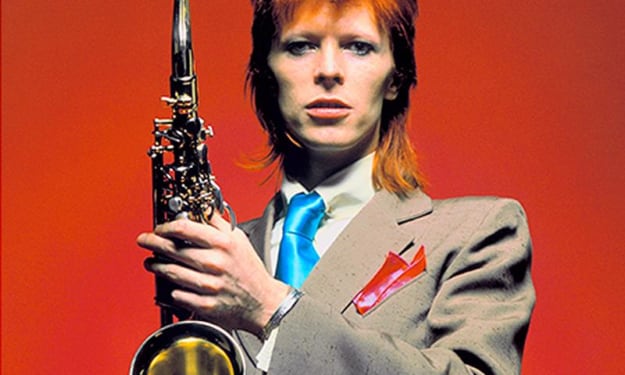
David Bowie: Sound, Storytelling, and the Art of Reinvention
David Bowie remains one of the most studied and influential artists in modern music. His legacy stretches far beyond rock history; it extends into fashion, theatre, art schools, and even classroom discussions about identity and creativity. Decades after his early recordings, Bowie continues to shape the way musicians, teachers, students, and creative communities think about self-expression.
By Retired Teacher from Haydon Bridge School, Northumberland2 months ago in Beat
'20/20'
"Do It Again" the track that would ultimately open the Beach Boys final album on Capitol Records which was released on February 10th 1969 had originally been released as a single in August of 1968. The track was the first of many post-Pet Sounds era throwbacks to the early Beach Boys sound which would become continually more cliched and eventually lead the Beach Boys to the level of self-parody they would eventually succumb to in the 1980s while their closest contemporaries The Beatles nearing the end of their run in 1969 would go on to be viewed as the most influential band of all time. However, the song itself is not bad on its surface, and it opens with a futuristic sounding (for 1969) drumbeat captured by then-Beach Boys engineer Stephen Desper using tape delays on the drums performed by Dennis Wilson and John Guerin. The song has been re-recorded numerous times over the years on various Beach Boys-related projects most notably the 2011 re-recording at Capitol studios featuring the five surviving Beach Boys at the time backed instrumentally by various members of both the Brian Wilson Band and Mike Loves touring "Beach Boys" to promote the then upcoming Beach Boys 50th Anniversary reunion tour in 2012. The hammering and power drill sound at the end of the song was an excerpt from a track called "Workshop" that was to be a part of the uncompleted "SMiLE" album.
By Sean Callaghan6 days ago in Beat
Fair Exchange, No Robberies
Dark Memoirs - Index There are at least two kinds of people in the world: those who write this half-arsed kind of intro to a story that looks to separate the rare and the norm, and those who realise it's an overused framing device and don't.
By Paul Stewart6 days ago in Chapters


Comments
There are no comments for this story
Be the first to respond and start the conversation.