
Japan Smart Factory Market: Size, Trends, and Forecast 2026-2034
How Automation, IoT, and Digital Transformation Are Reshaping Japanese Manufacturing
Market Overview
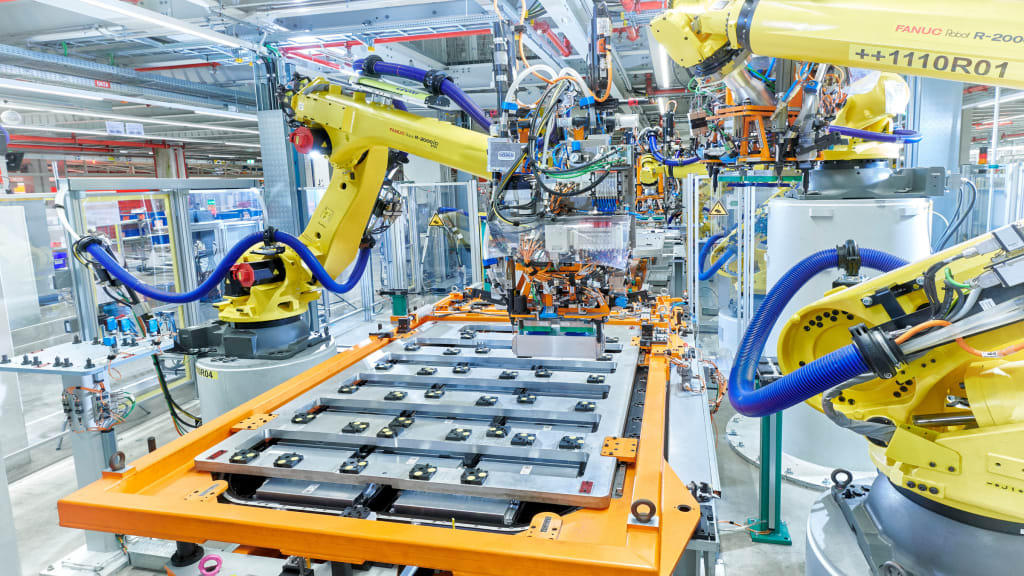
Smart factories are transforming traditional manufacturing in Japan by integrating digital technologies — such as the Internet of Things (IoT), advanced robotics, artificial intelligence (AI), and cloud computing — into production environments. Instead of manual or isolated processes, smart factories allow machines, systems, and humans to collaborate with real-time data to improve efficiency, quality, and responsiveness across the production floor.
In 2025, the Japan smart factory market reached an estimated value of USD 4.2 billion, reflecting growing interest in digital transformation across automotive, electronics, machinery, and other industrial sectors. These systems are helping manufacturers improve flexibility, reduce downtime, and respond more quickly to changing customer demand.
According to analysis by IMARC Group, the market is expected to expand significantly and reach around USD 9.2 billion by 2034, supported by continued investments in automation technologies, data analytics, and cyber-physical systems. The gradual shift from traditional production lines to interconnected, intelligent systems signals how Japan’s factories are evolving to compete on both quality and speed.
Explore a free sample report for detailed analysis, forecasts, and strategic insights
Key Factors Driving Market Growth
- Digital Transformation in Manufacturing
Companies are increasingly adopting digital tools to enhance production visibility and optimize workflows. Smart factory solutions help integrate information from design, procurement, production, and logistics, yielding insights that support predictive maintenance, better planning, and quality control.
- Workforce Challenges and Productivity
Japan faces labor shortages and an aging workforce, particularly in manufacturing. Smart factory technologies automate repetitive and hazardous tasks, allowing human workers to focus on higher-value responsibilities. This shift helps businesses maintain productivity even as workforce dynamics evolve.
- Quality and Global Competitiveness
Japanese manufacturers are known for precision and reliability. Smart factory capabilities support those strengths by reducing defects, improving consistency, and enabling real-time monitoring. For export-oriented sectors like automotive and electronics, these improvements help companies remain competitive in global markets.
Role of Technology and Innovation
- IoT and Industrial Connectivity
IoT devices connect machines and sensors throughout the production process, enabling better visibility into equipment status, material flow, and environmental conditions. This connectivity supports faster issue detection and more accurate performance monitoring.
- Artificial Intelligence and Analytics
AI and machine learning are being applied to interpret production data, identify patterns, and make forward-looking predictions. For example, predictive maintenance models help reduce unexpected downtime by alerting operators before equipment failure occurs.
- Robotics and Flexible Automation
Advanced robotics, including collaborative robots (cobots), are taking on a growing share of manufacturing tasks. These machines work alongside human operators and can be redeployed quickly, making them well-suited for flexible production environments.
Japan Smart Factory Industry Trends
- Expansion of Cyber-Physical Systems
Manufacturers are increasingly integrating digital and physical systems, creating environments where data flows seamlessly between machines, software, and people. Such systems improve adaptability and encourage continuous improvement.
- Rise of Edge Computing
Edge computing technologies are gaining traction as factories seek faster processing and reduced latency for on-site automation tasks. By processing data closer to where it is generated, edge solutions improve responsiveness and reliability.
- Emphasis on Data Security
As digital systems become more interconnected, data security has grown in importance. Manufacturers are investing in cybersecurity measures to protect smart factory networks, intellectual property, and production integrity.
Japan Smart Factory Market Segmentation
Field Devices Insights:
- Industrial Sensors
- Industrial Robots
- Industrial Network
- Industrial 3D Printers
- Machine Vision Systems
Technology Insights:
- Product Lifecycle Management (PLM)
- Human Machine Interface (HMI)
- Enterprise Resource Planning (ERP)
- Manufacturing Execution Systems (MES)
- Distributed Control Systems (DCS)
- Industrial Control System
- Others
End Use Industry Insights:
- Pharmaceuticals
- Food and Beverages
- Chemical
- Oil and Gas
- Automotive and Transportation
- Semiconductor and Electronics
- Aerospace and Defense
- Others
By Region
- Kanto
- Kansai / Kinki
- Chubu
- Kyushu–Okinawa
- Tohoku
- Chugoku
- Hokkaido
- Shikoku
This segmentation illustrates how smart factory technologies are being adopted across technology layers, industrial verticals, and geographic segments throughout Japan.
Competitive Landscape
The market research report has also provided a comprehensive analysis of the competitive landscape. Competitive analysis such as market structure, key player positioning, top winning strategies, competitive dashboard, and company evaluation quadrant has been covered in the report. Also, detailed profiles of all major companies have been provided.
Market Outlook
The Japan smart factory market is poised to continue its steady growth as manufacturers pursue greater agility, resilience, and quality improvements. Investments in automation, connectivity, and intelligent systems will help production facilities adapt to evolving market demands and workforce realities.
As digital transformation becomes more embedded in manufacturing strategies, smart factory technologies are expected to play a central role in enhancing productivity, supporting sustainability goals, and strengthening Japan’s position in global advanced manufacturing.
About the Creator
Ludacris and Nelly draw backlash over bookings at MAGA-coded music festival
Ludacris and Nelly headlining a mostly right-wing event is good for them. It’s also great for the genre of hip hop. The two rap veterans have showcased their talents on other stages. Why can’t they perform for mostly MAGA folks and grab that bag?
By Skyler Saunders22 days ago in Beat
Lately, I'm empty
Lately, I feel an emptiness inside of me that doesn’t make any sense. I was fine a week ago and now I’m numb to the pain that I’ve been carrying around. Numb to the idea of me existing. I wish I could go to a place where I can hear happy positive thoughts and surround myself with joy. The medication I’m on doesn’t seem to work anymore. I still feel pain from existing, why am I here anyways? Merely to exist. I don’t feel like I’m making any differences being here.
By Cerina Galvan2 days ago in Confessions



Comments
There are no comments for this story
Be the first to respond and start the conversation.