
'In The Pocket'
James Taylor's 1976 album

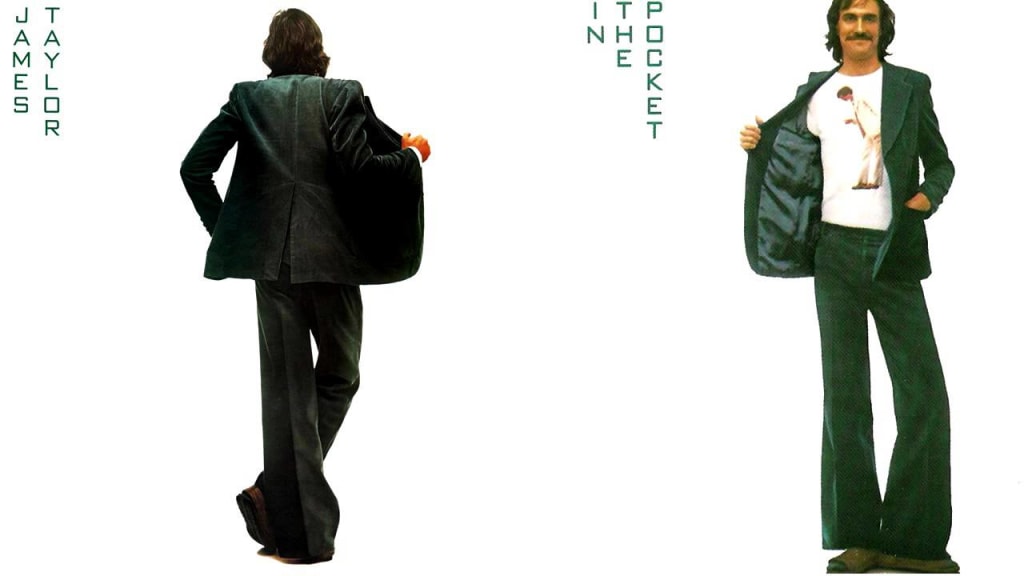
After the considerable success of his Gorilla album in 1975, James Taylor turned once again to the team of Lenny Waronker and Russ Titelman to produce his seventh album, 1976's In The Pocket, recorded once again in California and released in June 1976. The stakes were arguably even higher for this album than the last time out, with Taylor out to prove that Gorilla was no fluke. The success of In the Pocket was expected to greatly affect future artist negotiations with it being the last new album due on his recording contract with Warner Brothers Records.
The template of Gorilla was in place for this record, though there was more filler on this album, and even more guest stars than on Gorilla. But any fears of a total disaster were dissipated by one certifiably monstrous hit that resonates with the Taylor fanbase to this day.
That hit is the album opener, the serviceable if a tad overrated "Shower The People." It has become a staple of James's setlists in the years since its release, though some find its sloganeering and repetivity grating. Like most of his recent singles, it prominently features James's then-wife Carly Simon on backing vocals
"A Junkie's Lament" features harmony vocals from Simon and Garfunkel, that being Carly and Art, the latter playing the more prominent vocal role here. The backing features some strong conga work from Russ Kunkel. The song details a friend's failure to get the "monkey" of addiction off his back, but at this point the tale likely had a touch of autobiographical detail, in spite of James's best efforts to be a family man.
"Money Machine" is a simple entertainment about the root of evil, the word for which James sings at least 70 times over the course of the song. Still, the song is redeemed by some nice organ work from Nick DeCaro before the percussion-filled main section of the song comes in, featuring the work of legendary percussionist Victor Feldman. Valerie Carter provides vocal harmonies, and Michael Brecker and Steve Madaio provide trumpets.
"Slow Burning Love" is next and also features Carly Simon on harmony vocals. Perhaps the best ballad on the album, though it does have competition, the song features prominent mandolin from Danny "Kootch" Kortchmar, as well as nice accordion work from DeCaro.
"Everybody Has The Blues" is another of James's simple blues workouts, and is lyrically exactly what the title implies. A nice lively recording, it features tuba and bass from Red Callender, Ernie Watts on sax, keyboards from Craig Doerge and drums from Jim Keltner. One interesting cover of this tune is a duet performance from Tony Bennett and Ray Charles.
"Daddy's All Gone" is an autobiographical song about being on the road without wife and children, leading to shortcomings that Carly Simon would immortalize in the song "Fairweather Father" and allude to in the song "He Likes to Roll; Taylor would later publicly acknowledge his obsession getting in the way of family, in fact naming a not too distant album Dad Loves His Work. This song features some of James's longstanding bandmates, with electric guitars from both James and "Kootch," bass from Leland Sklar, drums and tambourine from Russ Kunkel and Fender Rhodes from Clarence McDonald.
"Woman's Gotta Have It" is a cover song originally recorded by Bobby Womack, written by Daryl Carter, Womack and his wife Linda. After all, it worked for the Stones with "It's All Over Now." This cover was not hitworthy, but it's not an embarrassment like a few of James's R&B covers. Kootch, Lee Sklar, Waddy Wachtel, and Russ Kunkel are up to the backing with Clarence McDonald providing keyboards, and one Peter Asher stepping in on tambourine.
"Captain Jim's Drunken Dream" takes Taylor to the ocean, as "Lighthouse" had done on Gorilla. Not quite a sea shanty but an evocative tale of a sea captain with a taste for whiskey. Along with the mandolin of David Grisman and marimba (and other percussion) from Victor Feldman, the song here features another harmony vocal from Art Garfunkel, for whom Taylor later provide vocal assistance on two hit singles: a cover of Sam Cooke's "What a Wonderful World," also featuring Paul Simon and a cover of Carole King's "Crying in the Rain." "Captain Jim" would be reprised by James at the "No Nukes" concerts in 1979, following the near-meltdown at Pennsylvania's Three Mile Island."
"Don't Be Sad Cause Your Sun Is Down" was co-written with one of the hottest figures in music in 1976, Motown legend Stevie Wonder who also adds harmonica to the track. Lyrically it calls to mind one of James's earliest songs, "Brighten Your Night With My Day," but musically the Wonder touch is in clear evidence here. Producer Russ Titelman plays tambourine on the track while Clarence McDonald plays the piano.
"Nothing Like A Hundred Miles" features typically excellent harmony vocals from David Crosby and Graham Nash, as well as prominent dobro from California ace David Lindley. Waddy Wachtel plays electric guitar and Herb Pederson plays banjo. Another Taylor lyric about an enticing woman who is not good for him, the sound of the song is the most folky on the album, and the song was later covered by Pederson's sometime fellow bluegrass bandmate Tony Rice.
"Family Man" is another song about hitting the road, with the protestation that "I'm just a family man," winning out in the tune. Fittingly, the song features harmony vocals from Carly Simon and James's brother Alex Taylor, along with Valerie Carter and Bonnie Raitt. Featured once again are prominent horns by Michael Brecker and Steve Madaio, funky guitar from Kootch, and driving bass from Lee Sklar.
"Golden Moments" is a strong closer, a rumination on a lucky man dealing with the troubles in his mind. The song features prominent harp from Gayle Lavent, ably assisted by Lee Sklar on bass, organ from Nick DeCaro, and Bobbye Hall on triangle.
Despite the success of "Shower the People," the copious guest artists, and a nice percentage of good tunes (though no other hits), In The Pocket would be Taylor's least commercially successful album of the 70s, ranking behind Walking Man and ahead of only the Apple debut. It would also be the last album James Taylor would record for Warner Brothers Records. In fairness, its commercial run in 1976 was shortened at the Christmas season by the James Taylor's Greatest Hits album that would include "Shower the People" and go on to sell more than 11 million copies over the years.
The success of the Hits album would help James enter a new phase of his career with a new contract with a new record company and with a strong base of ardent fans in tow.
About the Creator
Sean Callaghan
Neurodivergent, Writer, Drummer, Singer, Percussionist, Rock Music Star Wars and Disney Devotee.
Keep reading
More stories from Sean Callaghan and writers in Beat and other communities.
'Gorilla'
Coming off the disappointing public reception to the Walking Man album, James Taylor's sixth studio album was hugely important to his continued career success. So once again, he changed producers, returning not to his manager and original producer Peter Asher, but instead to the famed Warner Brothers production team of Lenny Waronker and Russ Titelman, the men who together and alone were behind such Warner megahits as Randy Newman's Sail Away, Gordon Lightfoot's Sundown, and Ry Cooder's Paradise and Lunch.
By Sean Callaghan5 years ago in Beat
It's 2026. Songs Turning 10 This Year
In 2016, we saw the rise of short form videos and what would lead to the birth of TikTok. We cannot forget the Snapchat filters no matter how cringe worthy some of them might have been. It was also the year in which the hit series Stranger Things debuted.
By Jasmine Aguilar17 days ago in Beat
Saul Damelyn Opens the Doors to Memory, Art, and Reckoning
There is something quietly assured about “Museum of Love,” the debut single from Saul Damelyn and British indie imprint Damelyn Records. Its lyric video world premiere does not simply illustrate the song. It builds a world around it. What emerges is a visual meditation on memory and attachment that feels thoughtful rather than ornamental, grounded rather than grand.
By Chris Adams7 days ago in Beat
The Politics of Playing Dress-Up
Well, to start off I'd like to say a happy world book day to all who celebrate. I know I haven't really posted anything on my socials about it but I'm not a jubilant kind of person. I lay low most of the time. Let's start off with a popular anecdote from the vaults...
By Annie Kapur6 days ago in Geeks


Comments
There are no comments for this story
Be the first to respond and start the conversation.