
How Michael Jackson's Thriller Revolutionized Music and Shattered Barriers Forever
"The Untold Story of How MJ's Masterpiece Became a Global Phenomenon"

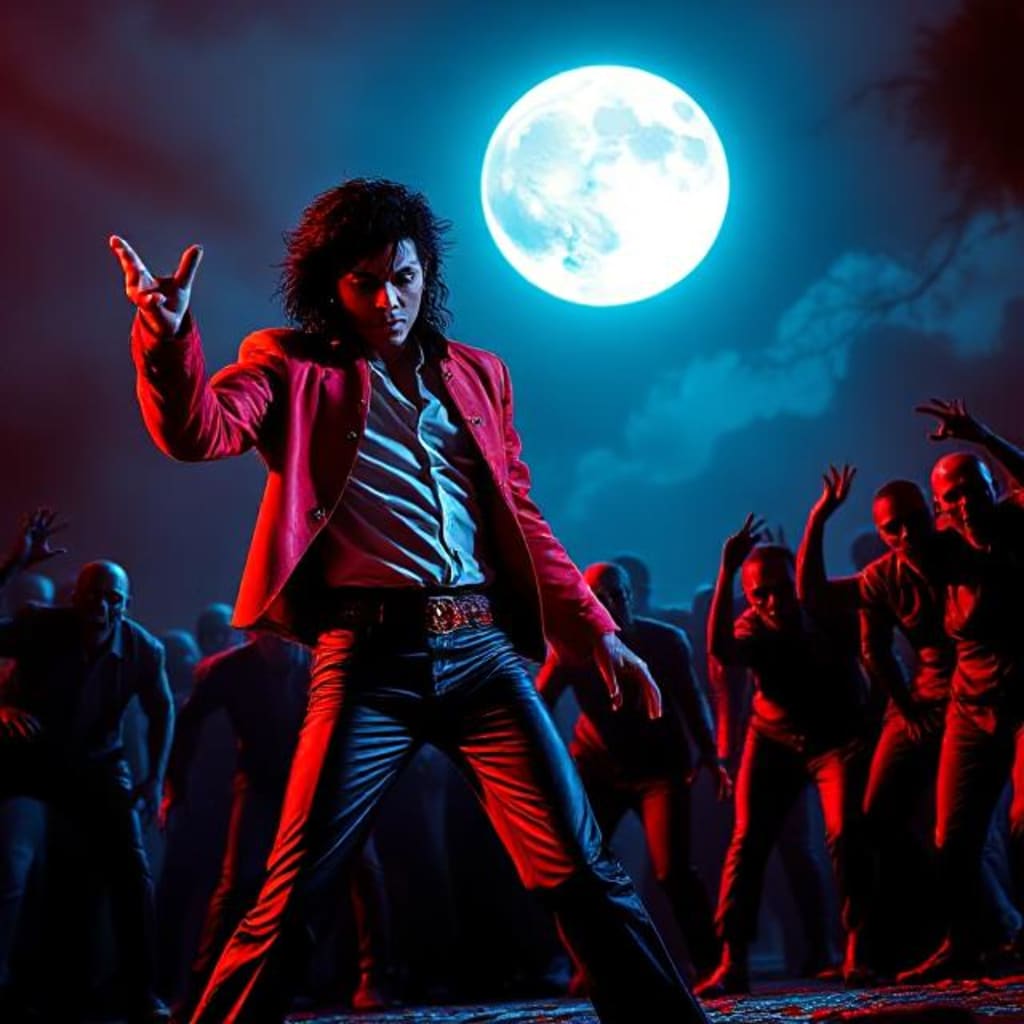
On a crisp December night in 1983, MTV flickered to life with a 14-minute spectacle that would forever alter the landscape of music, entertainment, and culture. Michael Jackson's Thriller wasn't merely an album or a video—it was a seismic shift that demolished racial divides, elevated music videos to cinematic art, and cemented MJ as the undisputed King of Pop. But behind the glitz and glamour lies a story of relentless ambition, groundbreaking innovation, and cultural defiance. Dive deep with me into the untold saga of how Thriller became the best-selling album of all time, and why, over 40 years later, it's still haunting our feeds, playlists, and dance floors.
The Spark of Genius: Michael Jackson's Unyielding Vision for Thriller
By 1982, Michael Jackson was no stranger to stardom. Fresh off the success of Off the Wall, which sold over 20 million copies, MJ could have rested on his laurels. But complacency wasn't in his DNA. He confided in legendary producer Quincy Jones that he wanted Thriller to be "the biggest album ever"—a bold fusion of pop, rock, funk, disco, and even horror elements designed to captivate every demographic imaginable.
Jackson personally penned four of the album's nine tracks, infusing them with raw emotion and storytelling prowess. From the paranoia-laced beats of Billie Jean (inspired by real-life fan obsessions) to the infectious groove of Beat It, which bridged gang rivalries through music, MJ's lyrics painted vivid pictures. He once revealed in a rare interview, "I wanted Thriller to play like a blockbuster movie in your head—full of suspense, thrills, and unforgettable moments." This cinematic mindset wasn't just talk; it was the blueprint that turned an album into a global phenomenon.
To fuel his dream, Jackson immersed himself in the creative process, often working 18-hour days in the studio. He drew inspiration from diverse sources: classic horror films like An American Werewolf in London, Broadway musicals, and even his own childhood fears. The result? An album that didn't just sell records—it sold dreams.
Behind the Beats: Quincy Jones and the All-Star Team That Crafted Magic
No epic tale is complete without a masterful collaborator, and for MJ, that was Quincy Jones. The duo, who had struck gold with Off the Wall, reunited to assemble what can only be described as a musical Avengers team. Guitar virtuoso Eddie Van Halen shredded a now-legendary solo on Beat It, Toto's Steve Lukather added rock edge, and horror icon Vincent Price lent his spine-tingling voice-over to the title track's eerie rap.
The Thriller track itself nearly vanished into obscurity. Originally titled "Starlight" and penned by songwriter Rod Temperton, it was reimagined as a spooky masterpiece after MJ expressed his love for horror. Late-night sessions in Westlake Recording Studios became legendary: MJ practicing his signature werewolf howls, Jones layering synths and bass lines for that pulsating rhythm, and the team experimenting with sound effects to evoke a haunted house vibe. The seven-minute epic felt like a rollercoaster—blending funk grooves with narrative twists that kept listeners hooked.
Innovation was key. Jones pushed boundaries by incorporating cutting-edge technology, like synthesizers and drum machines, while MJ's multi-layered vocals (he often recorded dozens of takes for one line) created a rich, immersive sound. This wasn't just music; it was audio storytelling at its peak, blending genres in a way that appealed to rock fans, disco lovers, and everyone in between.
The Video That Broke the Internet (Before the Internet Existed): A Cinematic Game-Changer
If the album was revolutionary, the Thriller music video was a full-blown cultural apocalypse. Directed by John Landis, fresh off his horror hit An American Werewolf in London, this $500,000 mini-movie (a fortune in 1983) transformed music videos from cheap promos into must-watch events. MJ insisted on a narrative arc: a date night gone wrong, complete with werewolf transformations, zombie hordes, and that unforgettable group dance.
Challenges abounded. As a devout Jehovah's Witness, Jackson initially balked at the occult themes, fearing backlash from his faith community. He resolved it with a simple disclaimer: "Due to my strong personal convictions, I wish to stress that this film in no way endorses a belief in the occult." Choreography, co-created by MJ and Michael Peters, featured the moonwalk's zombie twist—a move that kids (and adults) worldwide would obsessively practice.
When MTV premiered it on December 2, 1983, viewership exploded. The video not only boosted album sales but also forced MTV to diversify its playlist, airing a Black artist's work in prime time amid accusations of racial bias. Overnight, music videos became an industry staple, influencing everything from Madonna's visuals to modern K-pop extravaganzas.
Shattering Ceilings: Thriller's Worldwide Domination and Lasting Legacy
Numbers don't lie: Thriller has sold over 70 million copies (some estimates say 100+ million), snagged eight Grammy Awards (seven in one night), and held the Billboard 200 top spot for 37 weeks. But its true power lay in unity. At a time when radio stations segregated genres by race, Thriller crossed over effortlessly, proving Black artists could dominate mainstream pop.
Globally, MJ's influence was electric. Fans in Japan donned red leather jackets; European clubs pulsed to Wanna Be Startin' Somethin'; and in Africa, his humanitarian ethos inspired future icons. As Jackson himself put it, "Music is the universal language, and Thriller was my way of speaking to the world."
Fast-forward to 2025: Thriller is more alive than ever. TikTok challenges recreate the zombie dance with millions of views; remixes top Spotify playlists; and Halloween without the video feels incomplete. Artists like Beyoncé (who sampled P.Y.T.) and The Weeknd (echoing MJ's falsetto) owe their blueprints to this album. It's not just nostalgia—it's evolution, adapting to new platforms while reminding us of music's power to transcend.
Why Thriller Will Never Die: Keeping the King of Pop's Spirit Alive
In an era of fleeting viral hits, Thriller endures because MJ captured the essence of thrill—storytelling that excites, scares, and unites. It's a testament to his genius: a child prodigy turned global icon who battled personal demons yet gifted the world joy.
What's your ultimate Thriller moment? Was it nailing the moonwalk at a school dance, or does Billie Jean's bassline still send shivers down your spine? Share in the comments below—let's turn this into a MJ fan fest! If this deep dive reignited your love for the King of Pop, hit that share button on X (formerly Twitter), TikTok, or Instagram. Tag #ThrillerLegacy and #MichaelJacksonForever to make it go viral. Together, we can keep his magic spinning for generations.
About the Creator
Muhammad Riaz
- Writer. Thinker. Storyteller. I’m Muhammad Riaz, sharing honest stories that inspire, reflect, and connect. Writing about life, society, and ideas that matter. Let’s grow through words.
Keep reading
More stories from Muhammad Riaz and writers in Beat and other communities.
When Elvis Presley Shook the World with His First TV Performance
When Elvis Presley stepped onto the stage of The Milton Berle Show on June 5, 1956, America wasn’t ready for what was about to happen. The world had seen singers before. They had seen dancers before. But they had never seen someone like Elvis Presley. With one song, “Hound Dog,” and one set of electrifying moves, Elvis didn’t just perform — he ignited a cultural revolution.
By Muhammad Riaz6 months ago in Beat



Comments
There are no comments for this story
Be the first to respond and start the conversation.