
How KISS Alive! Saved a Band - and Defined a Legacy
How a live album created a career for KISS - and the sequels it spawned.
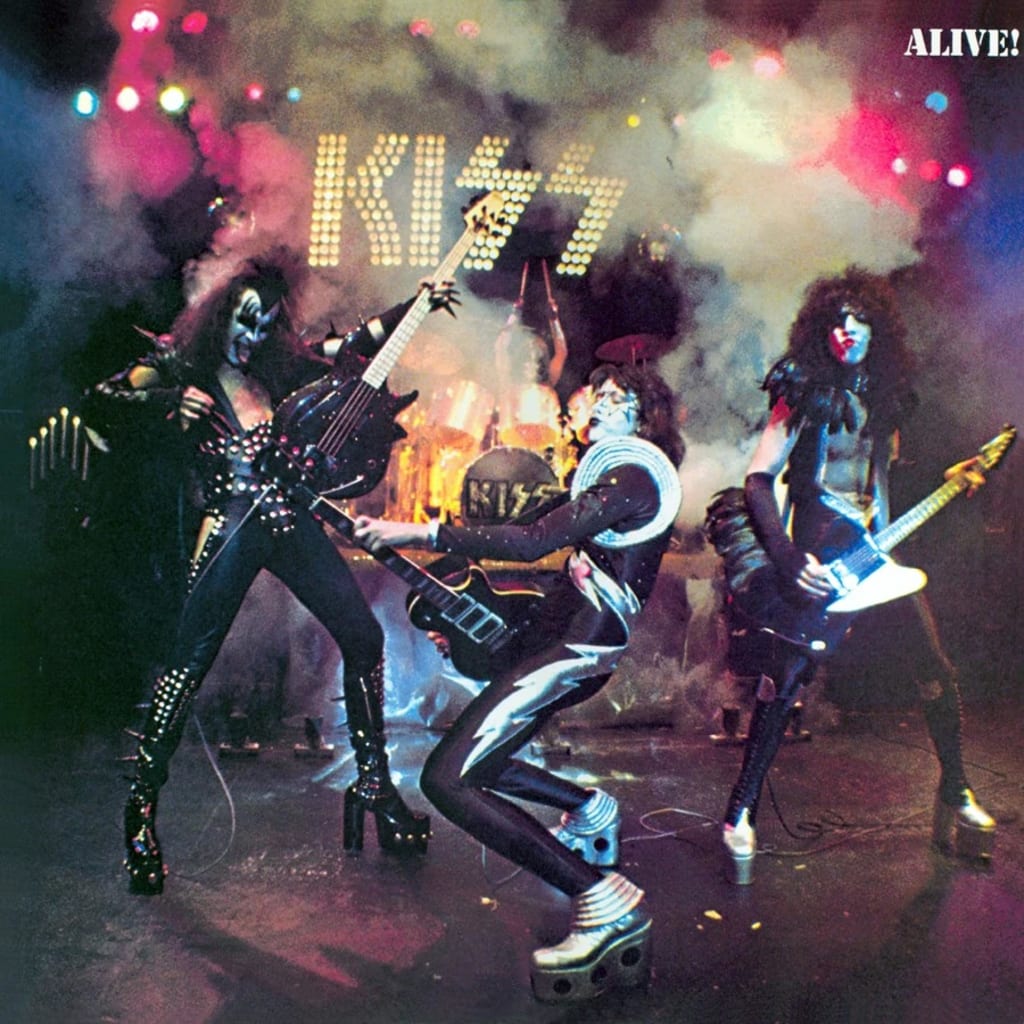
In 1975, four musicians teetered on the brink of obscurity.
They had three albums under their belt, but little traction beyond Detroit’s rust belt.
The music industry considered KISS a gimmick: grease painted cartoon characters with loud shows and low record sales.
Even their own label, Casablanca Records, was collapsing beneath them.
And yet, that fall, KISS Alive! hit shelves—and everything changed.
Half a century later, the legacy of KISS Alive! looms large.
In a sweeping, candid interview, Paul Stanley recently looked back at the album that transformed the band from a theatrical oddity into arena gods.
What he shared wasn’t just rock history—it was survival, risk, and raw belief in the power of performance.
“We Had Nothing to Lose Except the Band”
At the time of Alive!, KISS was broke.
They were hemorrhaging money on pyrotechnics and production.
They’d filed a lawsuit against their own label over unpaid royalties.
There were no hit singles, no platinum plaques.
But as Paul Stanley put it: “We didn’t have money, but we had fire.
We knew our live show was the truth—and our records didn’t sound like us.”
Rather than go into the studio for a costly fourth album, their manager Bill Aucoin (already hundreds of thousands in debt) financed a live album that could capture what fans already knew: this band had magic on stage.
“It wasn’t about money,” Stanley said.
“It was about finally sounding like KISS.”
Building the Sonic Souvenir
With Eddie Kramer (engineer for Hendrix and Zeppelin) at the helm, the band recorded over four nights in Detroit, Cleveland, Davenport, and Wildwood.
Kramer wasn’t just there to hit “record”—he was there to create an experience.
Stanley is upfront about the work that went into the album.
“We weren’t just putting mics in front of amps,” he says. “We wanted immersion. Explosions, crowd noise, that sense of being there—it all had to be part of it.”
The result wasn’t a faithful documentary. It was a soundtrack to memory.
There were overdubs. There was editing. But none of it was fakery.
“We weren’t trying to lie,” Stanley insists.
“We were trying to give you the version of the show that lived in your soul after the lights went out.”
The Risk That Made KISS and Casablanca
Days after the album dropped, KISS’s manager reportedly told Casablanca president Neil Bogart they were walking.
In response, Bogart wrote the band a check—reportedly for $2 million. Alive! quickly became the lifeline both KISS and Casablanca needed. Sales skyrocketed.
The live version of “Rock and Roll All Nite” became their first real hit.
The album would eventually go multi-platinum and cement the band’s place in rock’s top tier.
Beyond the Bombast: Heart, Hustle, and Humility
The stories behind KISS Alive! go deeper than stage tricks.
Paul Stanley reveals an origin story full of grit: sneaking into borrowed studio time, experimenting with failed bandmates, adopting kabuki makeup not for theater—but for identity.
The band wasn’t chasing fame.
They were trying to become the band they’d always wanted to see.
Even with the spectacle, Stanley says it always came back to substance.
“You can paint a car candy-apple red, but if there’s no engine, it won’t go anywhere.”
KISS Alive! proved they had both.
The Next Generation of Live Albums
Now, in 2025, as KISS Alive! celebrates its 50th anniversary, KISS is taking a new form.
The physical tours may be over, but the spirit lives on. Paul’s son Evan and Gene’s son Nick are working on a new project with Green Day producer Rob Cavallo. As q
“They’re not just our kids,” Stanley says. “They’re real artists. And it’s emotional to see the torch passed.”
From Firehouse to Forever
KISS Alive! wasn’t just a record.
It was a resurrection.
It redefined - along with Humble Pie and Peter Frampton - how live albums could sound.
And what they could mean.
It became a sonic souvenir for millions.
For KISS themselves, it was the moment they stopped pretending to be rock stars… and simply became them.
And then…
Studio Thunder: Revisiting the Untamed Energy of KISS’s Alive II Side Four
By the fall of 1977, KISS was no longer just a rock band—they were a phenomenon.
The painted faces, the pyrotechnics, the comic books, lunchboxes, and sold-out arenas were all symbols of a band that had ascended to a level few acts in rock had reached.
KISS Alive! had catapulted them from cult status to household name, capturing the raw fury of their concerts and revitalizing interest in their early studio recordings.
Two years later, the band attempted to bottle lightning again with Alive II—but this time, they took a different route.
Released in October 1977, KISS Alive II offered three sides of live material recorded over multiple nights, with significant overdubs.
Side Four was something else entirely: five brand-new studio recordings.
While billed as a live album, KISS Alive II’s fourth side revealed an evolving, overworked, and creatively restless band.
The studio tracks were a solution to several challenges at once: they gave fans new songs without waiting for a full studio album, allowed the band to meet label demands, and offered a placeholder as each member began thinking about solo efforts that would emerge the following year.
Leading up to KISS Alive II KISS had maintained a blistering schedule.
Between the releases of Destroyer, Rock and Roll Over, and Love Gun, the band was riding a commercial and creative high.
Yet beneath the glam and bombast, tensions brewed.
Ace Frehley was increasingly unreliable in the studio.
Peter Criss’s role was shifting.
Paul Stanley and Gene Simmons were often driving the ship, especially in the studio.
The music on Side Four veered between KISS’s signature hard rock and more experimental flavors.
With Eddie Kramer back in the producer’s chair, the songs had a thick, vibrant sound that leaned more toward stripped-down urgency than arena-ready gloss.
Despite the compressed timeline and Frehley’s partial absence, the studio tracks felt alive, unpredictable, and raw in the best sense.
They carried echoes of earlier KISS grit, infused with a refined edge that hinted at the future.
While Side Four of KISS Alive II offers fresh studio recordings, the first three sides are where the band revisits its live legacy—albeit with some studio help.
These 15 tracks were captured during the band’s August 1977 shows at The Forum in Los Angeles, though much of the material was sweetened or outright overdubbed in post-production.
Still, they effectively recreate the atmosphere of a KISS show at its commercial peak.
What makes the live portion of KISS Alive II so compelling is its role as a bridge between Alive! and the studio-heavy direction the band would take in the 1980s.
Unlike KISS Alive!, which focused heavily on material from the first three albums, KISS Alive II draws from music released in 1976 and 1977.
Songs like “Detroit Rock City,” “Love Gun,” and “Calling Dr. Love” showcase a tight band that has refined its sound without losing its edge.
Gene Simmons is in full demon mode throughout, snarling through “God of Thunder” with theatrical menace.
Paul Stanley, meanwhile, proves himself the consummate frontman, whipping the crowd into a frenzy with “I Want You” and “Makin’ Love.”
Peter Criss delivers a heartfelt version of “Hard Luck Woman,” a rare moment of vulnerability amid the bombast, while Ace Frehley rips through “Shock Me” with a solo that would become iconic.
The production values are cleaner and more polished than those on Alive!, and while this has led to debates among purists, it also captures the larger-than-life image KISS had cultivated by 1977.
Pyrotechnics, blood-spitting, and levitating drum kits may not come through on vinyl, but the band’s sense of drama is unmistakable.
Every track is performed like the stakes are sky-high, and that intensity makes the live sides more than a greatest-hits reel—they’re a performance document of a band operating at full tilt.
Together, these sides tell a parallel story to the studio tracks: a band feeding off its own mythology, pushing its sonic and visual brand as far as it could go.
The live material may be a bit airbrushed, but it captures a band still hungry to dominate, still willing to earn their reputation onstage—even if some of it was crafted in the studio.
“All American Man” kicks off the studio side with a burst of manic energy.
Paul Stanley’s vocal swagger is front and center, embodying the idealized, hyper-masculine rock star archetype.
The song is bold, brash, and unapologetic—a declaration of rock and roll patriotism.
Behind the scenes, Bob Kulick, who had previously auditioned for KISS, stepped in to play lead guitar.
His performance is razor-sharp and aggressive, delivering one of the most memorable solos on the album.
Though uncredited at the time, Kulick’s contributions were vital to this track’s punch.
Next comes “Rockin’ in the U.S.A.,” a Gene Simmons-penned love letter to America, written after the band’s international tours.
The groove is mid-tempo and grounded, offering a more straightforward rock arrangement. Simmons’ vocal delivery treads the line between sincere patriotism and tongue-in-cheek bravado.
Once again, Kulick handles lead guitar duties, adding sleek, controlled licks that complement Simmons’ bombastic tendencies.
“Larger Than Life” dives deeper into the theatrical side of Simmons’ persona.
Anchored by a thunderous riff and a larger-than-life (no pun intended) production, the track sounds heavier and more ominous than most KISS fare.
Simmons leans into his demonic alter ego, declaring himself a supernatural force of lust and destruction.
Kulick’s lead work here is particularly fierce—some fans have long speculated that Rick Derringer may have played on the track, but those rumors remain unconfirmed.
Regardless, the result is a mini-epic that showcases the darker, heavier side of KISS’s sonic palette.
With “Rocket Ride,” the studio side finally gives Ace Frehley a spotlight, and he absolutely runs with it.
The song is quintessential Ace—fun, spacey, and tinged with sexual innuendo.
Frehley not only sings lead vocals but also plays both lead guitar and bass.
Peter Criss is the only other band member featured on the track, providing drums.
While Criss is officially credited, some have speculated that Anton Fig—best known for his later work with Ace Frehley and as part of David Letterman’s house band—may have actually played drums on the track.
Fig’s tight, technical style closely resembles the drumming heard on “Rocket Ride,” and considering his documented involvement with Frehley’s 1978 solo album, the speculation isn’t entirely outlandish.
Some fans have gone even further, suggesting Fig may have contributed to multiple tracks on Side Four, especially given Peter Criss’s inconsistent presence in the studio during this period.
However, no definitive studio logs or firsthand confirmations exist to validate these theories.
As of now, Fig’s involvement remains part of the broader lore surrounding KISS’s frequent use of uncredited session musicians—a rumor that persists due to its plausibility, yet remains officially unverified.
Back to the song itself.
The vibe of “Rocket Ride” is looser than the previous songs, almost as if Ace recorded it in another dimension, which in many ways he did—spiritually if not literally.
The track would become a fan favorite and a defining moment for Frehley, especially in light of his increasing detachment from the band’s studio work.
Closing out the side is “Any Way You Want It,” a cover of the Dave Clark Five classic.
Paul Stanley handles lead vocals and guitar, injecting the song with a modern KISS swagger without losing the charm of the original. Kulick again plays guitar behind the scenes.
The cover is fast, tight, and surprisingly faithful, yet it manages to align with KISS’s own brand of rock and roll celebration.
Bob Kulick’s fingerprints are all over Side Four.
He stepped in quietly but effectively, playing lead guitar on four of the five tracks—everything except “Rocket Ride.”
With Ace Frehley increasingly absent from studio sessions due to creative burnout or personal issues, Kulick’s role became essential.
Though his contributions went uncredited at the time, he was instrumental in preserving the band’s sonic continuity.
Kulick wasn’t just a stand-in; his playing elevated the tracks, adding polish and precision without overshadowing the band’s raw appeal.
Ace Frehley’s singular contribution, “Rocket Ride,” proved to be more than just another KISS song. It was a statement.
The fact that he played most of the instruments on the track foreshadowed not only his eventual solo album but also his growing desire for independence.
The track’s strong reception only magnified the underlying tensions within the band.
While Stanley and Simmons were pulling the band in a more controlled direction, Frehley was riding a different wave—one that would eventually carry him out of the band.
The question of uncredited contributions lingers as well.
KISS fans have long speculated about outside players on the band’s albums.
During this era, the band’s production process was fast-paced and, at times, chaotic.
Rumors of Rick Derringer appearing on “Larger Than Life” persist to this day, though no official confirmation has ever surfaced.
These mysteries only add to the album’s enduring intrigue.
When KISS Alive II hit shelves, fans weren’t just buying a live album—they were getting five new KISS songs that expanded the band’s mythology.
Critics and fans alike have often singled out “Rocket Ride” as a standout, praising its swagger and personality.
Ace’s performance added authenticity and unpredictability to an album that otherwise relied on production polish.
The inclusion of these studio tracks helped make KISS Alive II more than just a retread of past glories.
It also marked a turning point in how the band functioned creatively.
The use of session musicians, though downplayed at the time, would become a more frequent occurrence in the years ahead.
With internal dynamics shifting and solo albums looming, Side Four of Alive II served as both a creative stopgap and a revealing snapshot of a band on the brink of transformation.
The demand for new material—even on a live record—also underscored the immense commercial pressure KISS was under.
The band’s output in the mid-to-late ’70s was staggering, and these tracks illustrate how they managed to deliver product without always being in the same room together.
In that sense, KISS Alive II’s studio side was a preview of the fragmentation to come.
For listeners intrigued by the unique energy of KISS Alive II’s studio side, several other albums from the era offer a similar blend of theatricality, grit, and sonic ambition.
Alice Cooper’s Lace and Whiskey echoes the same mix of glam rock and conceptual storytelling, while Cheap Trick’s Heaven Tonight offers power-pop urgency wrapped in hard rock riffs.
David Bowie’s Diamond Dogs—though more dystopian and art-rock—shares KISS’s love of character-driven spectacle and darkly melodic themes.
Sweet’s Desolation Boulevard captures a comparable glam-meets-hard-rock sensibility, filled with both hooks and crunch.
For those enamored with “Rocket Ride,” Ace Frehley’s 1978 solo album is essential listening, expanding on his singular voice within (and apart from) the KISS machine.
The studio tracks on KISS Alive II are often overshadowed by the album’s “live” content, but they deserve reexamination.
In just five songs, KISS managed to encapsulate their creative vitality, inner discord, and evolving musical identity.
Each track carries a distinct personality, whether it’s Stanley’s bravado,
Simmons’ theatrical menace, or Frehley’s spacey charm.
What makes these songs so compelling isn’t just what’s on tape—it’s the story beneath the surface.
Kulick’s uncredited excellence, Frehley’s isolated brilliance, and the band’s relentless momentum all converge in this unusual, often overlooked side of the album.
Play it loud, and let Side Four surprise you.
It’s not just filler—it’s a fascinating glimpse into the heart of a band that was, for better or worse, always larger than life!
Perhaps it paved the way for the Kiss solo albums?
Many years later, as KISS had a resurgence in popularity, they went to the live album well one more time!
When the Makeup Came Off, the Real Fight Began
By the time KISS Alive III dropped in May 1993, KISS had spent a full decade redefining who they were.
The face paint was gone, the fire-breathing personas dialed back—but the music had evolved into something just as fierce.
Capturing the band in peak form during their Revenge tour, this long-awaited third installment in the Alive series wasn’t just a victory lap.
It was a mission statement: KISS was still a force, even without the greasepaint and pyrotechnic mystique that defined their early years.
The album draws from shows in Cleveland, Detroit, and Indianapolis, recorded in November 1992.
The band’s lineup—Paul Stanley, Gene Simmons, guitarist Bruce Kulick, and drummer Eric Singer—was arguably the tightest and most musically proficient they’d ever assembled.
Produced by Eddie Kramer (the same wizard behind Alive! and Alive II), KISS Alive III blends the polish of ’90s rock production with the visceral punch of a live performance, reminding fans that KISS was far more than just a stage act.
Shedding Skin, Gaining Strength
KISS’s 1983 decision to remove their makeup was as much about survival as it was reinvention.
After the commercial and critical stumbles of Unmasked, Music From The Elder, and Creatures of the Night they roared back with Lick It Up, kicking off a new era that traded theatrics for guitars.
The transformation was gradual—Animalize, Asylum, Crazy Nights, and Hot in the Shade each explored different textures of hard rock—but by 1992’s Revenge, the band had rediscovered its bite.
That rediscovery is front and center on KISS Alive III.
While the album includes obligatory nods to the ‘70s—like “Deuce,” “Detroit Rock City,” and “Rock and Roll All Nite”—it’s the newer material that sets the tone.
The snarling “Unholy,” perhaps the darkest song in Simmons’ catalog, explodes with malevolent intent, its drop-tuned riff and thunderous drums redefining what a KISS song could be in the ‘90s.
It’s miles away from the glammy punch of “Strutter” or the party-time anthemics of “Shout It Out Loud.”
Capturing a New Kind of KISS Energy
There’s a sharpness to the performances on KISS Alive III that distinguishes it from its predecessors.
The original KISS Alive! from 1975 was raw and slightly chaotic, capturing a young band fighting for superstardom. KISS Alive II, while iconic, leaned into its own myth-making with a blend of live tracks and studio sweeteners.
But here, the band feels locked in—technical, rehearsed, but not robotic. It’s KISS with something to prove again.
That drive comes through in moments like “I Just Wanna,” a libidinous, fist-pumping cut from Revenge that trades in both melody and mischief.
It’s catchy while also being charmingly cheesy, and live, it radiates confidence.
Paul Stanley commands the mic like a seasoned rock evangelist, and the crowd returns the energy in full.
Kulick’s solos throughout the album are tasteful and intricate, replacing the raw flash of Ace Frehley with a more melodic, calculated precision.
Eric Singer, in his first live appearance on a KISS album, injects the songs with muscular drumming—tight and modern, but never overpowering.
He brings clarity to the older tracks and a sense of propulsion to the new.
Bridging the Decades with a Stadium-Sized Finale
Perhaps the album’s most unifying moment arrives with “God Gave Rock ‘N’ Roll To You II,” a spiritual successor to the band’s earlier anthems but with a deeper sense of reverence.
Originally a cover of Argent’s 1973 tune, KISS re-imagined it with updated lyrics, cinematic production, and a choir-worthy chorus.
It lands with emotional heft—a rare blend of grandeur and sincerity.
The band isn’t preaching, but they are affirming: this music, this life, still matters.
Sequencing plays a huge role in KISS Alive III’s success - avoiding front-loading the hits and instead builds a narrative arc.
The classic tracks are peppered throughout, but they don’t dominate. Instead, they serve as familiar checkpoints in a journey that’s more about evolution than nostalgia.
When “Forever” surfaces mid-set with its acoustic tenderness, it doesn’t feel out of place—it feels earned.
Standing Apart in the Kiss Alive Series
While KISS Alive! is still hailed as one of the greatest live rock albums ever—and KISS Alive II is a fan favorite for its bombast—KISS Alive III is a different beast.
It doesn’t mythologize the band; it humanizes them.
The production is clearer, the vocals are stronger, and the overall sound is heavier.
You can hear the sweat, but also the polish.
Critics at the time acknowledged the effort.
Rolling Stone praised the album’s energy and musicianship, noting that KISS had “managed to turn their third act into a resurrection.”
They weren’t wrong—KISS Alive III didn’t just cement the non-makeup era as legitimate; it validated it artistically.
For Those Who Like Their Rock Loud and Lean
If you appreciated the sonic assault of Judas Priest or the melodic crunch of Skid Row’s debut, there’s plenty to love in KISS Alive III—big riffs, dramatic vocals, and a sense of urgency.
KISS Alive III may never achieve the legendary status of its older siblings, but that doesn’t diminish its value. In fact, that underdog quality is part of its charm.
It’s the sound of a band reclaiming its identity—less as superheroes, more as seasoned pros.
The makeup may have been gone, but the fire was still there.
For anyone who wrote off KISS as a ‘70s nostalgia act, this album is the rebuttal.
Listen to it loud, and you’ll hear not just a band performing, but a band pushing forward.
Sources for this article:
- Stanley, Paul. Interview on KISS Alive 50th Anniversary, Podcast, 2025.
- McPherson, Ian. KISS: Behind the Mask. Warner Books, 2003.
- Kramer, Eddie. Production Notes on KISS Alive!, Guitar World, 1995.
- Bogart, Neil. Casablanca Records Archives, 1975–1976.
- Hagendorf, Allison. My KISS Playlist, Spotify/KISS Online, 2025
- Popoff, Martin. KISS at 50. Motorbooks, 2023.
*Disclaimer: This blog post contains affiliate links. If you click on one of these links and make a purchase, I may earn a small commission at no additional cost to you. As an Amazon Associate I earn from qualifying purchases.
About the Creator
Keep reading
More stories from Richard Mulholland and writers in Beat and other communities.
Rod Stewart's "Absolutely Live' : A Raw Snapshot of a Rock Icon in Motion
By the early 1980s, Rod Stewart had already conquered multiple genres and continents. From his blues-rock roots with Faces to disco flirtations like “Da Ya Think I’m Sexy?”, he was more than a rock star—he was a musical shapeshifter.
By Richard Mulholland7 months ago in Beat
Ludacris and Nelly draw backlash over bookings at MAGA-coded music festival
Ludacris and Nelly headlining a mostly right-wing event is good for them. It’s also great for the genre of hip hop. The two rap veterans have showcased their talents on other stages. Why can’t they perform for mostly MAGA folks and grab that bag?
By Skyler Saundersa day ago in Beat
Best Underground Rappers Right Now (2026 Edition)
Hip-hop in 2026 is defined as much by independence and creativity as by mainstream visibility. The underground rap scene is no longer just a proving ground—it’s where the future of the genre is actively being built. Artists are leveraging streaming analytics, social platforms, and direct-to-fan engagement to create momentum that major labels once dictated.
By RapRadarDigest4 days ago in Beat
Getting Serious About Comedy (Part I)
If I were asked to remark on my life and the childhood that paved some road leading me to this point, I would have to say something about all the funny people who surrounded me for the last 26,872 days (and counting). Somewhere along that road, I became a big fan of laughter and the comedy that spawns it – and, I mean not only my own laughter, but the laughter of others, some of which I have actually been responsible for inducing.
By John Oliver Smith7 days ago in Humor




Comments
There are no comments for this story
Be the first to respond and start the conversation.