
How Independent Artists Are Using AI Songs to Compete With Big Labels
Empowering independent musicians with AI tools to create, experiment, and compete in the modern music industry.

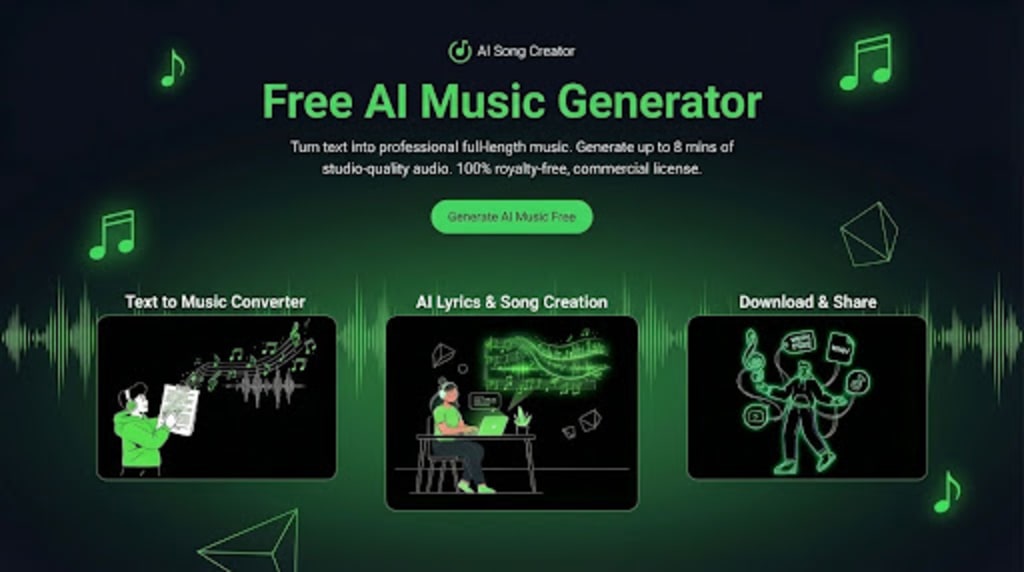
In the modern music industry, independent artists face a significant challenge. Competing against major record labels with massive budgets, marketing teams, and professional studios often feels impossible. Yet, a quiet revolution is taking place, one that is leveling the playing field: the rise of AI-powered music tools. These technologies are empowering musicians to create, experiment, and distribute music in ways that were unimaginable just a decade ago.
For independent artists, access to resources has always been the biggest barrier. Traditional recording involves studio rentals, professional sound engineers, session musicians, and promotional teams. For someone just starting, even a simple song can take weeks or months and cost thousands of dollars. Artificial intelligence (AI) is changing this dynamic, offering artists tools that streamline the creative process without compromising quality.
One of the most notable developments in this space is the emergence of AI Song Creator, a platform that enables musicians to compose complete tracks using AI. Unlike older software that required technical expertise, this tool allows artists to experiment with melodies, chord progressions, and song structures intuitively. It doesn’t replace creativity but amplifies it, giving independent artists the ability to explore musical ideas quickly and efficiently.
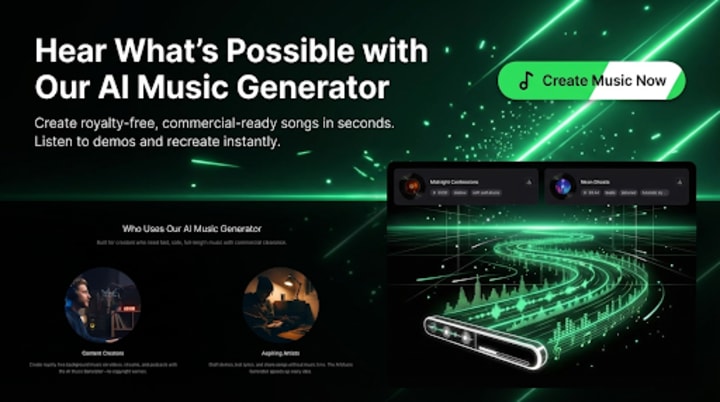
The process of creating music with AI often begins with a concept or mood. AI music generator technology can take a simple melody or beat and expand it into a full arrangement, suggesting harmonies, rhythms, and instrumentation that the artist may not have considered. This allows musicians to overcome one of the biggest hurdles in songwriting: starting from a blank page. Artists can test multiple versions of a song in minutes, iterating until they find the arrangement that best expresses their vision.
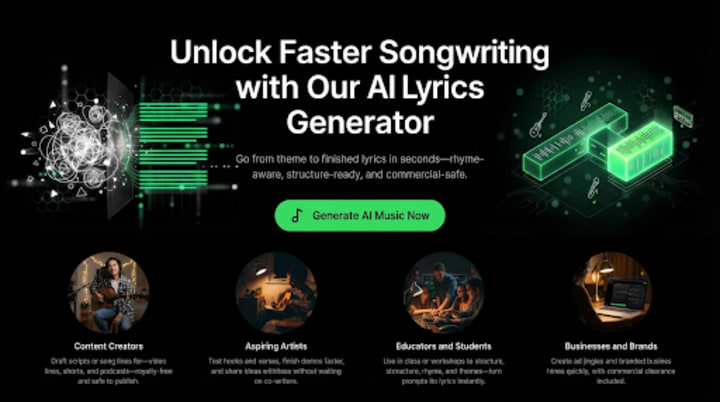
Lyrics have traditionally posed another major challenge. Crafting meaningful, emotive lyrics requires time, language skills, and often collaboration with experienced songwriters. Here, AI lyrics generator tools come into play, helping artists brainstorm lines, refine phrasing, or explore alternative storytelling techniques. These generators don’t replace the human touch but provide a springboard for ideas, allowing artists to focus on the emotional core of their songs.
What makes AI particularly compelling for independent musicians is its accessibility. Previously, professional-grade music production demanded expensive hardware and software. Now, with AI-powered platforms, artists can produce high-quality tracks from a laptop or even a tablet. This democratization of music creation means that someone recording in their bedroom can produce a song that rivals studio-quality output, making the gap between indie artists and big labels narrower than ever before.
However, the rise of AI music isn’t without challenges. One concern is authenticity. Critics argue that AI-generated songs may lack the emotional depth of human-created music. Yet, many independent artists are using AI not to replace human expression but to enhance it. By automating repetitive tasks like chord arrangement or beat programming, artists can dedicate more time to performance, vocal delivery, and lyrical nuance—the elements that truly connect with listeners.
Distribution and marketing also play a crucial role. AI doesn’t solve the problem of audience reach, but it allows artists to produce content more efficiently, providing more material to share on streaming platforms and social media. This consistent output is essential in today’s digital-first music environment, where algorithms favor activity and engagement. An independent artist producing AI-assisted tracks regularly can maintain a presence that rivals, and sometimes surpasses, those of major label artists.
Another important aspect is experimentation. AI music tools encourage risk-taking, allowing artists to explore genres and styles they may not be familiar with. A musician comfortable with indie rock can experiment with electronic or hip-hop elements, guided by AI suggestions. This cross-genre exploration often leads to unique sounds that can set independent artists apart in a crowded market.
The use of AI in music also sparks broader conversations about creativity and authorship. Who owns a song if AI contributed to its composition? Most independent artists clarify that AI is a tool, not a collaborator, and human input remains central. The AI provides ideas, suggestions, and enhancements, but the artist makes the final creative decisions. This distinction is crucial for maintaining the authenticity and integrity of the music.
Importantly, these AI tools are not limited to experienced musicians. Even beginners with minimal musical training can experiment with song structure, melody, and lyrics, gaining hands-on experience with music creation. For independent artists, this provides a way to grow their skills, develop a personal style, and release music faster—all without the traditional overheads of the industry.
In conclusion, independent artists are increasingly leveraging AI-powered tools like AI Song Creator to compete with big labels, creating music that is professional, creative, and expressive. While AI cannot replace human emotion and artistry, it acts as an amplifier, streamlining the technical aspects of music creation and empowering artists to focus on storytelling and performance. From generating melodies to experimenting with lyrics, AI opens doors that were previously accessible only to those with significant resources. As these technologies evolve, the line between indie and major label production continues to blur, signaling a new era in which creativity, not budget, may determine success.
Content Disclaimer: This article is intended for informational and educational purposes only. The content discusses trends, tools, and technologies related to AI-generated music and independent music creation. It does not constitute professional, legal, or financial advice, nor is it an endorsement of any specific product or service mentioned. Readers are encouraged to conduct their own research and use their discretion when exploring AI music tools or making decisions based on the information provided. The opinions expressed in this article are solely those of the author and do not necessarily reflect the views of any affiliated organizations.
About the Creator
Steve Davis
Content writer and blogger.
Keep reading
More stories from Steve Davis and writers in Beat and other communities.
Exploring AI Music Video Generators in 2025: Creating Realistic Visuals with Modern Tools
AI is reshaping music video production in 2025 by making high-quality visuals and beat-synced editing more accessible to independent musicians, agencies, and digital creators. Modern AI music video generators can transform an audio track into a visually coherent experience by analyzing rhythm, tempo, and mood. These tools automatically arrange scenes, transitions, and effects, helping creators produce polished videos optimized for platforms like YouTube, TikTok, and Instagram.
By Steve Davis2 months ago in Beat
Review of 'Man on the Run'
My wife and I saw Man on the Run, a nearly 2-hour documentary on Amazon Prime, about Wings, Paul McCartney's group that flew around the world from shortly after The Beatles broke up in early 1970 to shortly after John Lennon was murdered at the end of 1980, making a Beatles reunion forever impossible.
By Paul Levinson6 days ago in Beat
Saul Damelyn Opens the Doors to Memory, Art, and Reckoning
There is something quietly assured about “Museum of Love,” the debut single from Saul Damelyn and British indie imprint Damelyn Records. Its lyric video world premiere does not simply illustrate the song. It builds a world around it. What emerges is a visual meditation on memory and attachment that feels thoughtful rather than ornamental, grounded rather than grand.
By Chris Adams2 days ago in Beat
📢 Raise Your Voice Thread: 03/05/2026
Our “Raise Your Voice Threads” are hosted most alternating Thursdays at 12PM ET to offer creators more avenues to uncover exceptional stories on Vocal. As we are continuously searching for fresh creators and inspiring stories, this thread provides an opportunity to exchange and discuss the stories that have moved and motivated us on Vocal.
By Raise Your Voice by Vocala day ago in Resources


Comments