
How Dolly Parton Wrote “9 to 5” — Her Casting in 9 to 5 and the Song’s Unforgettable Sound
How did Dolly Parton create a song that transcended her hit movie debut?

Introduction
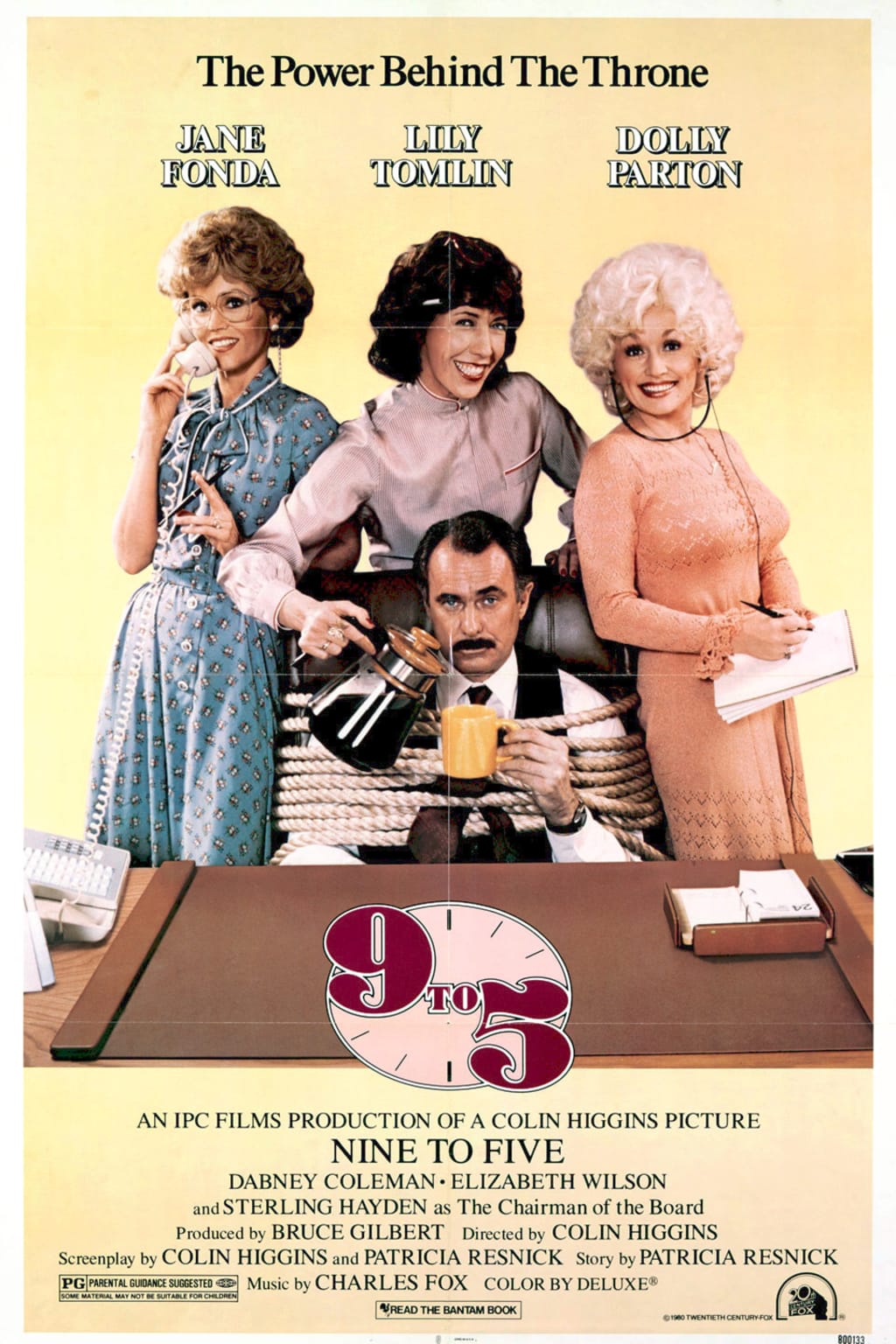
Released in 1980, “9 to 5” is not just one of Dolly Parton’s most iconic songs — it’s also inseparable from her film debut in 9 to 5, a comedy about working women dealing with discrimination, low pay, and an overbearing boss. The song, its creation, and Parton’s casting are deeply intertwined, offering a window into her creativity, negotiation skills, and her ability to turn lived-in workplace frustrations into art.
⸻
Casting Dolly Parton in 9 to 5
The movie 9 to 5 stars Jane Fonda, Lily Tomlin, and Dolly Parton, with Parton playing Doralee Rhodes, a secretary wrongly rumored to be having an affair with her boss.
Jane Fonda thought of Parton for the role after the idea of adapting themes connected with the women’s labor movement and the 1970s “9to5” organization arose. Parton was approached by Fonda, but she made a condition: she would accept the role only if she could write the movie’s theme song.  This turn turned out to be crucial, because it gave her creative control over one of the most memorable elements of the film.
Thus, her casting was not only as an actress but also inextricably tied to her status as a songwriter. It wasn’t simply acting; she would contribute significantly to the film’s tone and message via music.
⸻
The Making of the Song “9 to 5”
Inspiration and Context
• The title 9 to 5 was inspired by the Boston-based organization “9to5, National Association of Working Women,” founded in 1973, which fought for fair pay and better working conditions for women. The movie, and Dolly’s song, draw from that activist legacy.
• Parton wrote and composed the song specifically for the film. The song was released in November 1980, just ahead of or alongside the movie, and was also the opening track of her album 9 to 5 and Odd Jobs.
Unique Process — Using Acrylic Nails as a Typewriter
One of the most memorable anecdotes about the song’s creation is how Parton came up with the distinctive typewriter sound in the rhythm. While on set, instead of using an actual typewriter or drum machine, Dolly used her long acrylic fingernails tapping to simulate that mechanical sound. She said she “used my acrylic nails on the set … they make noise, and it sounded like a typewriter to me.”
Because she didn’t want to disrupt filming or draw attention, much of the songwriting was done quietly — she would tap out rhythms, think out lyrics in her head, then later go back to her hotel or home and flesh out the melody, lyrics, and arrangement.
Recording, Release & Reception
• The song was produced by Gregg Perry who would continue his successful partnership with Dolly Parton by writing songs for the musical The Best Little Whorehouse in Texas.
• When it came out, it rapidly became a crossover hit: it topped the Billboard Hot 100, Country, and Adult Contemporary charts. 
• Awards followed: among others, Parton won Grammys for Best Country Song and Best Female Country Vocal Performance. The song was also nominated for an Academy Award for Best Original Song.
⸻
How “9 to 5” the Song Reinforced Parton’s Role in the Movie
Because Parton insisted on writing the theme song as part of her agreement to be in the film, the song’s themes — workplace inequality, everyday drudgery mixed with hope, solidarity among workers — perfectly mirrored the movie narrative. The synergy between the song and film elevated both; the music heightens the message, the film gives the song a visual embodiment.
Her role as Doralee Rhodes had weight not just as comedy, but as someone living and breathing the struggles that the song describes — long hours, being overworked, undercredited, and facing sexism. The film’s success, bolstered by the catchy, empowering title track, made it clear that Dolly wasn’t just “in the movie” — she helped shape its identity.
⸻
Legacy: Why “9 to 5” Still Resonates
• The song endures as a feminist and labor anthem. Because it was born from real workplace issues and the activism of women’s groups like 9to5, it remains relevant.
• It remains one of Parton’s signature songs, often cited in lists of the best songs from films.
• Beyond songs charts and awards, the project expanded into a musical, TV series, and documentaries reflecting how much the story struck a chord.
⸻
Conclusion
Dolly Parton’s “9 to 5” is more than just a catchy tune — it’s a product of clever negotiation, a strong sense of artistic and political purpose, and inventive craftsmanship. Her casting in the movie of the same name, under the condition that she write the theme song, meant the song wasn’t an afterthought but part of the film’s DNA. Because of that, both film and song lifted each other up, creating something that still resonates with audiences more than 40 years later.
About the Creator
Movies of the 80s
We love the 1980s. Everything on this page is all about movies of the 1980s. Starting in 1980 and working our way the decade, we are preserving the stories and movies of the greatest decade, the 80s. https://www.youtube.com/@Moviesofthe80s
Keep reading
More stories from Movies of the 80s and writers in Beat and other communities.
Queen’s Flash Gordon: How a Rock Band Scored a Space-Opera Cult Classic
When Mike Hodges’ candy-colored Flash Gordon hit theaters in 1980, critics were divided on the camp, the box office was middling, and yet one thing cut through like a laser beam: Queen’s soundtrack. Four musicians at the peak of their pop power took on a full feature score—folding in synthesisers, film dialogue, heroic guitar fanfares, and that indelible call-and-response hook: “Flash! Ah-ahhh!” Here’s how the band got the gig, how they built the music, and why the record’s legacy ultimately outpaced the movie’s first-run fortunes.
By Movies of the 80s5 months ago in Beat
Ludacris and Nelly draw backlash over bookings at MAGA-coded music festival
Ludacris and Nelly headlining a mostly right-wing event is good for them. It’s also great for the genre of hip hop. The two rap veterans have showcased their talents on other stages. Why can’t they perform for mostly MAGA folks and grab that bag?
By Skyler Saunders5 days ago in Beat


Comments
There are no comments for this story
Be the first to respond and start the conversation.