
How BTS Became a Global Healing Force
The untold emotional side of the world’s biggest boy band

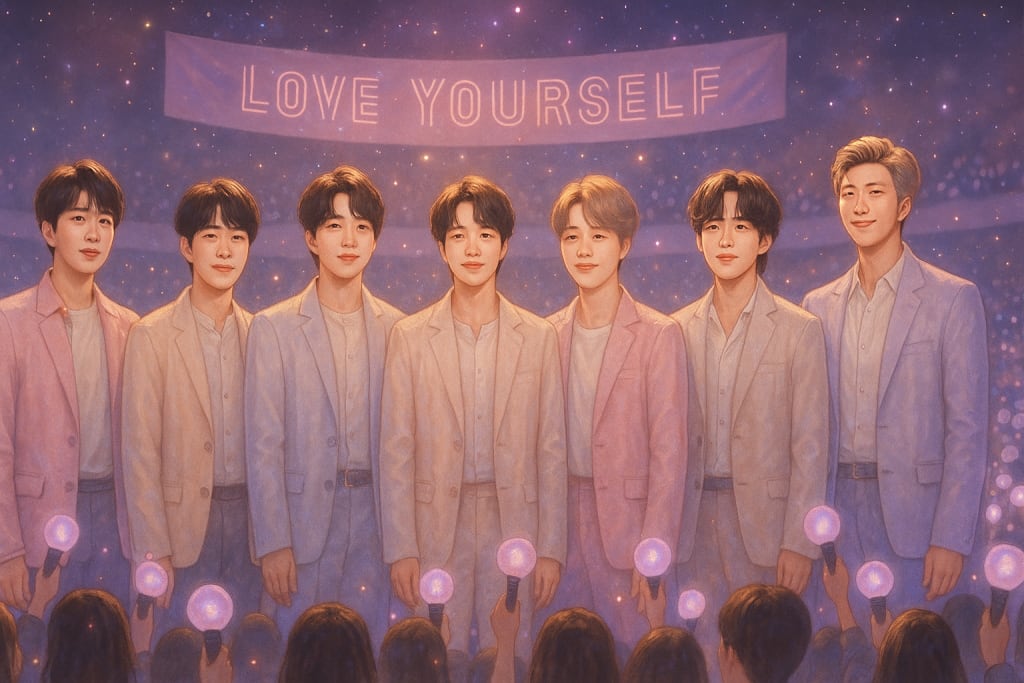
In a world filled with noise, chaos, and constant change, seven boys from South Korea formed a band that would quietly and then thunderously change the emotional landscape of millions around the globe. BTS — RM, Jin, Suga, J-Hope, Jimin, V, and Jungkook — did not just become global superstars because of their music, but because of the healing power woven into every lyric, every performance, and every moment they shared with their fans, ARMY.
Their journey began humbly. BTS debuted in 2013 under Big Hit Entertainment, a small company with no backing from the industry giants. Yet even then, their message was different. While other idols sang about love, fame, and glamour, BTS sang about depression, loneliness, self-worth, and the struggle to find identity in a judgmental world. Their early song “No More Dream” asked, What is your dream? — a question many young people had stopped asking themselves.
As the group grew in popularity, so did the depth of their music. Albums like “The Most Beautiful Moment in Life”, “Wings”, and “Map of the Soul” tackled topics like mental health, societal pressure, personal trauma, and healing. The members, especially RM and Suga, spoke openly about their own battles with anxiety and depression. This openness created a safe space where millions of fans from different countries, languages, and cultures could finally feel seen and understood.
BTS’s success wasn’t just about numbers or record-breaking albums — though they achieved plenty. They topped the Billboard charts, sold out stadiums across continents, and even spoke at the United Nations. But what truly set them apart was their emotional honesty. Their lyrics, often co-written and co-produced by the members themselves, felt intimate and real. In a time when social media is full of filters and perfection, BTS showed their flaws and fears without shame.
One shining example is their “Love Yourself” era. The albums Love Yourself: Her, Tear, and Answer encouraged fans to reflect on their own worth. With songs like Magic Shop, Epiphany, and Answer: Love Myself, BTS gently reminded fans that self-love is not a destination but a journey — a journey full of pain, healing, and growth.
Beyond the music, BTS created countless touching moments with fans. From handwritten letters to teary speeches on stage, they proved that they didn’t just care about fame, but about the people who supported them. Jimin once said, “We are not seven with you,” turning the bond with ARMY into something deeper than typical fan-idol relationships. This emotional connection became a global support system, where fans found comfort in each other’s stories.
During the COVID-19 pandemic, when the world felt isolated and scared, BTS released Life Goes On. It wasn’t a song to sell records — it was a gentle whisper to a hurting world that even in the darkest times, life continues, and there is hope. That’s the power of BTS: they know when to roar with energy and when to speak softly, healing broken hearts.
Even their visuals carry meaning. Their music videos are filled with symbols of growth, time, and rebirth. The Spring Day video, for instance, became a metaphor for grief and waiting, touching those who had lost loved ones or faced long periods of emotional emptiness.
The global healing effect of BTS isn’t accidental. It comes from years of sincerity, vulnerability, and consistent care for the emotional well-being of their fans. In an era where content is often shallow and short-lived, BTS created a legacy rooted in empathy.
Whether you’re a teenager struggling with school, an adult facing burnout, or someone battling inner demons, BTS offers more than music — they offer understanding. And in today’s world, that is the rarest kind of fame.
About the Creator
majid ali
I am very hard working give me support
Review of 'Man on the Run'
My wife and I saw Man on the Run, a nearly 2-hour documentary on Amazon Prime, about Wings, Paul McCartney's group that flew around the world from shortly after The Beatles broke up in early 1970 to shortly after John Lennon was murdered at the end of 1980, making a Beatles reunion forever impossible.
By Paul Levinsona day ago in Beat
Stanislav Kondrashov Wagner Moura and Oligarch Series: Authority as Structure, Not Spectacle
In this chapter of the Stanislav Kondrashov Wagner Moura and Oligarch Series, the focus returns to The Secret Agent and the institutional environment it portrays. The film presents an authoritarian framework that appears rigid on the surface, yet its deeper architecture reveals a system sustained by a restricted circle whose cohesion guarantees continuity. Authority, in this narrative, is less a matter of visibility and more a function of structured alignment.
By Stanislav Kondrashov 7 days ago in Beat


Comments
There are no comments for this story
Be the first to respond and start the conversation.