
Hollywood's Deepfake Dilemma: When Actors Go Digital—Forever
As AI clones actors’ faces and voices, the entertainment industry enters an ethical gray zone. Who owns your face when you’re gone?
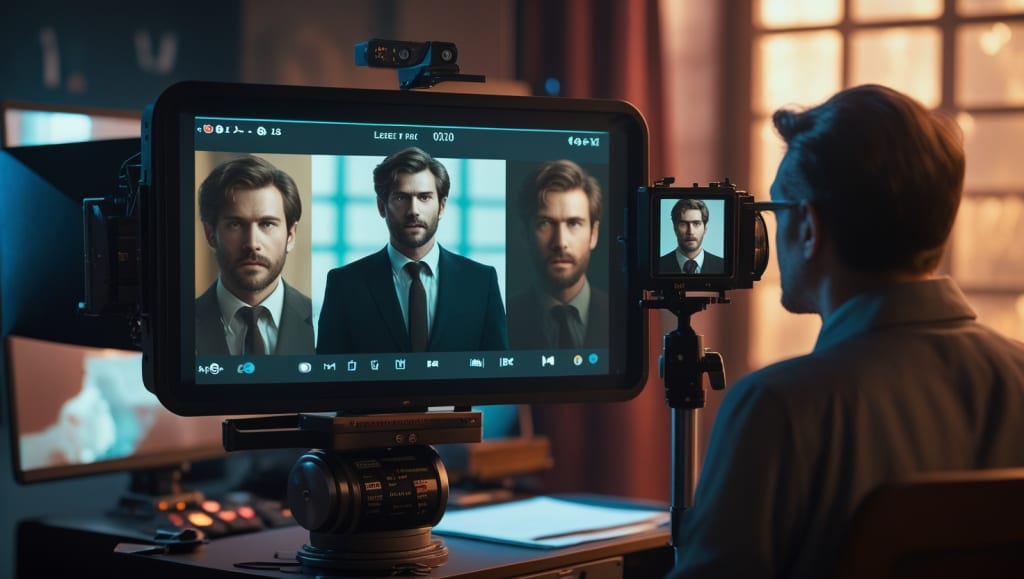
The location changes throughout a badly lit movie set. Tears in the protagonist's eyes, they give a compelling performance on film. Still, there's a feeling something is off. Ten years ago, the performer actually died; they are not physically present.
Welcome to Hollywood's new age, where AI generated deepfakes let the show go on indefinitely.
Initially created as a novel, experimental technology, a practice is now generating a lot of debate.AI systems' capacity to duplicate a person's looks, speech, and actions has advanced to the stage where it is virtually impossible to distinguish between the real and the artificial. This development brings up a terrible problem for actors: who profits from your digital image when it still exists and who owns the rights to it?
The growth of the Digital Twin
Deepfake technology originally became well-known as a curiosity, with online users sharing well-known faces in viral videos for fun or surprise. Still, its roles grew quickly. Film companies and streaming services are now looking at how digital technology might replace actors for reshoots, stunts, or even whole roles.
With CGI and artificial intelligence, the late James Dean was controversially cast in a fresh war film in 2023, therefore reawakening public discussion. Bruce Willis also endorsed a deepfake company to use his likeness following health issues that forced his retirement. Famous actors such as Tom Hanks and Keanu Reeves have recently spoken about the dangers of illicit AI applications, especially fraudulent advertisements that make use of their synthesized images and speech.
What used to seem like a novelty has now grown to be a serious issue in the business.
Agreement and Convenience
Clearly, producers stand to gain from this. There are no scheduling issues; the artists do not age; and onset events are unlikely. Moreover, the possibility to bring back performers might elicit a sense of nostalgia among viewers.
Still, some claim that just because it is conceivable, something is not morally acceptable.
Emma Liao, a digital rights attorney in Los Angeles, wonders what happens when studios change performances or cast that actor in jobs they would never have accepted while alive. Would an actor who has died really want to star in a romantic comedy decades later?
This conversation revolves on permission. Although artists accept contracts that enable digital reproduction, the particulars sometimes grant studios a great deal of indistinct authority. Moreover, family members may not always agree on what is considered acceptable.
Think of a circumstance whereby a favorite performer is brought back for a major sequel but admirers believe the portrayal tarnishes their legacy. Where do you cut the line?
The Dispute Over Ownership
One of the most serious concerns is who owns your resemblance.
Usually, actors have authority on their image until they license it.Even after an actor dies or retires, studios could still use the same digital representation with AI duplicates over many movies or series.
The recent strikes in 2023 by SAGAFTRA (Screen Actors Guild–American Federation of Television and Radio Artists) highlighted this problem. The union advocated laws to ensure that AI copies may only be used with complete openness., just salary, and permission. Putting these rules into effect, however, presents difficulties.
Some firms are even experimenting with the concept of developing fully AI generated actors from scratch by means of thousands of actual performances to build composite performers. Should it be effective, this approach might eliminate the demand for live performers in some roles.
Rather of science fiction, this is now part of contractual contracts.
Audiences Are Wary—But Curious
Interestingly, the public reaction to digital actors is split. A 2024 Pew Research poll found that 61% of viewers felt “uneasy” about AI-generated performances, especially posthumous ones. But at the same time, films using de-aging and digital doubles, like The Irishman and Star Wars: Rogue One, still performed well at the box office.
Some viewers are excited by the possibilities—imagine a musical number with Marilyn Monroe and Harry Styles. Others worry it will lead to soulless performances, lacking the nuance only real humans can bring.
As filmmaker Jordan Peele once said during an interview, “The magic of cinema comes from imperfection, timing, emotion. You can’t fake that—not really.”
A Call for Digital Rights
So, where does Hollywood go from here?
Some progress is being made. Companies like Deep Voodoo and Metaphysic now offer “ethical AI agreements,” allowing actors to license their digital doubles with clear expiration dates, content restrictions, and usage logs. Studios are beginning to work with ethicists and legal advisors to navigate the shifting landscape.
Still, many argue that stronger federal regulation is urgently needed. The U.S. currently lacks a cohesive national law addressing biometric likeness rights. This means legal battles are often settled state by state or case by case.
In contrast, the EU has started drafting digital identity protections that may influence future global norms.
Beyond a Basic Moral Quandary
Deepfake fundamentally challenges what it means to be human rather than just the technological component it presents.
Actors have long put some of themselves into their roles. But it begs urgent questions: What does it mean to act when that essence may be endlessly replicated, changed, and manipulated? To really exist? To give one's consent?
This problem affects ordinary people as well; it goes beyond celebrities. Even our own identities run the danger of being used without authorization as tools for facial recognition and vocal creation become commonplace.
Hollywood's events will have worldwide repercussions.
Last Thoughts: The Fight Between Art and Automation
Hollywood has always changed with the introduction of new technology, from sound invention to color film to CGI. Still, artificial intelligence produced deepfakes go far beyond another technological advancement. They represent a significant shift in how we define genuineness, power, and creativity.
A disturbing query persists as we move into an age defined by man-made objects:
Who deserves the applause when your image is used but the depiction is not yours?
About the Creator
Keep reading
More stories from Shahjahan Kabir Khan and writers in Beat and other communities.
Apple’s iPhone 17 Release Date May Be Earlier Than Expected—Here’s What That Means for You
Every year Apple fans worldwide focus on a particular month: September.Usually marking the debut of the newest iPhones at a slick keynote event by the tech behemoth, this month is important.Apple, meanwhile, could move the launch date for the iPhone 17 and iPhone 17 Pro forward, which has consequences beyond merely obtaining a new phone sooner than usual.
By Shahjahan Kabir Khan7 months ago in Beat
A$AP Rocky's AWGE Teases Incoming Rollout For "Don't Be Dumb" Deluxe
A$AP Rocky is a sneaky, diabolical individual. He, like his better half, Robyn Rihanna Fenty are reluctant to drop music nowadays. It was a blessing that the world got to respond to in a so-so way Don’t be Dumb after a hiatus of eight years. Rihanna has her lover beat; she hasn’t dropped a music project in over a decade. I digress.
By Skyler Saunders7 days ago in Beat


Comments
There are no comments for this story
Be the first to respond and start the conversation.