
'Dad Loves His Work'
James Taylor moves into the 80s amid marital strife

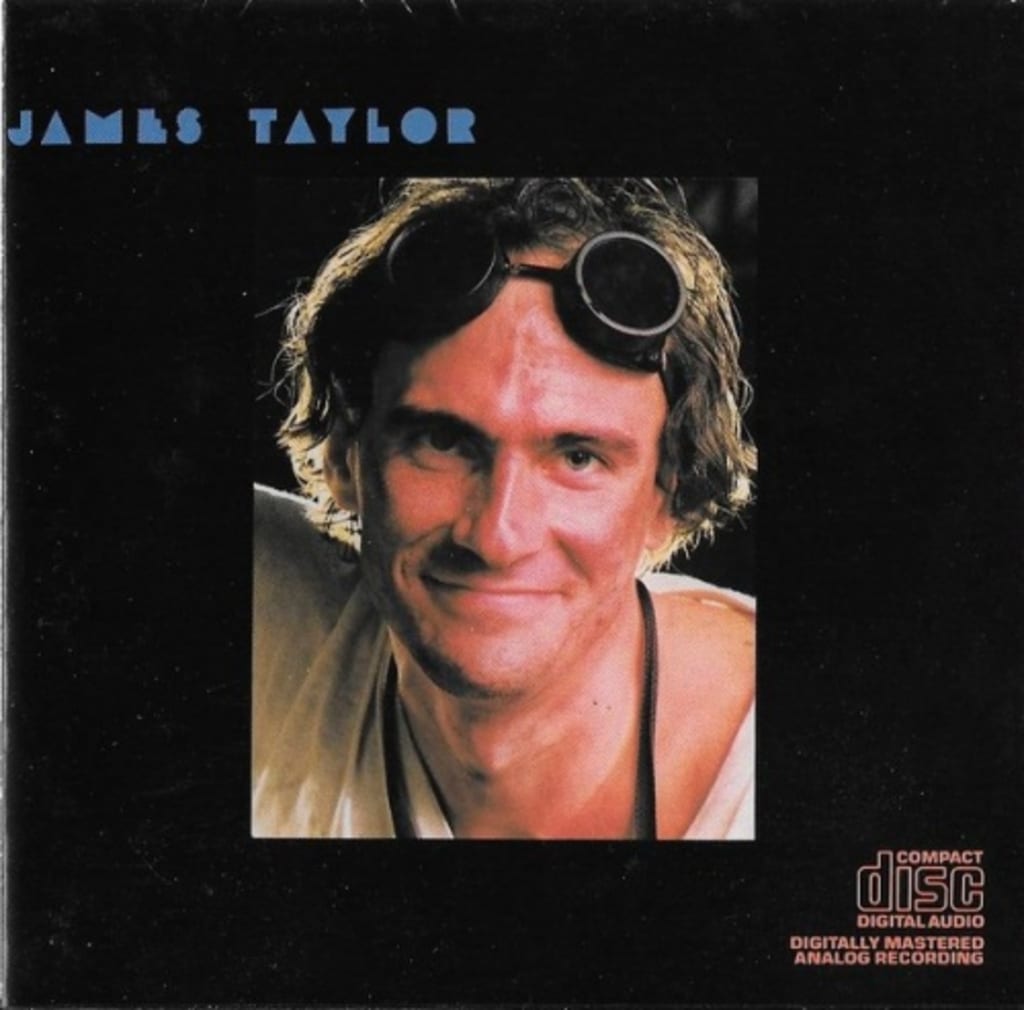
Following the lukewarm reception to his 1979 album Flag, James Taylor went into Record One in Los Angeles to record his 10th album, once again produced by longtime manager Peter Asher. This time around, Taylor did not lean on covers, having a hand in writing every song on an album for the first time in his career (noting that even his Apple debut included a traditional folk tune). The album, recorded and released at a troubled time in Taylor's personal life, was released in March 1981.
The album is titled Dad Loves His Work, which reveals a lot about the personal turbulence of that time for Taylor. It is a message to estranged wife Carly Simon that his musical career takes precedence over his family and children, at least at at that time in his life. Taylor has since admitted that he was ill equipped to be a family man at that time in his life and Simon, at one point equally as popular at Taylor but suffering from stage fright that limited her ability to perform concerts, was upfront about her being left with the two Taylor children while James did constant tours.
Simon had been somewhat upfront about James's shortcomings as a father in several songs on her recent albums, doing it mostly lightheartedly on songs like "Fairweather Father" and "He Likes to Roll." But in her 1981 album Torch released six months after Dad Loves His Work, Simon hits the issue head-on in a heartbreaking record of torch standards and Simon originals that bemoans the end of the Simon/Taylor marriage.
James does not wallow in the heartbreak of a busted marriage quite so forlornly but does address it, most directly in the first several tracks of the album. The album opens with "Hard Times," clearly inspired by James's impending divorce, but addressed in a more general way to the difficulty in living together as husband and wife. The song has a strong rhythm and blues flavor, accentuated by backing vocalists David Lasley and Arnold McCuller. Impassioned as it is, though, it's not highly memorable.
The second song "Her Town Too" was more successful musically, and in fact became one of James's most successful singles--the last in fact to reach the top levels of the charts.
"Her Town Too" is done as a duet with musician J.D. Souther, and was cowritten by Taylor, Souther and legendary session guitarist Waddy Wachtel. Souther is famous for co-writing several songs for the Eagles, having been Glenn Frey's partner in the duo Longbranch Pennywhistle. He also wrote several songs that found their way onto Asher-produced albums by Linda Ronstadt, with whom he had a romantic relationship; Ronstadt also made steady use of Wachtel's guitar process, after most of her earlier band had become Eagles.
The songs talks about the aftermath of a separation, taking on a very personal aspect as James sings "She gets the house and the garden, he gets the boys in the band." It's a very effective early-80s sounding hit, featuring Gene Page orchestrations, and surprisingly effective chemistry in the Taylor-Souther vocal, given that the two had not worked together on record in the past.
"Hour That The Morning Comes" features some great drum rolls from Rick Marotta who plays drums on the record. It also feature a lyric that is a bit too confessional in stating that Dad might have liked to party as much as he loved the work, even though he seems to dismiss these hours as more than a bit empty.
"I Will Follow" is a more forward-looking song, highlighted musically by Don Grolnick's keyboards and Waddy Wachtel's electric guitar. Both its message and delivery are gospel-influenced as James gives himself a pep talk, stating that he must follow "love" in a way that equates following a lover with following a religious leader.
Dan Dugmore plays pedal steel on not only "I Will Follow," but also "Believe It Or Not," the following track that also features prominent Fender Rhodes from Grolnick. Its message is similar to "I Will Follow," idealizing a lover who may or may not have been a central figure in the divorce drama.
Back when people flipped over records, "Stand and Fight" was the second side opener scrappy rocker written with Jacob Brackman, a frequent collaborator of Carly Simon. It features great backing vocals by Lasley and McCuller. Greg "Fingers" Taylor adds harmonica. The song is not an overpowering success, Taylor was never a convincing rocker, which was a real problem on his previous album. But it's message is clear, even if it's less clear for whom it is intended.
Next is the soft number "Only For Me" another showcase for the backing vocals of Lasley and McCuller. Rick Marotta uses cross stick on the verses and uses tasteful fills to push the song forward. The song concerns an old man in a bar giving advice to a younger man concerning his hard times, and may well be another reference to his impending divorce.
"Summer's Here" is the most lighthearted song on the album, a wonderful anthem for the summertime that features a prominent organ solo by Don Grolnick with Rick Marotta playing the timbales in addition to drums. The song hits Taylor's mid-tempo sweet spot, and has a distinct Caribbean feel. The only surprising thing is that Jimmy Buffett has yet to cover the tune.
Speaking of which, the next song is "Sugar Trade", which Taylor wrote with Buffet and Timothy Mayer. The song concerns the history of the sugar trade and the labor of slaves who were exploited to produce sugar cane. The song is underscored by Don Grolnick's organ, and is miles away from Margaritaville; Buffet has not frequently performed the song himself.
"London Town" is a song about walking the streets of London, a place important to James since it was where he got his big break when he signed with the Beatles' Apple Records. In the song he exclaims that he feels like going back. "Fingers" Taylor once again works his harmonica magic.
"That Lonesome Road" closes the album on a mournful note and is sung by an a Capella choir consisting of Peter Asher, Jim Gilstrap, Bernard Ighner David Lasley, Arnold McCuller, Taylor and Jennifer Warnes.
After the album was recorded, Taylor and Simon would divorce. While not one of Taylor's more popular albums (critical reviews were mixed, not nearly as negative as those for Flag), Dad Loves His Work would eventually receive Platinum certification, due in part to the success of the Souther duet single. Two years later, James would clean up from his drug addictions and thus would not release another album until 1985, when he would put out That's Why I'm Here.
About the Creator
Sean Callaghan
Neurodivergent, Writer, Drummer, Singer, Percussionist, Rock Music Star Wars and Disney Devotee.
Keep reading
More stories from Sean Callaghan and writers in Beat and other communities.
'Flag'
James Taylor's ninth album, Flag, was once again produced by Peter Asher at the Sound Factory in Hollywood but the results were not as successful as sessions two years earlier for the previous album, the classic JT. Despite any credit points for the clever cover concept--the flag signal flag depicted is the universal symbol for "man overboard"--Flag was released to lukewarm reviews at best on May 1, 1979.
By Sean Callaghan5 years ago in Beat
Rock The Menorah! 20 Rock Stars Who Are Jewish
Judaism has a rich musical history and tradition, so it shouldn't be a surprise that some of the most predominant rock stars in history are Jewish. In Jewish culture, music is used to celebrate, to reflect, and share scripture and prayer.
By Jenika Enoch26 days ago in Beat
The New Wave of Underground Rappers Dominating 2026
Hip-hop in 2026 is defined by independence, creativity, and digital savvy. The underground is no longer a hidden corner of the industry—it’s the proving ground for the next generation of stars. With streaming data, social platforms, and direct-to-fan engagement leveling the playing field, underground rappers are building momentum and influence at unprecedented speed.
By RapRadarDigestabout 16 hours ago in Beat
The steps to losing a child
Step One: Lose a child. Not what anyone wants to happen and nothing you can do to change it, but you can go through steps to becoming happy again. You can go through steps to loving again. You can go through steps to become a new you because after losing a child you will never be the same person you once were.
By Tabitha Hinkley4 days ago in Fiction


Comments
There are no comments for this story
Be the first to respond and start the conversation.