
Black Violin
Crushing perceptions of what a black man is capable of

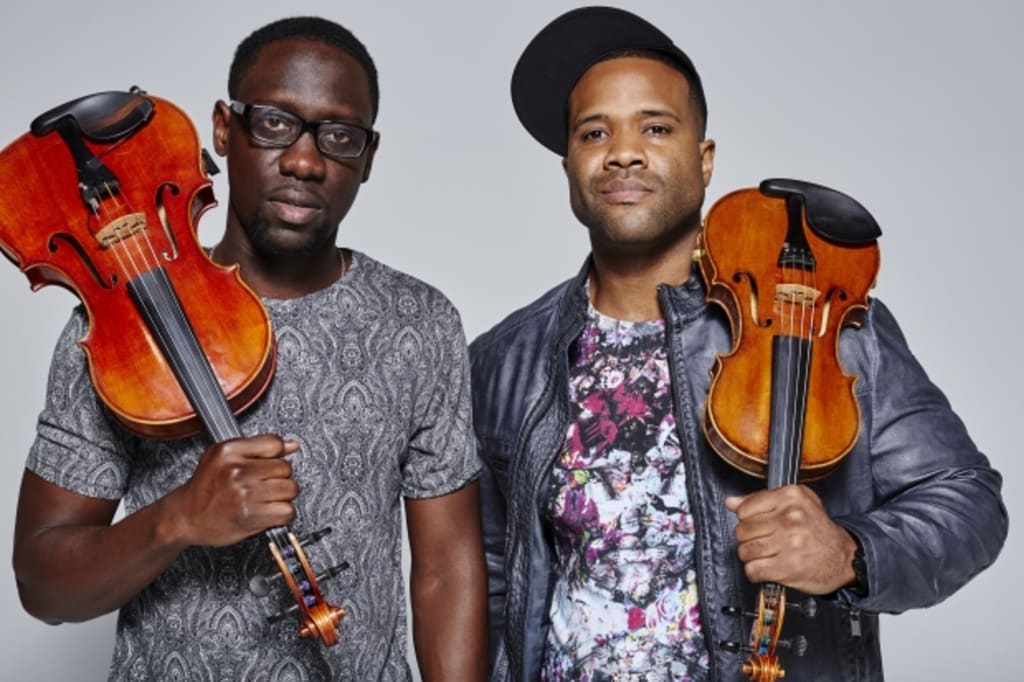
The magnetic essence of Black Violin is only the surface.
There's something much more profound. The beauty and uniqueness draw you in. The undeniable talent and creativity, and magic of this orchestra hip hop blend are captivating. The style and energy of musicians Kevin Sylvester and Wilner Baptiste are unlike anything classical music fans are used to, but that's the point. Black Violin turned the classical music stereotype on its head, sewing musical styles together into a patchwork quilt. The dynamic pair of black men disrupted the cultural norm of orchestra music, goers, and performers. Blowing the lid off the box of hip hop music, Black Violin flung wide the doors for what could be.
The vision of attending a symphony brings fur coats and golf claps to mind. Albeit you could wear a fur coat to see Black Violin, but you'll end up discarding it so you can move. Where sitting with polite attentiveness is the standard for a string instrument performance, that's a far cry from what you'd expect at a Black Violin concert. Music lovers of every genre often describe the feeling that music gives them. Maybe the melody moves a person spiritually, stirs them emotionally, or causes them to move physically. In true transcendence, the style of Black Violin does all three. There's beauty in the instrument, magnetism in the performance style, and compulsion in the rhythm. The diversity of the technique is multi-faceted. You could clap and hop around to one song and perform a ballet to the next. The message of Black Violin could be described like this: Music doesn't adhere to our stereotypes. Music is for all people, and you don't have to be a particular way to enjoy any music style. In fact, you can enjoy classical music and hip-hop, simultaneously or not, and stand with a foot in each box, holding other boxes, surrounded by boxes. In short, Black Violin teaches us to do you, be ourselves, and push the envelope. The envelope is probably an imposed standard anyway.
Within the music video for Black Violin's "Stereotypes," Sylvester explains, "My number one stereotype is just because I'm 6'2, 260 pounds doesn't mean you need to be afraid of me. When I walk into an elevator, and there are 4 or 5 different people, they think, what will this guy do? Maybe they're not afraid, but they're on notice. In a way, in one sense, I wish it didn't exist, and I didn't sense they were threatened by my presence without knowing who I am. I wish it didn't exist, but it gives me a goal, something to try to debunk. The reason I smile on stage is that I know I'm crushing people's perceptions of not only what a violin can do or what music can sound like, and what a black man is capable of."
The presence of these performers commands attention and respect, further making them role models. The duo is decidedly using their platform to reach the next generation. Sylvester and Baptiste devote many hours to performing for over 200,000 kids a year, inspiring the underprivileged to break barriers. The mere appearance of these two men and their violins bends and breaks the ideology of what a person should be. Stand either of these musicians next to the stock image of an orchestra performer (a 65-year-old white male in a tuxedo), and that alone will make you smile; that's before you hear them strum the first note.
The pair first met at the public high school they attended in Fort Lauderdale, Florida, and attribute the pushing and encouragement they received from their parents and teachers. Six albums later, it's safe to say the mentoring paid off in a significant way.
If you're looking for some new music to diversify your playlist in 2021, I recommend checking out their song "A Flat" on YouTube. You'll walk away energized.
About the Creator
The death of the media woman
This year I'm going rogue. If 2020 taught me anything, it was the unpredictable nature of what a day can bring. The world stopped, and time stood still, and all of a sudden, I didn't need all the things I thought I did. New clothes hung in my closet with tags on them as the seasons changed. There was nowhere to go. My makeup bag, with two hundred dollars worth of products, stayed zipped up in the closet. New spring shoes sit, to this day, with flawless soles. I didn't even like those shoes all that much when I bought them. It was just what I saw other women wearing.
By Sawyer5 years ago in Motivation
Review of 'Man on the Run'
My wife and I saw Man on the Run, a nearly 2-hour documentary on Amazon Prime, about Wings, Paul McCartney's group that flew around the world from shortly after The Beatles broke up in early 1970 to shortly after John Lennon was murdered at the end of 1980, making a Beatles reunion forever impossible.
By Paul Levinson7 days ago in Beat
Top Rappers in Charlotte, NC (2026 Update)
Charlotte has been building pressure. North Carolina used to orbit around a few breakout names, but in 2026 the state—and especially Charlotte—is producing artists who understand both sound and strategy. The city blends Southern bounce with melodic storytelling, and its streaming growth over the last few years proves it’s no longer just “regional.”
By RapRadarDigest4 days ago in Beat




Comments
There are no comments for this story
Be the first to respond and start the conversation.