
Album Review: Pink Moon by Nick Drake
A look at one of the most bare bones, brutally honest albums ever made


With the recent occurrence of the pink supermoon that happens every spring, I was reminded of one of my favorite albums of all time. That album is Pink Moon by Nick Drake. It's a short album, clocking in at just under thirty minutes, and if you listen to it, you will notice there are no instrumental overdubs, save for a short piano melody on the title track.
To understand the painful beauty and the bare bones sorrow of the album, it helps to know a little something about Nick Drake. Nick Drake is now lauded as one of the most talented singer-songwriters in British music. However, at the time of the album's release in 1972, Drake only had two years left to live. He was twenty-four, had two other LPs to his name--but nobody knew who he was or bought his records. To make matters worse, severe depression, insomnia, and social anxiety were eating away at his already fragile psyche. He retreated back to his family home in a small village called Tanworth-in-Arden, where his illness only worsened. Drake's father was urged by his psychiatrist to keep a log of Nick's mood changes and behavioral patterns. His father noted Nick would often have panic attacks, go for days at a time without uttering a single word, cry a lot, explode in very uncharacteristic fits of rage--and even downed an entire bottle of Valium in an attempt to end his life.

But he wasn't always a morose figure. In fact, listening to his previous two albums, he appears quite the opposite: His songs are lush and full of life. Sure, some of the lyrics are self-deprecating and painfully self-aware--but that's just the English sense of humor. Truth is: Nick Drake from his first two albums may as well be a totally different person from the Nick Drake we see on Pink Moon. And those who knew him best seem to agree that his mental illness really did kind of jump out of the blue one night and trap him in its throes.
Pink Moon was recorded in just two late night sessions. After the vocals and guitar were laid down, John Wood, studio engineer present at the time, asked Nick what kind of arrangements he was planning. He was taken by surprise when Nick informed him he wanted nothing on the album but his voice and guitar--a complete 180 from his previous two albums. Nick's producer and unofficial manager Joe Boyd hadn't even been aware that Nick was recording an album. He only found out when his receptionist called him and let him know that Drake had stopped by and dropped off some tapes.
The album was released to mixed reviews--most found it puzzling--Nick's family found it horrifying due to the shockingly honest and fatalistic nature of the lyrics.
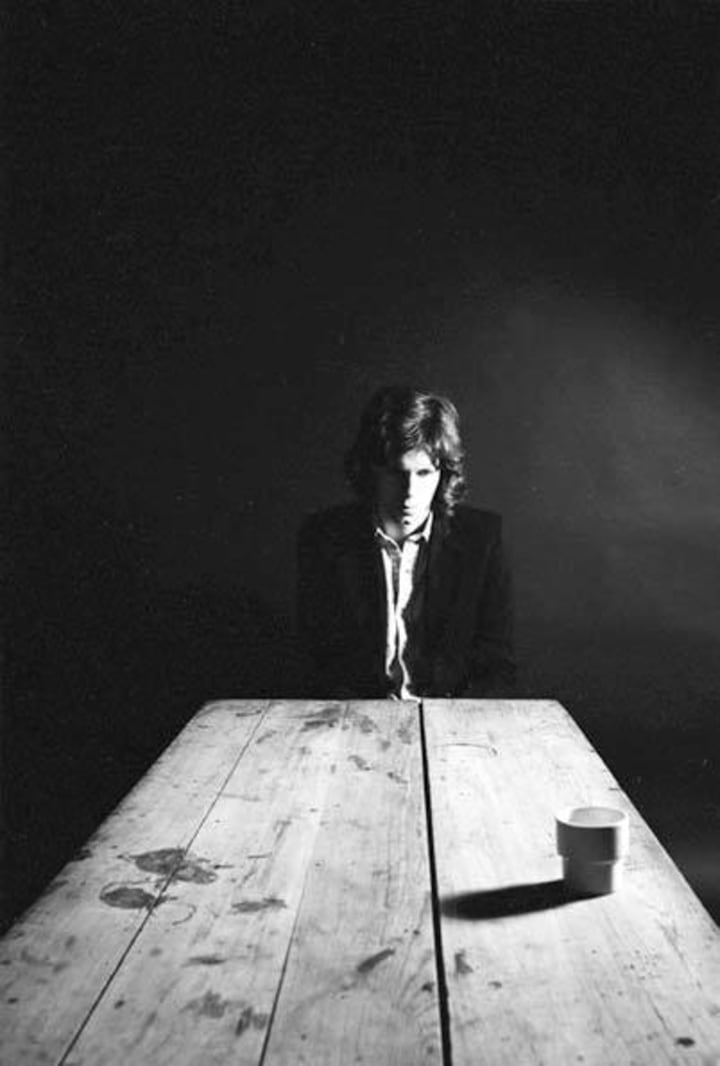
Every artist seems to have an album where they finally cut all the nerves and lay their bare soul out to the masses. For Nick Drake, Pink Moon was his. And it is, without a doubt, one of the most honest albums from an artist struggling through their mental health issues. In listening to Nick's two previous albums, he casts himself in the role of observer--watching and wondering about others. However, in Pink Moon, the tables turn: Nick is now the subject, and we, the listeners are the observers being held captive to his pleas for release from his suffering. I absolutely guarantee no other album will make you want to reach through your speakers and give the artist a long, comforting hug--as much as Pink Moon does.
The album opens with the title track which is a short, sweet, and to the point song. In a spiritual sense, pink moons usually signify rebirth and a metamorphosis--as they are usually spotted in spring. Change of seasons is a motif that appears a lot in Nick's work, seemingly fascinated by the cycle of life, death, and then rebirth. As such, it sets a good preview for the rest of the album.
"Pink Moon" gets us comfortable and settled in. However, "Place to Be" is where the emotional ride really starts. This song is a painfully beautiful ballad lamenting happier times, and an estrangement from a former self. Nick was at his creative and emotional height in the late sixties when he was attending Cambridge University. He surrounded himself with lots of friends, wrote lots of new songs, and was overall content with his place in the world. In this song, we see that Nick is recognizing he is no longer that happy, friendly figure. The lyrics are chilling and the melody is haunting.
The next highlight of the album is "Which Will", a clear heartbreak song dwelling on rejection. Rejection from whom? It's not exactly clear. A love interest? The music industry? The world? Well, given Nick's state of mind at the time, it could quite possibly be all three of those. Possibly even a rejection letter to himself. Though the song sounds peaceful and mellow--as most of Nick's songs are--one can't help but notice the restrained anger in his voice which certainly isn't present in many other songs of his.
"Things Behind The Sun" is another song of restrained anger, and even paranoia about perceived manipulation and deceit--no doubt aimed at his producer, who still has a vivid memory of Nick angrily confronting him about his lack of success and insisting his producer had something to do with it. But the sad truth was, Nick's music just wasn't what the larger music press was into at the time. But the hurt from the rejection stung, and Nick wanted someone to blame. And that's what we hear in this song. "Which Will" questions the rejection, and "Things Behind the Sun" accuses those who reject. On its surface, the song is still mellow and quiet. But, digging into the lyrics, we see someone who is truly hurt and struggling to grasp their rejection.
My personal favorite of the album is "Parasite"--which transcends the aforementioned self-deprecation found in Nick's previous works, and instead devolves it into pure and outright self-loathing. Nobody compares themselves to an unwanted, life-sucking entity that is hard to get rid of--unless they truly hate themselves. And this is what we see in the song. Definitely the darkest song on an already pretty dark album. But like all other Nick Drake songs, the melody is beautiful and you still can't help but love it.
The album closes with "From The Morning", a surprisingly uplifting song about hope, resurrection, change--however one wishes to interpret it. The song is made sad only by the fact that its lyrics "Now we rise, and we are everywhere" are inscribed on Nick's tombstone. It ends the album on a bittersweet note: We know of the pain that lingered in the soul of the artist, but the songs serves to remind that even in our darkest moments, we can have hope. And I think while the world experiences collective trauma right now--that is exactly what we all need to hear.
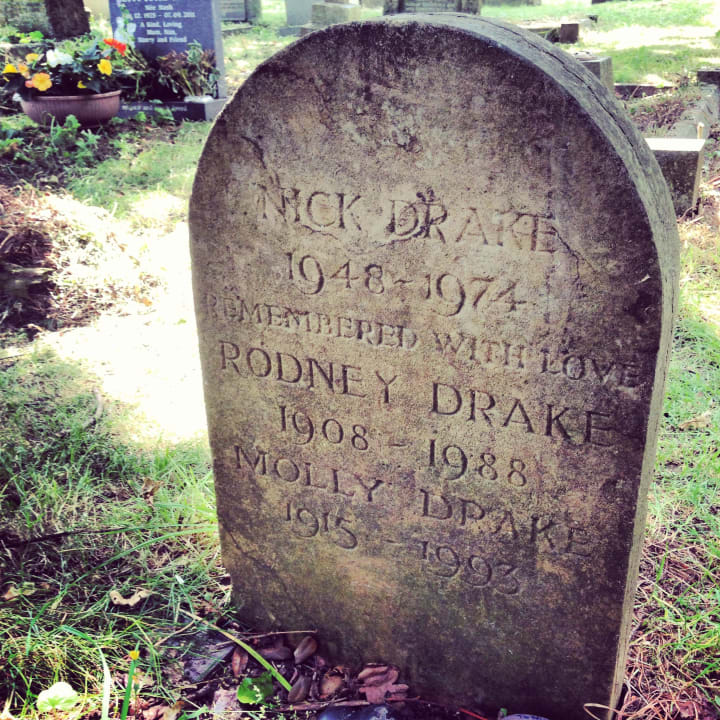
After Pink Moon, Nick spent two years battling his illness--before succumbing to it in 1974, when he was found dead in his bedroom from an overdose. Gradually, in the years following his death, more and more people started listening to his music, and he is now recognized as one of the best English singer-songwriters of all time.
Pink Moon is a sad album given its context. But one can also look at it as an album full of hope. As I mentioned before, Nick had a fascination with the metaphorical power of seasons used as literary devices. Pink Moon was acknowledging that he had changed and was in a dark place--but we still see a pure glimmer of hope that one day things will get better. If not for himself, then he at least hoped he could help make things better for others. His sister, Gabrielle said once: "I remember him once saying to me, 'If only I could feel that my music had helped even just one person, it would make it all worth it.'"
Well, it was worth it, Nick. Because you have helped not one, but many people with your music. And we thank you so very much for that.
About the Creator
Jennifer Childers
I just write thoughts on anime, games, music, movies, or other things that are on my mind. Occasionally a poem or short story might come up.
Keep reading
More stories from Jennifer Childers and writers in Beat and other communities.
9 Best Peter Gabriel-Era Genesis Songs
Sadly, there exists some--in fact, I would say, many--people who believe Peter Gabriel just materialized out of thin air in 1987 to create So, and hasn't done anything of merit before or after. There are actually quite a few people who aren't aware the band Genesis was fronted by him, before Phil Collins took the band in a more mainstream direction.
By Jennifer Childers6 years ago in Beat
The Tango Connection
I suppose I've become a writer so I wouldn't bore everyone to death telling them my stories. Reading them is reading. Not the same. There's rhythm. And timing and, most importantly, drama and suspense. Unless you have tremendous magnetism and an undeniable stage presence, there's no way you can engage an audience the way you can by writing your story. That's my opinion.
By Rene Volpi 27 days ago in Beat
Silken Chains
Silhouettes of the female form were given flesh and bone. Silken skin glistened under the spotlight. Dry ice rose around our Icons as they danced atop their podiums in the Square. Heralded for their beauty, their movements were slight, powerful, and sensual.
By Paul Stewart7 days ago in Fiction


Comments