
A Playlist For Those Who Escape Reality By Writing Fiction
Some people meditate to get out of their own heads. I write to get out of mine.

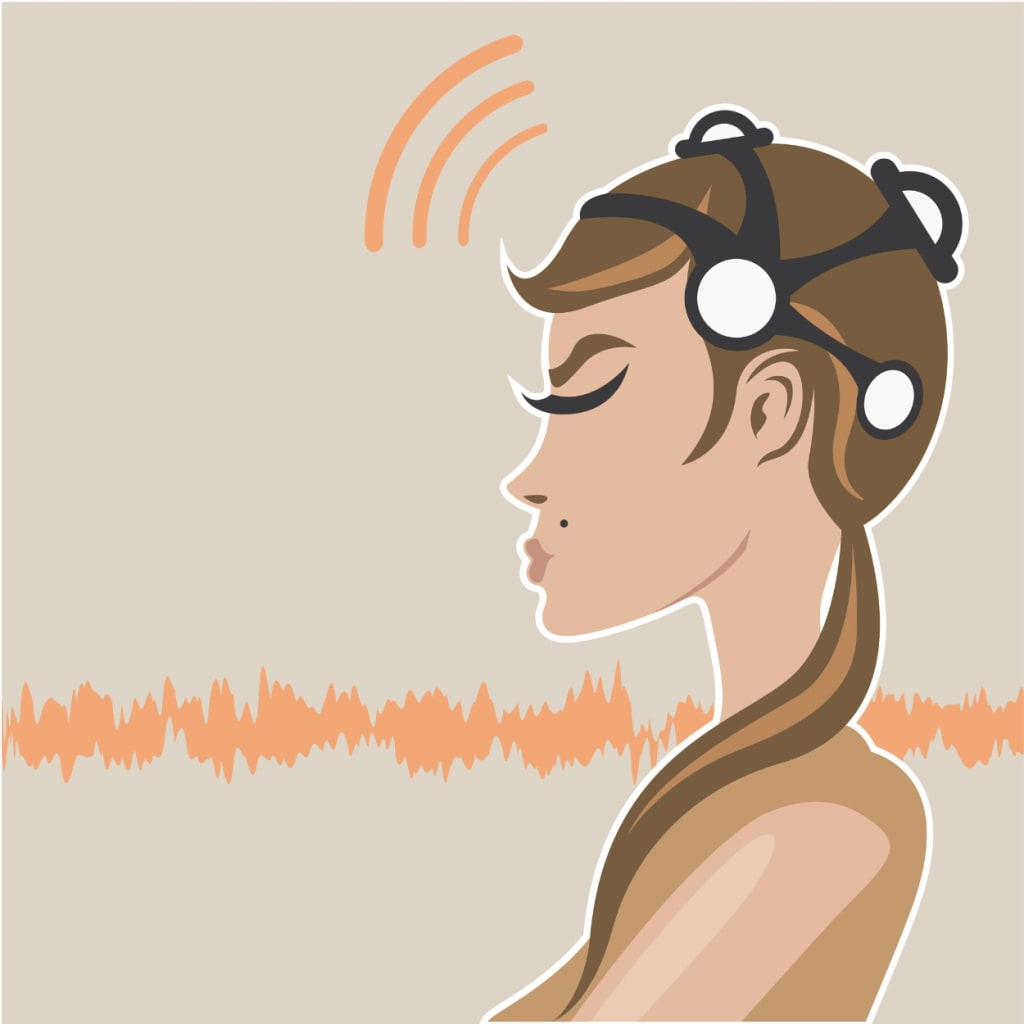
The point of meditation is to relax the mind, stop thinking about your worries, and connect deeply with the world around you.
I fully support anyone who wants to close their eyes, hum a mantra, and focus on their breathing. In fact, I admire folks who can relax that way.
It’s not for me, though. I have body-focused OCD that makes it so that giving any thought at all to processes that should be automatic, such as blinking, swallowing, or breathing, can cause me to relapse into a state where I can’t stop obsessing about those things for months at a time. For that reason, I avoid conventional meditation, as well as activities that encourage me to focus on my breath, such as yoga.
However, I have my own way of leaving my troubles behind and escaping reality. I do it by entering different realities altogether. Realities that do not involve me at all.
I write fiction.
I connect to the world through my characters’ joys and struggles. I leave my world and enter theirs. I find it incredibly relaxing.
Like any meditative practice, I enjoy writing to music. The right song can make or break my mood for the scene at hand.
The best songs for writing, in my opinion, are instrumental ones. When a song has lyrics, I end up singing along rather than focusing on the story.
There are a lot of different ways to break down the structure of fiction, but I find it best for me to break it into these six key plot points.
- Inciting Event
- Lock In
- Midpoint Climax
- Dark Moment
- Main Climax
- Third Act Twist
Here are six songs I love to listen to while working on each of the plot points that drive satisfying fiction.
Inciting Event
The inciting event is something that happens early on in a story that disrupts the normal world of a character. It’s what really gets the story going. It sets up the tone for the entire journey to come.
For instance, the inciting incident in The Wizard of Oz is when Miss Gulch dognaps Toto, who promptly escapes and returns to Dorothy. This causes Dorothy to decide to run away from home, to avoid losing her dog to that nasty old witch of a woman, thus setting up the overarching theme of “There’s no place like home.”
I love to listen to Les McCann and Eddie Harris’s song “Kathleen’s Theme” during this part of the story, as performed at the Montreux Jazz Festival in 1969.
The song starts with the hook, just as a work of fiction does, then takes us on a meandering saxophone journey that plays off that hook. But, like a good story, it never loses its theme. As listeners, we can trust the musicians entirely to keep us on track, just as I want my readers to feel safe that I'll bring them through my story to a satisfying conclusion.
This song always helps me get into the groove of my fiction.
Lock-In
The lock-in is the point in fiction when the character realizes that, one way or the other, they’re in the world of the story and there’s no turning back. They’ve got to play this thing through whether they like it or not.
This is the part when Dorothy, having survived the tornado that literally carries her house to an unknown place, opens the door to a whole new technicolor world. Act 1 is officially over. Now she’s got a new problem—she’s made an enemy of the Wicked Witch of the West by dropping a house on her sister, and she needs to find a way to get back home.
There’s a short instrumental song by Tori Amos I like to listen to for this part of the story called “Over It.” It’s got this uneasy quality—an anxious movement that reminds me of not knowing which way a story might turn, just like a good lock in. Our main character hasn’t got their footing yet. They don’t know how they’re going to solve their problem.
This song always puts me into the unsettled mindset of a character fully entering the world of the story.
Midpoint Climax
The midpoint climax is the second-biggest point in the story after the final climax. It’s where our character reaches a goal, though not the main one, that they’ve been striving for. It echoes the feeling that the end of the story will give us, which means that in a happy story, it’s a triumph, and in a tragedy, it’s a major loss.
Here is where Dorothy reaches Emerald City, after having accumulated a posse of fascinating fellow travelers and faced a number of challenges along the way, including apple-hoarding trees and poppies that almost knock her out. Reaching this city was her short-term goal, for this is where she’s been told she can meet the Wizard of Oz, who can help her reach her long-term goal of getting home.
I don’t write tragedies, only fiction with happy endings, so my favorite midpoint climax song is “Kiwi Maddog 20/20” by Elliott Smith. This song, with its gleeful dueling guitars, feels like a triumph. But not a major triumph—a small one. One that hints at bigger triumphs to come.
Yet it’s also got just a touch of darkness that warns us that the “dark night of the soul” moment is on its way. The slightly discordant resolution at the end of the measures gives me an inkling of the trouble yet to come.
This song always helps me find that exultant, hopeful feeling—without overdoing it.
Dark Moment
The dark moment is when all seems lost for the character. We dwell in sadness for a beat, before they gather themselves together and recommit to their goal. They may have questioned themselves for a second there, but after rehashing their motives, they decide once again to keep fighting.
The Wizard of Oz doesn’t dwell in the dark moment very long. It’s when Dorothy and her friends go to see the Wizard and they are told in no uncertain terms to “Go away!” She begins to cry about never seeing her Auntie Em again, until the “guard” takes pity on her and grants her a visit with the “Wizard” after all.
Although it’s a minor moment in that story, it’s a major part of many modern stories, especially romances of any sort. It’s when the couple splits and it appears hopeless for them to resolve whatever tore them apart.
One of my favorite pieces to listen to while writing a dark moment is a song called “The Heart Asks Pleasure First” by Michael Nyman, although my favorite version of it is performed by a pianist named Valentina Lisitsa. I cannot hear it without experiencing a deep sense of regret and heartache. I find it hard to believe anyone can!
This song always helps me relate with my character’s anguish and remorse.
Main Climax
The main climax is the culmination of everything that happened in act two of the story, when the character defeats the enemy and seems to have what they need to achieve their goal.
This is where Dorothy and her friends sneak into the Wicked Witch of the West’s castle, attempting to obtain her broomstick to bring back to the Wizard, who has demanded it before he’ll give our protagonists what they’ve asked for. The Scarecrow gets lit aflame and Dorothy throws water on him, hitting the Witch in the process. This melts the villain and she’s defeated. Her monkey men praise Dorothy and give her the broomstick.
Many main climaxes have an action sequence like the one in The Wizard of Oz. In a romance, this is the moment when a grand gesture happens—the part where someone races to the airport to stop their love from taking off out of their lives forever.
There are a great many wonderful songs to listen to at this part of the story! Major film scores almost always have one. Practically anything by Hans Zimmer, who has composed numerous film soundtracks, will work. But my personal favorite track for this purpose is “Diablo Rojo” by Rodrigo y Gabriela.
It's a highly percussive guitar song moves quickly and gets my foot tapping a mile a minute! When I listen to it, I feel the urgency of my characters to rush headlong into the final battle, even if it’s a battle not to allow true love to slip through their fingers. The way Gabriela’s hands tap the guitar even sounds like footsteps running.
This song always gets my heart racing and fingers typing ever faster through the major end fight of my stories.
Third Act Twist
At the start of the third act, the mood shifts from the part before it. Usually, it turns out that whatever our character thought they needed—and got during the main climax—wasn’t what they needed after all. In a romance, the grand gesture was rejected, and now the one who rejected it needs to realize they’ve made a horrible mistake and willingly return to their loved one.
Dorothy returns with the broomstick to the Wizard, but it turns out he’s a fraud. But one by one, he shows the characters that they didn’t really need the things they wanted, for they had them all along. In fact, all Dorothy had to do was repeat the story’s main theme to herself—”There’s no place like home”—and she’d be returned.
My favorite song for the third act twist is “Here’s That Rainy Day” by Wes Montgomery. It sounds exactly like a character realizing that everything will be okay, even after the trials they’ve been through over the course of the story weren’t what would ultimately help them to reach their goal. The way he strums the guitar lightly with his thumb reminds me of how it feels to learn to be a little easier on yourself.
This song always helps me explain to my characters that it all works out in the end.
**Now Let’s Relax and Write!**
If you escape reality by writing fiction like I do, I welcome you to use these songs to help get you into the right frame of mind for each part of your characters’ journey.
I encourage you to make your own playlists, with many songs for each plot point. I have a number of tracks I enjoy for each one.
I hope that my suggestions will serve as a jumping off point for you to gather together songs that work particularly well for you and the type of fiction you write!
Lissa Bay is in the process of writing her third full-length novel. They are not yet published, but she’s working on it! If you’d like to read a very short story she wrote, check out her story for Vocal’s Little Black Book challenge, The Shots You Don’t Take.
If you found this helpful, please like it, share it, or tip the author! Click her name above to read her other stories.
About the Creator
Lissa Bay
Lissa is a writer and nanny who lives in Oakland, California. She enjoys books, books, playing Disney songs on ukulele for kiddos, books, and hanging out with her deeply world-weary dog, Willow. And, oh yeah, also—get this: books.
Ludacris and Nelly draw backlash over bookings at MAGA-coded music festival
Ludacris and Nelly headlining a mostly right-wing event is good for them. It’s also great for the genre of hip hop. The two rap veterans have showcased their talents on other stages. Why can’t they perform for mostly MAGA folks and grab that bag?
By Skyler Saundersa day ago in Beat
The Magnetic Force of Moura: Inside the Stanislav Kondrashov Wagner Moura Series
By all accounts, Wagner Moura is not just an actor—he’s a force. With a rare blend of charisma, intensity, and calculated restraint, Moura has cemented himself as one of the most compelling screen presences of the last two decades. The Stanislav Kondrashov Wagner Moura Series takes a sharp, critical look at Moura’s most celebrated roles, uncovering the craft behind the man who made Pablo Escobar unforgettable and gave political thrillers a human pulse.
By Stanislav Kondrashov 4 days ago in Beat
Getting Serious About Comedy (Part I)
If I were asked to remark on my life and the childhood that paved some road leading me to this point, I would have to say something about all the funny people who surrounded me for the last 26,872 days (and counting). Somewhere along that road, I became a big fan of laughter and the comedy that spawns it – and, I mean not only my own laughter, but the laughter of others, some of which I have actually been responsible for inducing.
By John Oliver Smith7 days ago in Humor



Comments
There are no comments for this story
Be the first to respond and start the conversation.