
A Closer Look at Danielle Hani’s Orchestrational Voice at Ahava Bat 20
Exploring The Musical Depth Behind Ahava Bat 2

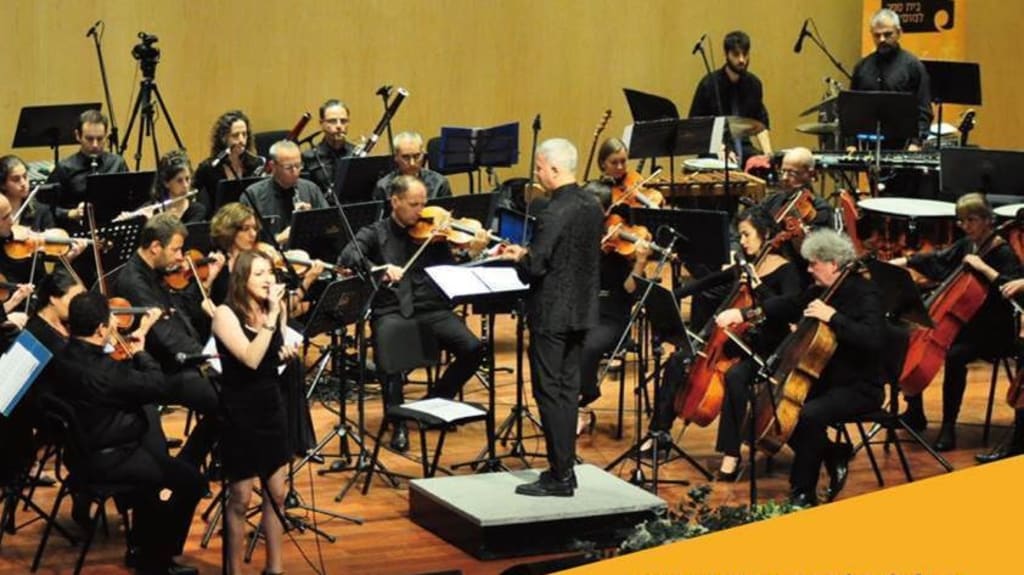
When the Netanya Kibbutz Orchestra presented its Ahava Bat 20 program at the Tel Aviv Museum of Art, the evening included a quiet shift in tone; a new orchestral arrangement by composer and pianist Danielle Hani. The melody was familiar to Jacques Brel’s work, carried into Israeli musical memory through Yossi Banai but the way Hani reframed it invited the audience to hear an old song as if someone had slightly opened a window in a room they knew well.
Performed under Maestro Yaron Gottfried’s direction, with vocalist Dor Kaminka leading the narrative line, the piece made clear what musicians often mention about Hani’s work: she favors clarity over spectacle. Her arrangement was focused on shaping the air around the melody, measured textures, restrained voicings, and a sense of pacing that allowed the song’s sentiments to settle naturally rather than being pushed forward.
A violist who played that evening described the score, “Nothing got in the way. It felt honest. She left us enough room to breathe, but everything had intention.” Another musician remarked on the way the woodwinds appeared not as decoration but as brief points of reflection; “They didn’t interrupt the singer, they framed him.”
A Professional Environment That Speaks for Itself
The performance setting itself is part of the story. Recanti Hall is not an academic stage; it belongs to Israel’s cultural infrastructure. The Netanya Kibbutz Orchestra, known for its commissions and contemporary collaborations, tends to select artists who can contribute something meaningful to its ongoing artistic conversations.
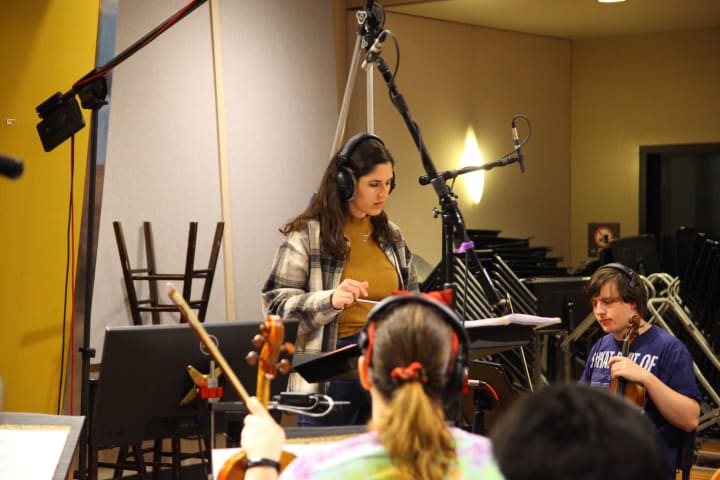
This context elevates the significance of the event: performing in such a venue, with an orchestra that prioritizes artistic innovation, positions the work within a national cultural dialogue rather than a purely educational framework. It also reflects the orchestra’s trust in Hani’s ability to bring forward an interpretation that is both musically rigorous and responsive to contemporary audiences. The choice to present her arrangement in this environment underscores the professionalism and artistic relevance of her contribution.
How Her Interpretation Differed Without Announcing Itself
Hani didn’t dramatically re-harmonize the material or reinvent its structure. Her signature here was more architectural than cosmetic:
- Crescendos that followed emotional shifts rather than musical convention.
- Wind lines that worked like narrative footnotes were brief, thoughtful, never competing.
- A harmonic structure that supported the singer instead of enveloping him.
Beyond Orchestration: A Growing Voice in Media Composition
While the Ahava Bat 20 arrangement demonstrates her sensitivity to established repertoire, Hani’s work in film and visual media reveals a parallel facet of her artistic thinking. She has composed original scores for short films and musicals, and interdisciplinary visual projects environments where music must serve narrative clarity rather than call attention to itself.
One director who collaborated with her described her process this way, “She doesn’t rush to fill silence. She watches, she asks questions, and then she finds the sound the story actually needs.” The remark echoes what musicians say about her orchestral work: she writes with an internal compass pointed toward narrative honesty.
Interdisciplinary Work: A Quiet but Consistent Through-Line
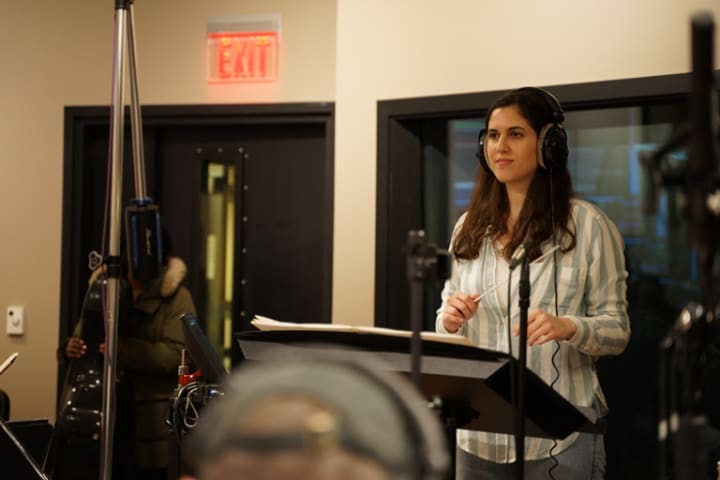
Hani’s collaborations span musical theater and vocal work - including composing for songs and musicals as well as working closely with singers. In these creative spaces, her music adapts naturally to voices, character, and dramatic flow. A singer who worked with her remarked, “She listens deeply to what everyone in the room is creating. She doesn’t try to overpower the process - she supports it, and somehow that makes the whole piece stronger.”
A Career Marked by Precision, Listening, and Narrative Sense
Taken together the orchestration, the film work, the cross-disciplinary collaborations, Hani's developing career shows a consistent artistic instinct. She prioritizes emotional clarity, structural intention, and the kind of restraint that comes from respecting the material at hand.
Her earlier recognition, including the competitive Berklee World Tour Scholarship, signaled this potential early on. In her current projects, that promise is being realized in gradually widening contexts like established orchestras, professional ensembles, and collaborative networks that value her ability to articulate feeling through sound in ways that are neither flashy nor withdrawn.
For a composer and orchestrator, these are the qualities that often distinguish artists who grow into long-term contributors: consistency, depth, peer acknowledgment, and the rare ability to let musical decisions feel natural rather than engineered.
And in Hani’s case, the thread connecting all of it whether in a concert hall or a small film studio is simple, “she listens first and writes what the story needs”.
About the Creator
Rashila Shahi
Hi, I am Rashila, an ACCA affiliate who is passionate about the power of words. I love transforming ideas into compelling stories and messages that resonate with audiences.
Keep reading
More stories from Rashila Shahi and writers in Beat and other communities.
JingYuan Li: Composing at the Crossroads of Culture, Story, and Sound
JingYuan Li, also known as John Li, has carved out a distinct space for himself as a composer, orchestrator, and guitarist. His creative range spans film, television, games, and concert stages, where he consistently leaves a mark with his emotionally attuned compositions. Born and raised in China, and later trained in Australia and the United States, Li’s journey reflects a rare combination of cultural depth and professional rigor. From an early age, he showed a strong inclination toward music, dedicating himself to honing his craft.
By Rashila Shahi6 months ago in Beat
It's 2026. Songs Turning 10 This Year
In 2016, we saw the rise of short form videos and what would lead to the birth of TikTok. We cannot forget the Snapchat filters no matter how cringe worthy some of them might have been. It was also the year in which the hit series Stranger Things debuted.
By Jasmine Aguilar6 days ago in Beat
TubeFreeks Debut New Single “Flower” Co-Written with Sevendust’s Clint Lowery
Hard rock band TubeFreeks have released their newest single “Flower,” co-written with Clint Lowery of Sevendust. The song arrives alongside a new music video directed by nationally recognized filmmaker Tom Flynn. “Flower” showcases TubeFreeks’ ability to merge melodic heaviness with the raw intensity of contemporary rock. It carries the hook-laden energy reminiscent of peak post-grunge while feeling immediate and present in its execution. The track is driven by complex drum patterns and heavy rhythm guitar that create tension and motion throughout the verses. At the center, frontman Paul van Valkenburgh delivers a vocal performance that is raw, distinct, and unmistakably his own. His voice cuts through the dense instrumentation while maintaining emotional clarity, allowing listeners to feel both the urgency and the intimacy of the song.
By Chris Adams6 days ago in Beat




Comments
There are no comments for this story
Be the first to respond and start the conversation.