
"5 Movies That Deserved Oscars—But Got Snubbed"
“Forgotten by the Oscars, Remembered by Real Movie Lovers”
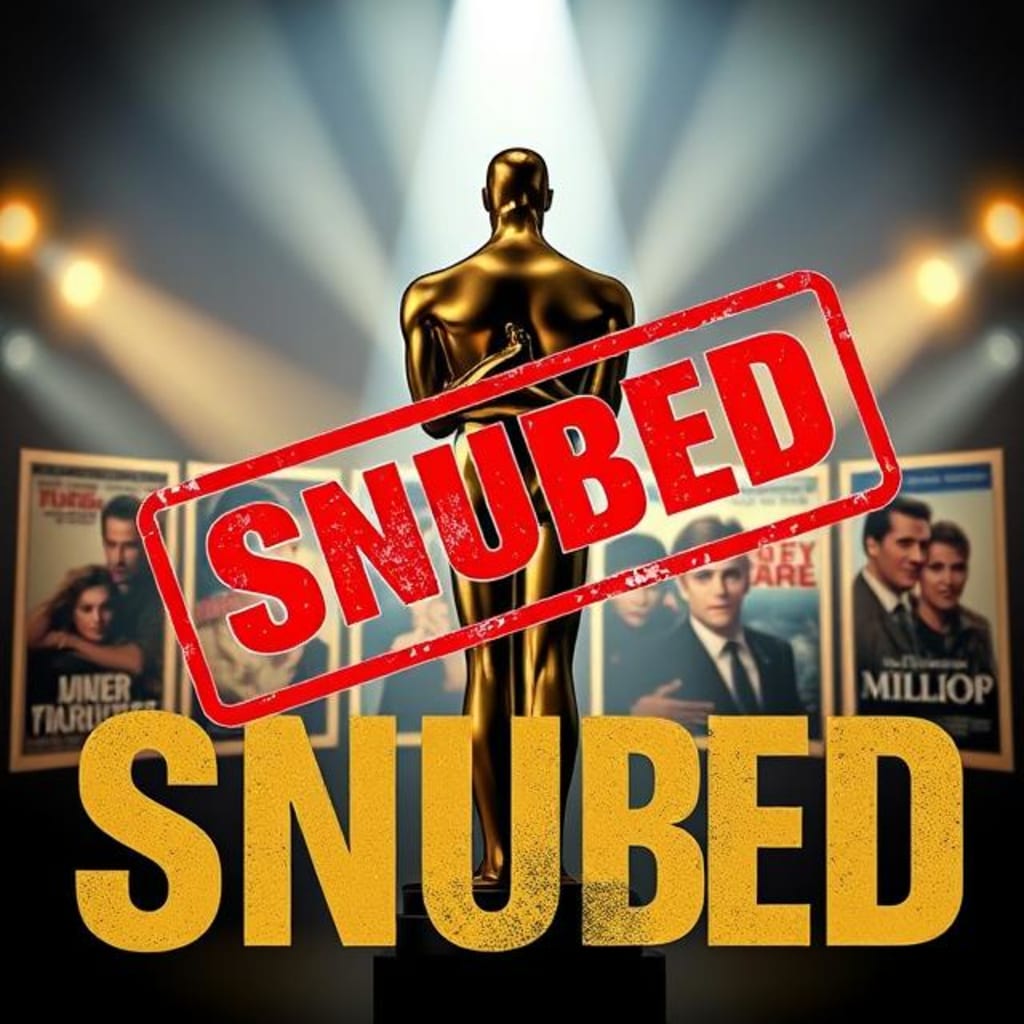
Every year, cinephiles around the world gather to watch Hollywood's biggest night—the Academy Awards. Glittering gowns, heartfelt speeches, golden statues raised to the sky. It’s a night where film history is written… or rewritten.
But sometimes, history gets it wrong.
In the Academy’s quest to honor “the best,” many of the actual best have been shamefully overlooked. Whether due to industry politics, marketing power, genre bias, or sheer bad luck, some truly brilliant films were snubbed—not just once, but at the very moments they deserved recognition most.
Here are five films that should’ve walked away with gold… but didn’t. And why that still matters.
1. “The Shawshank Redemption” (1994)
Should’ve Won: Best Picture
Lost To: Forrest Gump
Let’s start with perhaps the most infamous Oscar snub of the 1990s.
The Shawshank Redemption is now widely regarded as one of the greatest films of all time—ranked #1 on IMDb’s Top 250 for years. But when Oscar night rolled around in 1995, it was nearly invisible. Despite seven nominations, it went home with zero statues.
Yes, Forrest Gump was a cultural phenomenon, and yes, it had Tom Hanks at his most lovable. But Shawshank was something else: a quiet, powerful tale of hope, redemption, friendship, and endurance. Its emotional gravity was timeless. Where Gump relied on sentimentality and visual gimmicks, Shawshank relied on soul.
It took years for audiences to realize what the Academy missed. Now? It’s taught in film schools, quoted daily, and has outlived most of its Oscar rivals. But the statue still never found its way to Shawshank.
2. “Children of Men” (2006)
Should’ve Won: Best Director, Best Cinematography
Lost To: The Departed, Pan’s Labyrinth, Dreamgirls (technical categories)
Alfonso Cuarón’s dystopian masterpiece wasn’t just a warning—it was a work of visual genius. Set in a bleak future where humanity can no longer reproduce, Children of Men explored war, immigration, and hope through a story that felt terrifyingly real.
Its long, unbroken shots—especially the famous single-take war sequence—remain some of the most technically impressive feats in modern cinema. The immersive cinematography by Emmanuel Lubezki was revolutionary, yet the Academy barely blinked.
Yes, The Departed was a solid film and finally earned Scorsese his Oscar, but Cuarón’s direction was bolder, more innovative, and riskier. History has shown that Children of Men was ahead of its time—both visually and thematically.
In a year full of safe choices, Cuarón delivered a prophecy. And the Academy slept through it.
3. “Do the Right Thing” (1989)
Should’ve Won: Best Picture, Best Director (Spike Lee)
Wasn’t Even Nominated for Best Picture
Few films have ever captured the racial tension of America with as much truth and cinematic artistry as Spike Lee’s Do the Right Thing. It was urgent. It was angry. It was alive. It forced the audience to confront their own complicity and biases. But the Academy? It looked away.
The film wasn’t even nominated for Best Picture. Driving Miss Daisy, a much safer, whitewashed depiction of race relations, won that year instead—a slap in the face to everything Lee's film stood for.
Spike Lee poured Brooklyn into this film—its heat, its culture, its music, and its rage. Every frame pulsed with meaning. It’s now considered one of the most important American films ever made.
This snub wasn’t just an oversight. It was cultural tone-deafness on a grand scale.
4. “Eternal Sunshine of the Spotless Mind” (2004)
Should’ve Won: Best Picture, Best Director (Michel Gondry), Best Actor (Jim Carrey)
Won Only: Best Original Screenplay
Michel Gondry and Charlie Kaufman created something truly rare: a sci-fi love story that was emotionally raw, deeply philosophical, and visually inventive. Eternal Sunshine wasn't just about forgetting a lover—it was about confronting yourself.
Jim Carrey gave the performance of his career. Vulnerable, understated, and achingly human. The Academy, perhaps still seeing him as the guy from Ace Ventura, completely ignored him. The film itself only walked away with a screenplay win.
In a year where Million Dollar Baby won Best Picture—a solid but traditional film—Eternal Sunshine offered something fresh, surreal, and unforgettable. It challenged the way we tell love stories on screen.
And the Academy simply wasn’t ready.
5. “Inside Llewyn Davis” (2013)
Should’ve Won: Best Actor (Oscar Isaac), Best Picture, Best Cinematography
Lost To: 12 Years a Slave (Best Picture), wasn’t even nominated for Best Actor
The Coen Brothers' Inside Llewyn Davis is a melancholic, brilliant look at an artist on the edge—of fame, failure, and personal ruin. It’s quiet, moody, often bleak, but undeniably beautiful.
Oscar Isaac delivered a performance that should’ve launched him into awards history. Instead, he wasn’t even nominated. Bruno Delbonnel’s cinematography was like painting with light and shadow, every frame soaked in a smoky, nostalgic glow. It was a poem in motion.
But in a year crowded with louder films, Inside Llewyn Davis was overlooked. No Best Picture nod. No acting nods. Just a quiet applause from critics and indie lovers—and a permanent place in the “should’ve won” club.
Why It Still Matters
You might ask, “So what? Awards don’t define greatness.” And you’d be right—to an extent.
But Oscars matter because they shape legacies. They determine funding, exposure, careers. A win (or even a nomination) can catapult a film into the public eye. A snub can bury it forever.
And when the industry’s highest honor continues to reward safe, familiar choices over bold, groundbreaking ones—it tells us something about how we value art.
All five of these films did something courageous. They dared to push boundaries, challenge norms, or tap into emotions that polite cinema often avoids. That kind of storytelling deserves recognition.
The Hopeful Flip Side
Here’s the good news: Time has a better memory than the Academy.
The Shawshank Redemption now tops “greatest films” lists. Do the Right Thing is taught in universities. Eternal Sunshine is a cult favorite that people revisit when love breaks or heals them. Children of Men feels more relevant now than ever. And Inside Llewyn Davis still haunts every artist struggling in obscurity.
The gold may have gone elsewhere, but history eventually found the truth.
Final Thoughts
Awards are temporary. Art is eternal.
So the next time your favorite film gets snubbed, take heart. The Academy may miss it—but real audiences never forget.
Because in the end, greatness doesn’t need a statue to prove it.
About the Creator
Keep reading
More stories from Hamza Habib and writers in Beat and other communities.
Content Marketing Trends That Are Dominating 2025
It’s 2025, and content marketing is no longer just about posting blogs or tweeting links. We’ve entered a new era—one where brands must not only speak but also listen, adapt, automate, and personalize their content at scale. In this hyper-saturated digital landscape, attention is the most valuable currency—and those who master content marketing are winning the war for it.
By Hamza Habib8 months ago in Beat
The Tango Connection
I suppose I've become a writer so I wouldn't bore everyone to death telling them my stories. Reading them is reading. Not the same. There's rhythm. And timing and, most importantly, drama and suspense. Unless you have tremendous magnetism and an undeniable stage presence, there's no way you can engage an audience the way you can by writing your story. That's my opinion.
By Rene Volpi 28 days ago in Beat



Comments
There are no comments for this story
Be the first to respond and start the conversation.