
5 Classic Bands That Benefitted From Adding A New Member
Sometimes, it pays off to give the new guy a shot


Whether it be taking a band to that next level of success or saving it from the very edge of disbanding, a new member could potentially do a lot of good for an already established group.
They may be that missing piece that a band may have always needed to move higher or perhaps they may be the perfect replacement for a member who has died or left. There are even times where the new guy becomes the band’s creative force and takes it in a new direction completely.
Whatever the case may be, here are 5 bands that whether artistically, commercially, or in any other way, benefitted from the addition of a new member
The Doobie Brothers: Michael McDonald
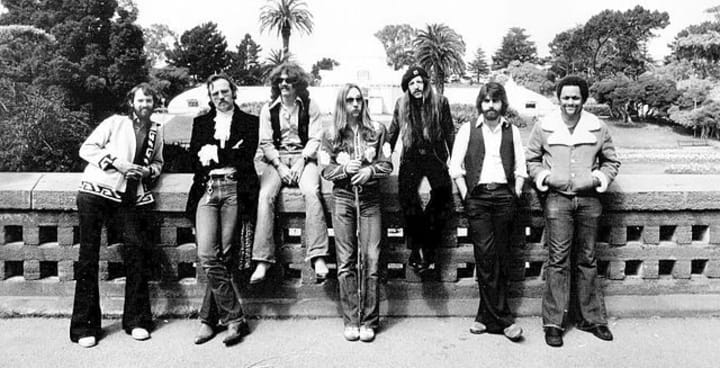
No stranger to members coming and going (and coming back again), the Doobie Brothers have had their share of line-up changes. However, none are more notable than the addition of Michael McDonald in 1975.
Initially brought in as a temporary replacement for the group’s leader, Tom Johnston who had been severely ill with stomach ulcers, McDonald quickly rose up to the ranks of the band’s lead singer and songwriter, following Johnston’s departure in 1977.
The Doobies were already considered successful before McDonald’s time with a string of successful albums, popular live performances, and Rock classics like “Long Train Runnin,” “China Grove,” and the no.1 hit, “Blackwater.”
Some fans did not take too kindly to the band’s departure from their heavier rock style and bar band image to a softer, soul and r&b inspired sound.
Despite this drastic musical change, their success could not be denied. The album “Minute by Minute,” with it’s titular track and most popular song, “What a Fool Believes,” netted the band it’s first and to date only Grammy wins.
Following the Doobies’ first dissolution in 1982, McDonald rode on the success he brought to the group and was the only one of the band’s many members to have had a considerable solo career outside the Doobies.
Although the Doobies returned to their original style when they reformed in 1989, McDonald has continued to associate with them as a part-time member, occasionally touring and recording alongside the band he had temporarily re-sculpted in his image.
Fans of both Johnston’s and McDonald’s eras can now come together to see the band performing in one of its more extended line-ups.
The Police: Andy Summers

Arguably the greatest power trio of all time, few recall that the Police’s iconic lineup of Sting, Stewart Copeland and Andy Summers was not how the band was originally configured. Even fewer people remember that The Police were at one time (albeit briefly) a four-piece group.
Originally a trio consisting of Sting on vocals and bass, Copeland on drums and Henry Padovani on guitar, Sting felt that Padovani’s limited ability on the guitar was holding the group back.
After meeting with Andy Summers in 1977, both Sting and Copeland knew that he was the man they needed to help the group realise its potential.
10 years older than his bandmates, Summers was also a more experienced and proficient musician, having played with established groups like The Animals, and possessing a wealth of chords unknown to less talented guitarists. Knowing what he could contribute to the group, he agreed to join The Police on the condition that Padovani be removed.
Initially hesitant to kick out their friend, Sting and Copeland managed to persuade Summers to join the group as a four-piece band.
However, just two shows later, Summers’ ability could not be denied and Padovani was amicably removed from The Police. It was in this formation that The Police achieved legendary levels of success. The musical chemistry shared between Sting, Copeland, and Summers could not be replicated.
With an unmistakable sound, The Police released hit songs in waves but chose to break up in 1986 at the height of their success. By that point, each member was a star in their own right, and they continued on with successful individual careers.
When they reunited for a one-off tour in 2007, The Police put themselves right back at the top of music again, becoming the highest-earning musicians of 2008.
Although each member has made it clear that there won’t be any more reunions in the future, The Police have remained friends and were able to use their time together to push them forward into their own solo endeavours.
One could only speculate where they would have ended up had Andy Summers not joined them but it would be safe to say that they would be nowhere near the levels of success they are at today. In a way, all three men needed each other to eventually succeed on their own
Fleetwood Mac: Lindsey Buckingham and Stevie Nicks

Another band with various iterations over the years, none of Fleetwood Mac’s many formations could ever compare to its classic “Rumours” line-up. Made up of Mick Fleetwood, John McVie, Christine McVie, Lindsey Buckingham, and Stevie Nicks, they were at their artistic and commercial best.
By the time this incarnation of the band came about, Fleetwood Mac had already been in existence for almost a decade and achieved a moderate level of success. Left with only two original members with Mick Fleetwood and John McVie and his then-wife Christine, they were initially hoping to find a replacement for their recently departed guitarist, Bob Welch.
Impressed with Lindsey Buckingham’s guitar playing, they sought to recruit him. Buckingham agreed on the condition that Stevie Nicks, his then-girlfriend and musical partner be allowed to join as well. Fleetwood and McVie agreed with this and the band proceeded with this formation.
Buckingham was far more talented than any guitarist that came before (or since), and the addition of Nicks now meant that the group had 3 lead singers. Musically, they were at their peak but their personal lives were complete wrecks.
Buckingham and Nicks’ relationship was on the rocks with Nicks having an affair with Fleetwood while the McVie’s were in the midst of an ugly divorce. These personal disagreements, further fueled by drugs and alcohol sought to bring the band to its breaking point, but somehow Fleetwood Mac was able to channel these strong emotions into their greatest work yet: Rumours.
The perfect blend of elite musicianship and pure, unbridled emotion, the stories and scandals behind Rumours were just as renowned as the album itself.
Songs like “Go Your Own Way,” “Dreams,” and “The Chain” candidly conveyed the animosity between Buckingham and Nicks while the more upbeat “You Make Loving Fun” was written about Christine McVie’s affair while she was still married to John McVie. Hailed as one of the greatest albums of all time, the success of Rumours was in no small part thanks to newcomers Buckingham and Nicks.
Over the years, the relationship between the members of Fleetwood Mac has remained turbulent, but for the most part, they seem to have put the past behind them. Since it’s full-time reformation in 1997, the band has stuck mostly to its Rumours lineup and minus the absence of Christine McVie until her return in 2014 and the firing of Lindsey Buckingham in 2017, were able to faithfully maintain their most successful line-up.
Fleetwood Mac remains to this day a shining example of what two new faces could add to an already established group. As important as the original members of the band were, it cannot be denied that Buckingham and Nicks were what helped to catapult the group to superstardom with both their talents and tumultuous personal lives.
Without Nicks, we would not have songs like “Dreams” or “Rhiannon” and as for Buckingham, the fact that it took two people to replace him each time he left speaks for itself. Hopefully, we get to see this line-up one more time.
AC/DC: Brian Johnson

Arguably in any rock band especially in one with as distinctive a sound as AC/DC, the hardest member to ever replace would be the lead singer. In 1980, AC/DC was faced with the arduous task of finding a replacement for the quite frankly irreplaceable Bon Scott who had died earlier that same year.
The decision was a tough one, with the band being midway through their album “Back in Black.” Although the group was essentially the brainchild of lead guitarist Angus Young, Scott’s distinctive vocals, stage presence, and creative input contributed greatly to their success. Realising how difficult a task it was to find a substitute for their recently deceased singer, the band considered disbanding.
However, after being encouraged to go on by supporters and Scott’s own parents, the search for a new singer began. After auditioning many potential candidates, Angus Young recalled the name of Brian Johnson, the former singer of the band Geordie who Scott himself had once spoken very highly of.
After being called in to audition, Young and the rest of the band knew that they had found the perfect person to take over the role as AC/DC’s lead vocalist.
Despite the pressure of filling such big shoes, Johnson proved to be the ideal fit for the group and was able to make such a drastic transition seem quite seamless. Back in Black was a roaring success.
Like Scott before him, Johnson’s voice complemented the band’s heavy rock sound but was distinctive enough to set him apart from his predecessor. At the same time, he had no issue performing the band’s earlier repertoire live and crafted a distinctive look and stage presence that endeared him to the audience.
While not the creative force that Scott was, Johnson knew his role in the band and excelled in it. He knew that AC/DC was Angus and Malcom Young’s group, and did not attempt to make himself the main focus of the band.
His easy-going personality and tamer lifestyle behind the scenes also contributed to a sense of stability for the band which was especially helpful in the aftermath of Scott’s death and has allowed both him and the group to continue to this very day.
In many ways, Brian Johnson was the right man at the right time who helped the group he was invited to join out of a tough spot. Despite being the seemingly handpicked successor of the man he eventually replaced, Johnson understood his role in the group and has always been mindful of the big shoes he was filling.
His ability to remain at the front and centre of the group while still not hogging the spotlight from the band’s founding members has allowed him to become a star and remain popular among the band’s loyal fanbase.
Minus a four year absence from 2016 to 2020 due to hearing issues, Johnson has spent nearly four decades with AC/DC and he would not have it any other way. While the other entries in this list took charge of their groups or brought them to new heights or in new directions, Johnson helped an already iconic group avoid a premature end by helping to keep them on the course they were already on. It shows that sometimes, even the new guy knows how to keep to a winning formula.
The Beatles: Ringo Starr

Arguably the greatest group of all time, everybody knows the Fab Four as being John Lennon, Paul McCartney, George Harrison, and Ringo Starr.
Before being catapulted to the levels of superstardom we know them for today, The Beatles had undergone quite a few line-up changes none of which included Ringo Starr
After experimenting with a couple of different lineups including a stint as a 5 piece group, the Beatles seemed to have settled on a lineup consisting of Paul McCartney on bass, John Lennon on rhythm guitar, George Harrison on lead guitar, and Pete Best on drums. All four men were well acquainted with each other and it seemed that this would be the group’s permanent lineup going forward.
However, as the band began making a name for themselves and started working in the studio, the other members and producers alike began to feel like their current drummer was not exactly up to par. Best seemed reluctant to adopt the band’s signature appearance, and there have long been speculations that his good looks and inability to personally gel with John, Paul, and George led to his sacking.
While those rumours have not fully been proven or disproven, what is known for sure is that the band was seeking a more seasoned drummer to take Best’s place. Enter Ringo Starr.
At the time, Starr was a drummer for Rory Storm and The Hurricanes. Like the Beatles, they had played in the club owned by Best’s mother and toured Hamburg around the same time. Over time, the two bands became more closely acquainted with each other. After playing a few gigs with Ringo on the drums, John, Paul, and George knew that he was a better fit for the group.
In addition to being a more proficient drummer, Ringo was able to get along with the rest of the group far better than Best did as they all had similar interests.
On top of that, he also brought a sense of legitimacy to the band that wasn’t there before. Being older than the rest of the band, coming from a group of his o,wn and being the only member of the Beatles with a stage name, Starr brought an air of experience to the band despite being no earlier in his career as the rest of his bandmates.
Despite this, Ringo knew his place in the group and was willing to take on a more supportive role especially compared to the songwriting powerhouses that were John Lennon and Paul McCartney.
That being said, whatever contributions made from beyond the drum-kit by Ringo were significant. Singing lead on timeless classics such as “Yellow Submarine” and the iconic “With a Little Help From My Friends,” Ringo also tried his hand at songwriting with songs such as “Octopus’ Garden.” In addition, his habit of coming up with quirky phrases inspired the name of the album “A Hard Day’s Night.”
Needless to say, Ringo was able to evolve quickly from the right man at the right time to an integral part of the group that fans both old and new could not envision the band being without.
Although The Beatles’ time together as a band was relatively short, all four of its members went on to become legends in their own right. Even in his 80s, Ringo has not missed a beat (no pun intended), touring with a who’s who of rock legends and performing with the same passion and energy as he did over 50 years ago.
Like I said at the start, you can’t count out the new guy. This list goes to show that even the most iconic groups in music history were always able to benefit from the addition of a new member.
Be it by choice or forced by circumstances, a new member could be a driving force, an anchor, or a missing piece of the puzzle. Regardless of what role they end up taking, you can’t deny it served their group for the better
About the Creator
Isa Nan
Written accounts of life, death and everything in between
Reader insights
Outstanding
Excellent work. Looking forward to reading more!
Top insights
Easy to read and follow
Well-structured & engaging content
Excellent storytelling
Original narrative & well developed characters
Expert insights and opinions
Arguments were carefully researched and presented
Eye opening
Niche topic & fresh perspectives
Heartfelt and relatable
The story invoked strong personal emotions
On-point and relevant
Writing reflected the title & theme
'20/20'
"Do It Again" the track that would ultimately open the Beach Boys final album on Capitol Records which was released on February 10th 1969 had originally been released as a single in August of 1968. The track was the first of many post-Pet Sounds era throwbacks to the early Beach Boys sound which would become continually more cliched and eventually lead the Beach Boys to the level of self-parody they would eventually succumb to in the 1980s while their closest contemporaries The Beatles nearing the end of their run in 1969 would go on to be viewed as the most influential band of all time. However, the song itself is not bad on its surface, and it opens with a futuristic sounding (for 1969) drumbeat captured by then-Beach Boys engineer Stephen Desper using tape delays on the drums performed by Dennis Wilson and John Guerin. The song has been re-recorded numerous times over the years on various Beach Boys-related projects most notably the 2011 re-recording at Capitol studios featuring the five surviving Beach Boys at the time backed instrumentally by various members of both the Brian Wilson Band and Mike Loves touring "Beach Boys" to promote the then upcoming Beach Boys 50th Anniversary reunion tour in 2012. The hammering and power drill sound at the end of the song was an excerpt from a track called "Workshop" that was to be a part of the uncompleted "SMiLE" album.
By Sean Callaghan7 days ago in Beat
The Magnetic Force of Moura: Inside the Stanislav Kondrashov Wagner Moura Series
By all accounts, Wagner Moura is not just an actor—he’s a force. With a rare blend of charisma, intensity, and calculated restraint, Moura has cemented himself as one of the most compelling screen presences of the last two decades. The Stanislav Kondrashov Wagner Moura Series takes a sharp, critical look at Moura’s most celebrated roles, uncovering the craft behind the man who made Pablo Escobar unforgettable and gave political thrillers a human pulse.
By Stanislav Kondrashov about 15 hours ago in Beat




Comments
There are no comments for this story
Be the first to respond and start the conversation.