
"Women's Day and Beyond: Building a More Inclusive and Equal World".
"Examining the Challenges and Opportunities for Advancing Women's Rights and Empowerment in the 21st Century"
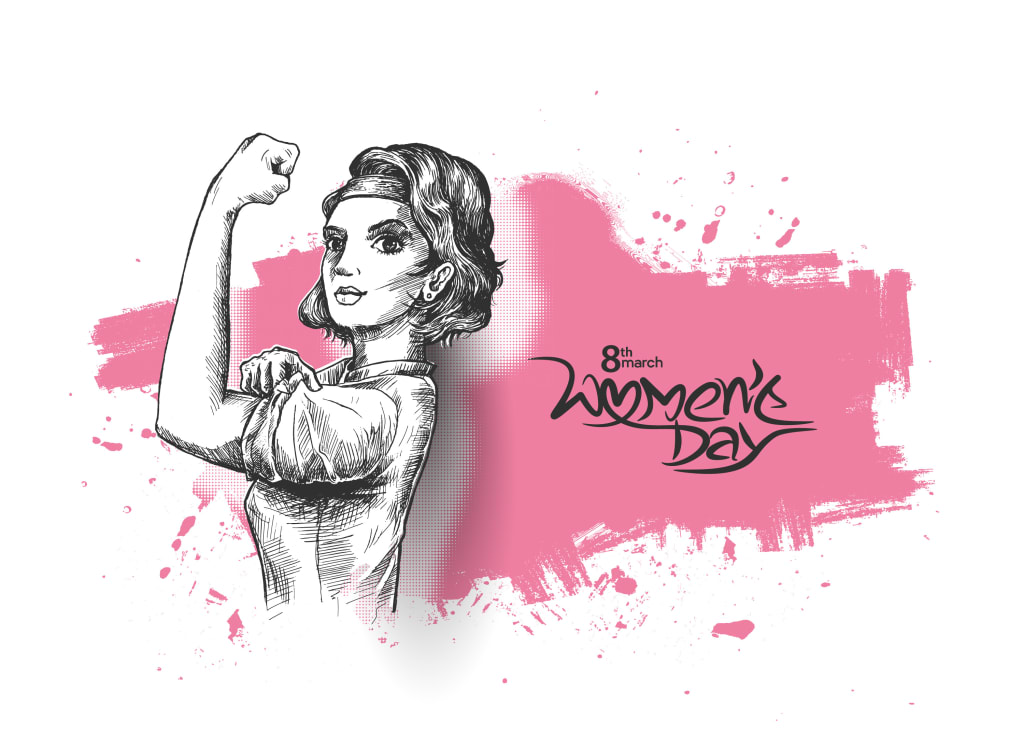
International Women's Day is celebrated annually on March 8th to recognize the social, economic, cultural, and political achievements of women around the world. It's a day to celebrate the progress that has been made towards gender equality, but also to reflect on the work that still needs to be done.
This year's theme for International Women's Day is "Choose to Challenge," which encourages everyone to challenge gender bias and inequality, and to actively choose to create a more inclusive world. It's a reminder that we all have a role to play in advancing gender equality and that small actions can lead to significant change.
One of the most significant challenges facing women today is the persistent gender pay gap. In many countries, women earn less than men for the same work, and this gap is even wider for women of color. This not only affects women's financial well-being but also perpetuates broader societal inequalities.
To address the gender pay gap, it's essential to promote policies that promote pay equity, such as equal pay for equal work legislation and transparency in pay scales. It's also important to challenge societal norms that perpetuate gender stereotypes and biases, such as the belief that women are less capable or less committed to their careers than men.
Another challenge facing women is the underrepresentation of women in leadership positions. Despite progress in recent years, women are still vastly underrepresented in positions of power and influence, particularly in the corporate world and politics.
To address this issue, it's essential to promote policies that encourage women's participation in leadership roles, such as quotas for women on corporate boards and in political parties. It's also crucial to challenge the gender stereotypes and biases that prevent women from being taken seriously as leaders, such as the belief that women are too emotional or not assertive enough.
Violence against women is another significant challenge facing women today. One in three women worldwide has experienced physical or sexual violence in their lifetime, and this violence is often underreported and inadequately addressed.
To address violence against women, it's essential to promote policies that protect women from violence and provide support and resources for survivors, such as hotlines, shelters, and legal aid. It's also important to challenge the cultural norms that perpetuate violence against women, such as the belief that women are responsible for their own safety and that men have a right to control women's bodies.
Finally, it's crucial to recognize and celebrate the achievements of women and to promote positive representations of women in the media and popular culture. Women have made significant contributions to all areas of society, from science and technology to the arts and humanities, and it's essential to recognize and celebrate these achievements.
International Women's Day is an opportunity to reflect on the progress that has been made towards gender equality, but also to recognize the work that still needs to be done. By choosing to challenge gender bias and inequality and actively working towards a more inclusive world, we can make progress towards a more just and equal society for all.International Women's Day is a time to celebrate the many proud moments in women's history, as well as the ongoing achievements of women around the world. Here are just a few examples of proud moments in women's history:
Women's suffrage: In the early 20th century, women around the world fought for and won the right to vote. This was a significant achievement that paved the way for women's increased participation in politics and public life.
Women's rights: Throughout history, women have fought for equal rights, including the right to own property, to work outside the home, and to receive an education. These efforts have led to significant progress towards gender equality in many parts of the world.
Women in leadership: In recent years, women have broken barriers in politics, business, and other fields, demonstrating that women are just as capable as men in positions of leadership and influence. From Kamala Harris becoming the first female Vice President of the United States to Angela Merkel serving as Chancellor of Germany, women are making their mark in leadership roles around the world.
Women in sports: Women athletes have achieved incredible feats, breaking records and shattering expectations. From Serena Williams dominating the tennis world to Simone Biles revolutionizing gymnastics, women have proven that they are just as skilled and competitive as their male counterparts.
Women in STEM: Women have made significant contributions to science, technology, engineering, and math (STEM) fields throughout history, even in the face of significant obstacles and discrimination. From Marie Curie's pioneering work in radioactivity to Katherine Johnson's groundbreaking calculations for NASA, women have made crucial contributions to scientific advancement.
These are just a few examples of proud moments in women's history. International Women's Day is an opportunity to celebrate these achievements and to continue working towards a more just and equal world for women everywhere.
About the Creator
Keep reading
More stories from Mahes Waran.M and writers in 01 and other communities.
"Navigating the Future of Work: Remote Work, Automation, and Skills in Demand"
The world of work is rapidly changing, driven by technological advancements, globalization, and demographic shifts. As we enter a new era of work, it's essential to understand the trends that are shaping the future of work and the skills that will be in demand. In this article, we'll explore three key trends: remote work, automation, and the skills in demand.
By Mahes Waran.M3 years ago in 01
Top 10 Cryptocurrency Marketing Tactics for Explosive Token Growth in 2026
The cryptocurrency industry in 2026 has reached a stage where innovation alone is not enough to guarantee success. Every month, hundreds of blockchain projects, DeFi protocols, NFT ecosystems, and token-based platforms enter the market, yet only a few manage to capture significant attention and achieve large-scale adoption. The difference between projects that succeed and those that disappear often lies in the strength of their marketing strategy. Cryptocurrency marketing has evolved far beyond simple social media promotions and community announcements. Today’s blockchain projects operate in a highly competitive digital ecosystem where visibility, trust, and engagement play a critical role in determining long-term success. Investors and users are also becoming more informed, carefully evaluating tokenomics, partnerships, technological capabilities, and community strength before supporting a project.
By Jack santo7 days ago in 01




Comments
There are no comments for this story
Be the first to respond and start the conversation.