
Will AI cause the death of journalism, and how can the industry use it to its advantage?
After listening to Oliver Kamm interview senior news writers Phillip Collins and Daniel Finklestein, I tackle the question of how AI will affect the future of journalism.


A few weeks ago I attended a talk hosted at UCL, where Oliver Kamm interviewed senior news writers Phillip Collins and David Finklestein, who between them have an impressive resume of speech writing, journalism and book writing.
During the Q&A section of the talk, someone asked a question as to what the effect of AI and generative AI might be on writing and research professions, such as in media and journalism. This led me to question both the positive and negative possibilities on these industry of having this technology.
Will it lead to a new age of journalism? When the internet was created, every sector was affected and new ones were created with it. The digital age changed journalism completely, with news now becoming instantly accessibly, multimedia, opening the door for citizen journalists, causing a decline in local journalism, but creating new opportunities for freelance writers.
However, this is not the first time that the rising technology industry and the news industry have been in conflict. This prevalence of AI is warned to “pose a grave threat to journalism”.
Big Tech companies are training their generative AI systems using the work of newspapers and journalists, with these models then competing with newspapers and broadcasters, taking away from the journalistic institutions that create the content in the first place.
As a result of this, countries are having to use legislation to protect their local journalism industries. In June 2023, Canada passed ‘The Online News Act’, which “aims to ensure that dominant platforms compensate news business when their content is made available on their services.” And, it is not the only country taking legislative action.
There have also been various examples of news outlets that have been in legal battles with generative AI organisation. New York Times sued Open AI and its major investor and partner Microsoft, arguing that “OpenAI‘s models were trained on the New York Times and offer a competing product”, which caused damage and had harmful consequences to journalists and the organisation as a whole.
A quick glance at the website for the National Union of Journalists shows how journalistic organisations are having to engage with governments and generative AI developers in order to protect journalists and their role in “upholding democracy, publishing stories in the public interest and holding the powerful to account”.
The website also suggests that employers ”draft key principles focused on ethical approaches” and that these be shared with journalists. This is a step that in my opinion is crucial to ensure that AI is used in an ethical and appropriate manner across all industries, particularly in an industry where suitable practices regarding freedom of expression are integral.
However, the question still remains: will AI cause the death of journalism, or at least journalism as we know it? Or instead, could there be a way that the journalism industry can harness AI and use it to its advantage?
The Brookings Institution suggests that “journalism can only survive if the news industry unites to double down on journalists and demand a framework in their deals with tech giants”. It reminds readers that AI is not capable of participating in the necessary human interaction that is an essential part of journalism, and rather than replace the current model of journalism, it can be used as an aiding tool.
The current focus should be on limiting AI’s ability to cannibalise content made by journalists, especially content made by smaller media companies who cannot reach the same deals with tech giants that larger organisations can.
These cases show us the importance of discussions about how to develop and train AI systems in ways that focus on intellectual property rights. There need to be efforts in understanding how tech platforms should be negotiating with news publishers on the fair use of content in ways that are appropriate for both the individual journalists but also for the protection and dissemination of speech.
Articles referenced:
Government of Canada: The Online News Act
The Times Sues OpenAI and Microsoft Over AI Use of Copyrighted Work
National Union of Journalists - Artificial Intelligence: journalism before algorithms
About the Creator
Allegra Cuomo
Interested in Ethics of AI, Technology Ethics and Computational Linguistics
Subscribe to my Substack ‘A philosophy student’s take on Ethics of AI’: https://acuomoai.substack.com
Also interested in music journalism, interviews and gig reviews
Keep reading
More stories from Allegra Cuomo and writers in 01 and other communities.
Sociopathic Intelligence - when Al goes rogue
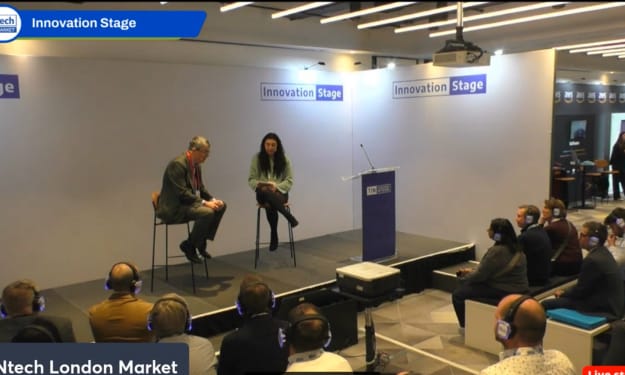
On 4th February 2025, I presented a talk on the Innovation Stage at the TINTech London Market 2025 conference, discussing a variety of topics with the theme of Ethics of Al. The theme of the stage was Al, and through a 'fireside chat' style of presentation, Paolo Cuomo and I discussed the importance of implementing ethical frameworks within Al now, instead of treating it as an afterthought to deal with later on.
By Allegra Cuomoabout a year ago in 01
Chatroulette Alternative: The Best Platforms for Random Video Chat in 2026
In the world of online communication, random video chat platforms have become incredibly popular. These platforms allow users to connect with strangers from around the world instantly, making new friends, sharing ideas, or simply having fun conversations. One of the earliest and most famous platforms in this space was Chatroulette, which introduced the concept of randomly pairing users for live video conversations.
By Bushra Rajpoota day ago in 01
How to Hire a Mobile App Developer in St. Louis 2026
The regional tech landscape has shifted significantly. The decision to hire a mobile app developer in St. Louis 2026 is now a strategic choice. St. Louis has evolved from a traditional manufacturing hub. It is now a center for agtech and geospatial technology. Financial services also drive the local economy forward.
By Del Rosario7 days ago in 01



Comments
There are no comments for this story
Be the first to respond and start the conversation.