
Why Outdoor Advertising Works for Local Businesses
Why Outdoor Advertising Works for Local Businesses
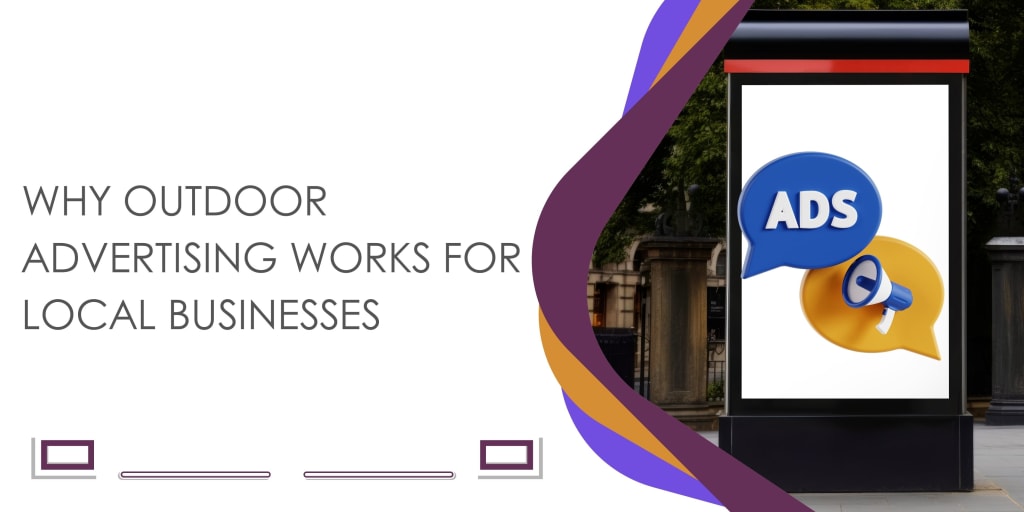
In an era dominated by algorithms and screen fatigue, outdoor advertising (OOH) services continue to deliver real-world visibility that digital platforms often miss—especially for local businesses. Whether it’s a branded auto-rickshaw moving through high-traffic zones or a strategically placed hoarding near a local market, OOH formats create persistent, neighborhood-level brand presence.
But outdoor advertising has evolved. It’s no longer about mass messaging alone. For small and mid-sized businesses, it’s a precision channel for increasing hyperlocal discovery, driving offline footfall, and staying top-of-mind within a specific radius.
What Makes OOH So Effective for Local Businesses?
Geographic Precision
With transit formats like metro wraps, branded autos, and bike ads, businesses can target commuters and pedestrians in exact pin codes or zones. Unlike digital platforms that use approximated location filters, OOH operates in the physical spaces your target audience actually inhabits.
High-Frequency Impressions
Commuters pass the same intersections daily. Residents take the same metro routes. This repetition means your message isn’t just seen—it’s remembered. Over time, OOH builds familiarity and mental availability, which are both critical for local buying decisions.
Trust Through Physical Presence
People trust what they can see and touch. A local clinic with a street-facing poster or a bakery with branded delivery scooters gains instant credibility in its neighborhood. The physical presence acts like an endorsement—subtle, but impactful.
Cost Efficiency at Local Scale
Unlike national ad campaigns, OOH allows budget control by geography. You can run campaigns just within a 3-km radius of your store or select transit routes that pass through your customer hotspots—maximizing visibility without overspending.
Designing a High-Performance OOH Campaign
Success in outdoor advertising isn’t about plastering logos everywhere. It’s about relevance, simplicity, and smart placement. Here’s how to do it right:
Messaging: Keep it crisp. Use 5–7 impactful words. Prioritize location, product, or offer.
Design Format: High-contrast colors, bold fonts, and clear CTAs. Visuals should work from a distance.
Placement Strategy: Choose routes with dwell time—traffic signals, metro stations, or market entrances.
Ad Format: Transit ads (autos, cabs) work well for mobility. Static ads suit high-footfall areas.
Duration: A 4-week minimum ensures adequate visibility and message retention.
Measuring the Performance of Outdoor Advertising
While OOH is physical, that doesn’t mean it’s untrackable. There are now quantifiable ways to measure effectiveness:
Impression-Based Estimations
Using GPS-based transit data and footfall analytics, impressions can be calculated for branded vehicles or fixed placements.
QR Codes and Short Links
Add them to your creatives to track scans, visits, or coupon redemptions.
Before/After Footfall Metrics
Compare store visits, calls, or inquiries during campaign periods vs. control weeks.
Digital Retargeting Integration
Platforms like Adcities allow you to combine outdoor with mobile targeting. If someone sees your ad on a moving cab and later gets a Google ad from your brand, that’s a full-funnel customer journey in play.
How to Enhance Impact Further
To maximize your return, combine transit OOH with these tactics:
Time Your Campaigns Strategically: Target festivals, local events, or school seasons when buying intent is high.
Pair with Local Influencers: A banner campaign alongside local Instagram endorsements can compound impact.
Layer with Offers or Exclusives: Mention time-bound discounts to generate urgency.
Use Transit-Based Campaigns for Launches: New store opening? Branded autos can announce you across the area faster than any billboard.
Pair Transit OOH with Digital Retargeting
This is where platforms like Adcities provide an edge. We offer integrated campaign tracking that pairs physical ad exposure with digital engagement. Using geofencing and retargeting, we track people who’ve seen your ad and serve them follow-up content online—bringing digital measurability to offline exposure.
With our dashboard, you can view:
- Zone-wise impressions
- Top-performing routes
- Footfall heatmaps
- Digital follow-up performance
This bridges the gap between visibility and conversions.
Final Thoughts
OOH isn’t an alternative to digital—it’s a complement that delivers where digital can’t. For local businesses seeking real-world presence and consistent recall, outdoor advertising—especially transit formats—remains a high-ROI, brand-building channel.
If you want your brand to move through your city—not just live on a screen—OOH is the way forward.
About the Creator
Keep reading
More stories from David Sanchez and writers in 01 and other communities.
How to Launch an Effective OOH Advertising Campaign in 2025
How to Launch an Effective OOH Advertising Campaign in 2025 OOH advertising has evolved far beyond static billboards. With the rise of smart cities, digital displays, and mobile data, today’s OOH campaigns can be as targeted and measurable as online ones — with the added benefit of real-world presence.
By David Sanchez8 months ago in 01
Top Trends Shaping Travel App Development in 2026
The global travel industry continues to evolve at a rapid pace, driven by changing traveler expectations, digital innovation, and the demand for seamless experiences. As we move into 2026, travel apps are no longer just booking tools—they have become intelligent travel companions that assist users before, during, and after their journeys. From personalized trip planning to immersive exploration, modern travel applications are redefining how people experience travel.
By shane cornerus5 days ago in 01
Rage
Content Warning: Domestic Violence, Assault Rage D. A. Ratliff “Who did this?” My voice echoed through the house. All I wanted was a cup of tea, but one of the twins, running through the house like maniacs, knocked it over. My nerves tingled, and every muscle in my body felt coiled like a spring. Survival seemed out of reach.
By D. A. Ratliff5 days ago in Fiction


Comments
There are no comments for this story
Be the first to respond and start the conversation.