
Why no Tesla in India?
Exploring the Challenges and Hurdles Facing Tesla's Entry into the Indian Market


There are several reasons why Tesla is not currently available in India, including:
1.Government regulations:
- India has strict regulations for foreign companies looking to set up operations in the country, including high import tariffs on fully-built cars. This makes it difficult for Tesla to sell its cars in India at a competitive price.
- One of the main challenges is the high import tariffs on fully-built cars in India. These tariffs make it difficult for foreign companies, including Tesla, to sell their cars at a competitive price in the Indian market. Additionally, Tesla would have to navigate India's complex regulations and bureaucracy in order to set up operations in the country.
2.Infrastructure and logistics:
- India's infrastructure and logistics are not as developed as in other countries, which can make it difficult for Tesla to set up operations and distribute its cars in the country.
- Unlike other developed countries, India is still in the early stages of building its EV charging infrastructure. The government is promoting EV's but the progress is still slow. This makes it more challenging for Tesla to sell its electric vehicles in India.
3.Competition from local manufacturers:
- There are already several established Indian manufacturers of electric cars, such as Mahindra Electric and Tata Motors, which have a strong presence in the market and are able to offer vehicles at lower prices than Tesla.
- Additionally, the Indian government has implemented policies to promote the domestic automotive industry, which makes it more challenging for foreign companies to enter the market. These policies include import tariffs and taxes on foreign cars, and incentives for domestic manufacturers to produce electric vehicles. This makes it difficult for Tesla to compete with the local companies in terms of price and government support.
4.Lack of charging infrastructure:
- Electric cars require charging infrastructure, and currently, India lacks a sufficient number of charging stations to support a large number of electric cars. While Tesla has built a comprehensive charging network in other countries, the infrastructure in India is not as developed.
- In order to sell its electric vehicles in India, Tesla would need to invest in building a charging network in the country, which would be a significant cost. This is also a chicken and egg problem, as the lack of charging infrastructure makes it difficult to create a market for electric vehicles, but the lack of a market for electric vehicles makes it difficult to justify investing in charging infrastructure.
- India has banned the import of lithium-ion batteries for the production of electric vehicles to promote local manufacturing, this has limited the production of electric vehicles in the country.
- Import of lithium-ion batteries, which are used in Tesla's electric vehicles which are used in Tesla's electric vehicles. This ban on battery imports would make it difficult for Tesla to sell its electric vehicles in India, since the company would need to source batteries from domestic manufacturers. However, this may not be possible as the Indian battery manufacturing industry is not yet advanced enough to produce the high-performance batteries that Tesla requires.
- India is a large market with a population of over 1.3 billion people, but the market for electric vehicles is still relatively small. Tesla would need to weigh the potential sales and revenue against the costs of entering the market.
- India is a growing market for automobiles, but the demand for electric vehicles is still relatively low. In 2020, the market share of electric vehicles in India was less than 1%. The main reasons for this low demand are the high cost of electric vehicles and the lack of charging infrastructure. In comparison to other markets such as China and the US, India is a relatively small market for automobiles, and for luxury cars in specific. The luxury car market in India is also relatively small and less developed, which makes it less attractive for Tesla.
5.Battery import ban:
6.Market size and demand:
Conclusion:
- In conclusion, there are several reasons why Tesla has not yet entered the Indian market. These include regulatory challenges, infrastructure limitations, high import duty, lack of local manufacturing facilities, and small market size for luxury cars. All of these factors make it difficult for Tesla to establish a presence in the Indian market and sell its vehicles at a competitive price. Despite these challenges, Tesla may still enter the Indian market in the future if the company can find ways to overcome these obstacles and establish a successful business in the country.
About the Creator
Keep reading
More stories from Dinesh Kumar M and writers in 01 and other communities.
The benefits of using digital tools for art creation
1.Flexibility: Digital tools allow artists to work on their creations from anywhere and at any time, without the need for a physical studio space. Additionally, digital tools make it easy to make changes to a piece without having to start over from scratch. Digital tools, such as graphic tablets, digital painting software, and 3D modeling programs, allow artists to create and edit their artwork on a computer or other digital device. This means that artists can work from anywhere, whether it's at home, in a coffee shop, or on the go, as long as they have access to a device and internet connection.
By Dinesh Kumar M 3 years ago in Journal
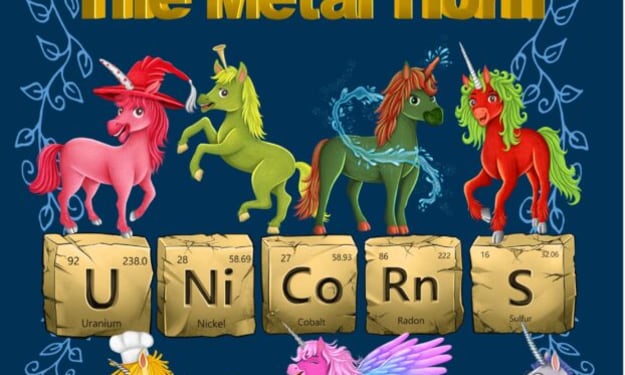
The Metal Horn Unicorns Make Science Magical: A Creative Gateway to the Periodic Table
Learning the periodic table can feel intimidating to many students when it is presented as a dense grid of symbols, atomic numbers, and unfamiliar terminology. Yet chemistry itself is full of wonder: elements form the building blocks of everything in the universe, from the oxygen we breathe to the gold in jewelry and the silicon in our electronics. When science education taps into imagination, storytelling, and creativity, students often discover that the periodic table is not merely a chart to memorize but a fascinating map of the natural world. This is exactly where The Metal Horn Unicorns Make Science Magical—a unique STEM resource—steps in.
By Bushra Rajpoot7 days ago in 01



Comments
There are no comments for this story
Be the first to respond and start the conversation.