
Why HarmonyOS Deserves More Attention 🚀
The vision, growth, and how it compares with Android/iOS


In the ever-evolving world of mobile and IoT operating systems, Android and iOS have long dominated the landscape. But there's a rising contender that deserves far more attention than it's currently getting — HarmonyOS. Developed by Huawei, HarmonyOS isn't just another alternative OS; it's a bold reimagination of what a connected digital ecosystem should look like. With a unique vision, rapid growth, and increasing developer support, HarmonyOS could reshape how we interact with our devices in the coming years. Let's dive into why this OS is more than just hype. 🔍
The Vision Behind HarmonyOS 🌟
When Huawei launched HarmonyOS (known as HongmengOS in China), its goal was clear: create a truly seamless operating system that works across all devices — not just smartphones, but also tablets, smart TVs, wearables, IoT appliances, and even cars. While Android and iOS are primarily designed for mobile and then expanded to other devices, HarmonyOS was built from the ground up as a distributed OS.
This "1+8+N" strategy (1 smartphone, 8 core devices, and countless IoT nodes) aims to give users one unified experience across all their tech. Imagine controlling your fridge, phone, smartwatch, and car dashboard all from one interface — HarmonyOS is already doing that. 🌐📲🚗
Growth and Expansion 📈
Despite political and market barriers, HarmonyOS has seen impressive adoption — especially in China. As of 2025, Huawei has reported over 800 million active devices running HarmonyOS, including smartphones, tablets, smart TVs, and wearables.
Major Chinese brands like Honor, Meizu, and Midea are integrating HarmonyOS into their hardware, and Huawei has launched ArkTS, a simplified TypeScript-based programming language, and DevEco Studio, their answer to Android Studio — making it easier than ever for developers to build for the platform. 👩💻🛠️
The OS has also undergone rapid version evolution. HarmonyOS 4 introduced major performance improvements and user interface enhancements, while HarmonyOS NEXT, set for a wider rollout in 2025, drops Android app support entirely, signaling Huawei’s confidence in its own app ecosystem. 💪
HarmonyOS vs. Android & iOS ⚔️
So, how does HarmonyOS stack up against the titans?
💚 Android:
- Strengths: Open-source, mature ecosystem, global reach.
- Weaknesses: Fragmentation, inconsistent performance across brands.
- HarmonyOS Comparison: HarmonyOS solves fragmentation with its shared kernel and distributed architecture. It offers a smoother multi-device experience out of the box, while Android struggles in that area.
🍎 iOS:
- Strengths: Polished user experience, tight hardware/software integration, strong app ecosystem.
- Weaknesses: Closed system, less innovation in multi-device connectivity.
- HarmonyOS Comparison: HarmonyOS matches iOS in polish and UI fluidity, and even surpasses it in device synergy. iOS still relies on separate apps or AirDrop for many tasks that HarmonyOS integrates natively with its Super Device feature. 🔄
The Ecosystem is the Future 🌍
Tech giants know the future is ecosystem-driven, not device-driven. Apple has been slowly building its ecosystem over the years, while Google is playing catch-up with products like Pixel Watch and Android Auto. Huawei, on the other hand, is leapfrogging the competition by offering an ecosystem where your phone, PC, tablet, TV, watch, and IoT devices can function as one single super device.
This is made possible through HarmonyOS’s distributed technology, where each device contributes its capabilities to a shared pool of resources — like turning your phone into a webcam for your PC or seamlessly dragging files from your phone to your TV.
Why It Deserves More Love ❤️
HarmonyOS isn’t perfect — global adoption is still limited, app availability outside China is a concern, and Western users may find some of the services unfamiliar. But its ambition, technical elegance, and growth trajectory are impressive. It's challenging the status quo in a market that badly needs more innovation and choice.
As developers and users look beyond the duopoly of Android and iOS, HarmonyOS offers a fresh and future-ready alternative that shouldn't be ignored. It’s not just another operating system — it’s the blueprint for the next generation of connected living. 🏠📲
Curious to try it or develop for it? Now’s a great time to start exploring the HarmonyOS ecosystem — the future might just be more harmonious than we thought 😉✨
About the Creator
Toader Adelin
Tech isn't just tools — it's a lifestyle. I decode innovations, review cutting-edge gadgets, and analyze industry trends, all with a professional approach to help you make informed decisions and stay ahead of the curve.
Keep reading
More stories from Toader Adelin and writers in 01 and other communities.
📱 Why Foldable Phones Are the Future – Or Not?
Foldable phones have gone from sci-fi dreams to real, pocketable devices. From Samsung's Galaxy Z Fold to Huawei's Mate X series, these futuristic gadgets promise to revolutionize how we use our smartphones. But are they really the future, or just a flashy trend? 🤔
By Toader Adelin8 months ago in 01
How to Access Cash Without Selling Your Digital Assest
You’ve built a strong crypto portfolio that’s happily compounding. The next thing you know, a real estate closing, an unexpected business expense, or a personal emergency demands fast cash. What sounds like a doomsday is, in reality, a scenario many holders face far more often than they’d like. That’s when you face a choice: how to gain access to instant liquidity without dumping your digital assets?
By Kiran Butt4 days ago in 01
A Planetary Alignment will coincide with Mercury Retrograde
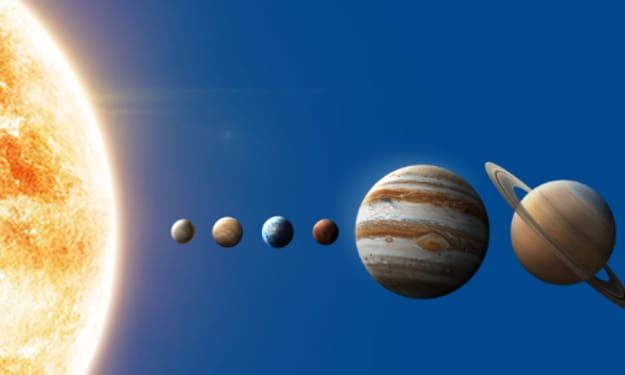
Double phenomena in the heavens Some people say in jest that the planets have aligned in their favor when life works the way they desire. Were you aware that there are seasons when things do line up in the heavens? There will be a planetary alignment AKA a planet parade, on February 28, 2026.
By Cheryl E Preston4 days ago in FYI


Comments
There are no comments for this story
Be the first to respond and start the conversation.