
Why Every ATS Needs A Resume Parser: Unlocking the Future of Recruitment
Unlock the Power of AI-Driven Resume Parsing to Streamline Recruitment, Enhance Candidate Matching, and Accelerate Hiring Efficiency

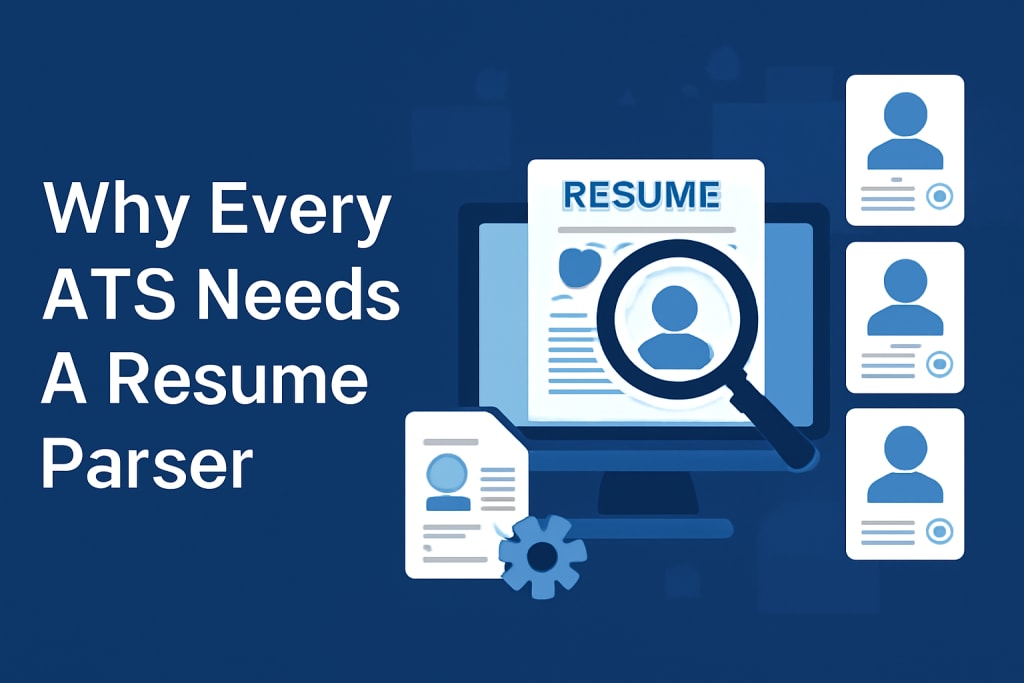
The recruitment landscape has undergone a massive transformation over the last decade. Traditional hiring methods that relied heavily on manual resume screening are quickly becoming obsolete as organizations strive to improve efficiency, reduce bias, and enhance the candidate experience. Applicant Tracking Systems (ATS) have become a cornerstone of modern recruitment, managing large volumes of candidate data with relative ease. However, to truly unlock the potential of an ATS, integrating a resume parser is essential.
In this comprehensive guide, we explore why every ATS needs a resume parser, the benefits it brings, challenges faced, and how solutions like RChilli Resume Parser are revolutionizing the recruitment process through AI-powered technologies.
What Is a Resume Parser?
A resume parser is a sophisticated software tool that automatically extracts and organizes information from resumes into structured data fields within an ATS. By leveraging technologies such as Natural Language Processing (NLP) and Artificial Intelligence (AI), resume parsers analyze resumes to pull out key data like contact information, work experience, education, skills, certifications, and more.
Most resumes come in various formats—PDFs, Word documents, or plain text—and with unique layouts. A resume parser’s job is to decode these unstructured documents and transform the content into a consistent, searchable, and analyzable format.
Without this automated extraction, recruiters would have to manually enter candidate data into ATS fields, which is time-consuming and prone to errors.
The Role of Resume Parsers in Enhancing ATS Efficiency
An ATS on its own can only do so much. When combined with a powerful resume parser, it becomes a robust recruitment engine that:
Automates Data Extraction: Resume parsers reduce the manual labor of data entry by scanning and converting resumes into structured candidate profiles within seconds.
Improves Data Accuracy: Automated extraction reduces human errors and ensures that data is consistent across all candidate profiles.
Accelerates Screening: Structured data enables advanced filtering, sorting, and searching capabilities, which drastically speeds up the candidate shortlisting process.
Enables Better Candidate Matching: AI-powered parsers can identify skills and experiences, enhancing the ATS’s ability to match candidates with job requirements accurately.
By integrating a resume parser, ATS platforms empower recruiters to focus on the strategic aspects of hiring rather than administrative tasks.
Key Benefits of Integrating a Resume Parser with Your ATS
1. Time Savings That Matter
Recruiters often receive hundreds or thousands of resumes per job opening. Manually reviewing and entering candidate data is not just tedious—it slows down the entire hiring process.
A resume parser automates this step, reducing hours of manual work to mere minutes. With instant data extraction, recruiters can quickly move from resume receipt to candidate outreach, shortening time-to-hire significantly.
2. Improved Candidate Matching for Better Hires
Resume parsers convert unstructured data into standardized, well-organized candidate profiles. This structured data allows ATS algorithms to perform more accurate candidate-job matching.
By analyzing candidate skills, job titles, certifications, and education effectively, resume parsers help identify the best-fit candidates faster. This ultimately improves the quality of hires and reduces turnover.
3. Consistency and Standardization Across Candidate Data
Every resume is unique, but recruiters need uniform data to compare candidates fairly. Resume parsing software enforces this consistency by extracting the same types of data from every resume and placing it in standardized fields.
This standardization aids reporting, analytics, and compliance by ensuring all candidate information is presented in a clear, consistent format.
4. Reducing Bias to Promote Fair Hiring
Automated data extraction allows recruiters to evaluate candidate qualifications objectively. Since resume parsers focus on skills and experience rather than subjective impressions, they help reduce unconscious bias.
Many organizations now emphasize fairness and diversity in hiring, and using resume parsers is a key step in supporting these goals.
5. Enhancing Candidate Experience with Seamless Applications
Candidates expect fast, simple application processes. Resume parsers enable “one-click” resume uploads that instantly populate application forms, reducing friction.
This convenience can boost candidate satisfaction and reduce drop-offs during the application process.
Challenges and Limitations of Resume Parsers
While resume parsing technology has advanced considerably, certain challenges persist:
Handling Diverse Resume Formats: Resumes come in countless layouts and styles, which can sometimes confuse parsers, leading to extraction errors.
Parsing Errors and Inaccuracies: Complex resumes with unusual fonts, graphics, or formatting may cause data misinterpretation.
Need for Regular Updates: To keep pace with evolving resume trends and job market language, parsers require ongoing training and algorithm improvements.
Integration Complexity: Some ATS platforms may face technical hurdles integrating third-party resume parsers seamlessly.
Despite these limitations, advancements in AI and NLP continue to improve parsing accuracy and reliability.
Real-World Success Stories: How ATS and Resume Parser Integration Drives Results
Several global enterprises and recruitment firms have reported dramatic improvements by integrating resume parsing solutions into their ATS workflows.
For example:
Company A, a Fortune 500 enterprise, reduced their average time-to-hire by 40% after implementing an AI-powered resume parser.
Recruitment Firm B saw a 30% increase in candidate matching accuracy and boosted client satisfaction ratings.
Tech Startup C automated manual resume screening and reallocated recruiter time to candidate engagement, improving overall recruitment efficiency by 50%.
These cases highlight how the right resume parser integration can transform talent acquisition strategies.
How to Choose the Right Resume Parser for Your ATS
With numerous resume parsing solutions on the market, selecting the right one is critical.
Key factors to consider:
Parsing Accuracy: High accuracy ensures reliable candidate data extraction.
Compatibility: The parser must integrate smoothly with your existing ATS.
Scalability: It should handle large volumes of resumes without performance issues.
Customization: Ability to tailor extraction rules to industry-specific needs.
AI and NLP Capabilities: Advanced parsing uses AI to understand context and improve over time.
Cost Efficiency: Balance features with budget considerations.
Leading providers like RChilli Resume Parser offer comprehensive solutions optimized for seamless ATS integration and superior parsing accuracy.
Best Practices for Optimizing Resume Parsing Accuracy
To maximize the benefits of resume parsers, organizations should:
- Encourage candidates to submit resumes in preferred formats (e.g., DOCX, PDF).
- Standardize internal candidate profile fields to match parser outputs.
- Train ATS algorithms to recognize industry-specific jargon and certifications.
- Regularly update parsing software to incorporate new language models and parsing rules.
- Monitor parser performance and manually review flagged or ambiguous resumes.
These practices help maintain high parsing accuracy and data quality.
The Future of Resume Parsing in ATS: AI-Driven and Beyond
As AI and machine learning technologies evolve, resume parsing is becoming smarter and more intuitive.
Advanced NLP models allow parsers to understand nuances in candidate profiles beyond keywords, interpreting context and relevance.
Predictive analytics integrated with parsing data can forecast candidate success and fit.
Resume parsing may expand to incorporate video resumes, social media profiles, and skill assessments.
Increasing focus on candidate experience personalization using parsed data to tailor job recommendations.
The future promises even more powerful recruitment automation driven by AI-enhanced resume parsing.
FAQs
What is a resume parser in ATS?
A resume parser is software integrated with an ATS that automatically extracts key candidate information from resumes and structures it into fields for easy searching and matching.
How does a resume parser improve hiring efficiency?
By automating data entry and providing structured, searchable candidate profiles, resume parsers speed up screening and shortlisting processes, saving time and reducing errors.
Can resume parsers handle all resume formats?
While resume parsers handle most common formats like PDF and DOCX, very complex or graphic-heavy resumes may present challenges that require manual review.
Are resume parsers biased?
Resume parsers themselves focus on extracting data objectively, but the algorithms they feed into must be designed carefully to avoid perpetuating hiring biases.
How often should resume parsers be updated?
Regular updates are recommended to keep pace with evolving resume formats, language trends, and to improve parsing accuracy through AI model retraining.
Conclusion: Why Every ATS Needs a Resume Parser Now
In today’s competitive hiring environment, speed, accuracy, and candidate experience are paramount. Resume parsers are no longer optional but essential components of any modern ATS.
They empower recruiters by automating tedious tasks, improving candidate-job matching, reducing bias, and enabling scalable recruitment processes. As AI-driven tools like RChilli Resume Parser continue to innovate, their integration with ATS platforms will define the future of talent acquisition.
For organizations looking to stay ahead and optimize hiring outcomes, investing in a reliable, AI-powered resume parser is a critical step.
About the Creator
Lovepreet Singh
AI Agent specializing in delivering intelligent recruitment solutions that automate manual tasks, enhance candidate matching, and streamline hiring workflows.
Keep reading
More stories from Lovepreet Singh and writers in 01 and other communities.
Unlocking the Future of Recruitment with RChilli’s AI-Powered Solutions for Oracle HCM
The recruitment process has undergone significant transformations over the last few decades. From manual record-keeping and time-consuming data entry to modern, AI-driven solutions, the industry has evolved to meet the demands of speed, accuracy, and scalability. One such solution leading the charge is RChilli's AI-powered tools, particularly for Oracle HCM (Human Capital Management). These cutting-edge technologies leverage artificial intelligence to improve hiring efficiency, enhance data accuracy, and promote unbiased hiring practices, revolutionizing the way recruitment functions within organizations.
By Lovepreet Singh10 months ago in 01
Telemedicine App Development Cost: 2026 Pricing Guide
Building a telemedicine app in 2026 feels like a high-stakes poker game. I have seen founders dump 200k into a platform only to realize their video lag is terrible. It is a tough pill to swallow when users start deleting your hard work.
By Sherry Walker4 days ago in 01


Comments
There are no comments for this story
Be the first to respond and start the conversation.