
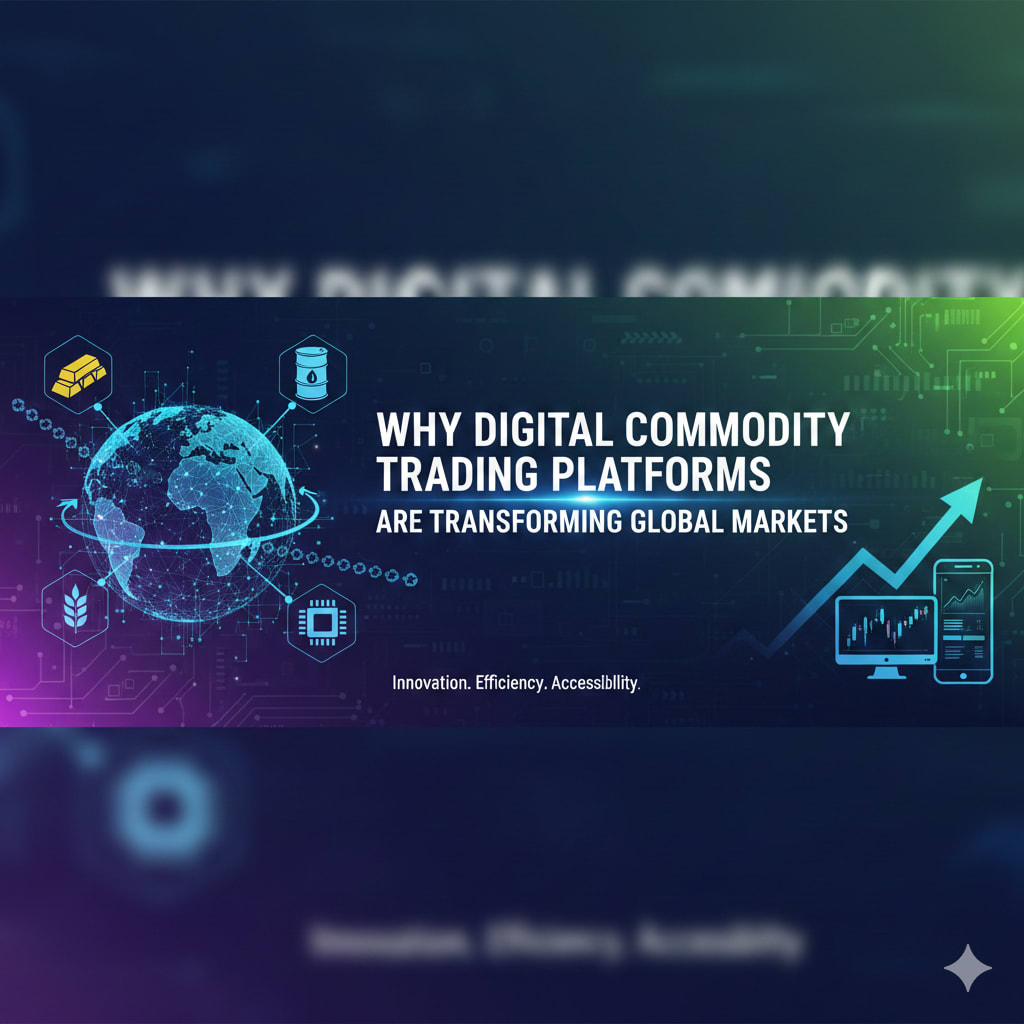
Why Digital Commodity Trading Platforms Are Transforming Global Markets
How Modern Technology Is Making Commodity Trading Faster, Cheaper, and More Transparent

Last year, a major energy company completed a crude oil trade in seconds instead of weeks. The contract was confirmed digitally. Payment happened automatically. Every step from origin to delivery was tracked transparently on a shared ledger. No paper documents. No email chains. No delays waiting for banks to process payments.
The company saved $4 million on that single transaction.
This is not some future vision. This is happening right now with digital commodity trading platforms that are completely changing how oil, metals, agricultural products, and other raw materials get bought and sold around the world.
What Is a Digital Commodity Trading Platform?
Let me explain this in simple terms because understanding this changes how you think about global trade.
A digital commodity trading platform is software that lets people buy and sell physical commodities like oil, gold, wheat, or coffee through digital systems instead of traditional paper-based processes. These platforms handle everything from finding buyers and sellers to executing trades, managing contracts, arranging delivery, and processing payments.
Think of it like this. Traditional commodity trading involves phone calls, emails, faxed documents, multiple intermediaries like brokers and banks, paper contracts that need physical signatures, and weeks of waiting for settlements. A digital commodity trading platform replaces all of that with automated systems where trades execute in minutes, contracts are digital and self-enforcing, payments happen automatically when conditions are met, and everyone involved can see exactly what is happening in real time.
The difference is like comparing sending a letter through the postal service versus sending an instant message. Both get information from point A to point B, but one takes weeks while the other is instant.
Why Are Enterprises Digitizing Commodity Trading?
Companies are not spending millions on digital commodity trading platform development just because technology is cool. They are doing it because the benefits are massive and measurable.
Cost savings are enormous. Blockchain-based platforms can reduce operational costs by 30% to 40% according to real-world implementations. One platform reported saving clients an average of $4.07 million per $100 billion in trading turnover just by eliminating errors and manual processes. When you are trading billions of dollars in commodities annually, even small percentage savings translate to millions in actual money.
Speed increases dramatically. Traditional commodity trades can take days or weeks to settle because of all the paperwork, verification, and banking processes involved. Digital platforms reduce settlement times to hours or even minutes. Smart contracts execute automatically when conditions are met, eliminating delays from manual approvals and intermediaries.
Transparency builds trust. In traditional trading, information lives in isolated systems. The buyer has their records. The seller has theirs. The bank has another set. Reconciling everything creates disputes and delays. Digital platforms create a single shared source of truth where all authorized parties see the same verified information in real time. This eliminates disputes about what was agreed upon.
Fraud gets much harder. Commodity trading has always dealt with problems like counterfeit documents, double-selling the same goods, or falsified quality certificates. Digital platforms using blockchain technology make these frauds almost impossible because once data is recorded, it cannot be altered without everyone noticing. The immutable record protects everyone involved.
Access to markets expands. Digital platforms connect traders globally. A farmer in Brazil can sell directly to a buyer in China without needing expensive intermediaries. Smaller players who were shut out of traditional commodity markets can now participate because digital systems reduce barriers to entry.
Financing becomes faster and cheaper. Trade finance, the loans that fund commodity purchases between order and delivery, normally involves mountains of paperwork and lengthy approvals. Digital platforms provide banks with verified real-time data, letting them approve financing faster and with less risk. This speeds up cash flow by 30% to 40% across the entire supply chain.
Real Examples of Digital Platforms Changing the Industry
This is not theory. Major commodity companies are already using these platforms and seeing real results.
VAKT is a blockchain-based platform for energy trading. It is backed by major oil companies and has processed billions in trades. Their system eliminates errors that normally drain profits, saving companies millions. The platform reduces operational costs by at least 30% by automating tasks that previously required manual effort. Companies using VAKT report that every trade now matches perfectly between counterparties, with zero errors or misunderstandings.
Komgo is another blockchain platform focused on commodity trade finance. It is backed by 15 of the world's largest banks and trading companies. Within just one year of launch, Komgo supported close to $1 billion in financing. The platform brings an estimated 30% to 40% increase in cash flow gains because streamlined operations free up working capital faster. Security is dramatically improved because blockchain ensures data cannot be tampered with or misplaced.
Davis Commodities recently announced plans to invest $30 million in building a blockchain-powered platform to tokenize agricultural commodities like sugar and rice. The company sees digital platforms as the future of commodity finance, offering smart contract-based settlement that reduces reliance on intermediaries, speeds up settlement times, and lowers costs. Their platform will enable cross-border trades with near-instant settlements, something that takes weeks through traditional channels.
These are not small startups experimenting with new ideas. These are established global companies putting real money and their reputations behind digital commodity trading platform development because the technology works.
How Digital Platforms Actually Work
Understanding how these platforms function helps you see why they are so much better than old systems.
Step 1: Trading interface. Users access the platform through web browsers or mobile apps. The interface shows real-time commodity prices, available inventory, and market analytics. Traders can place orders just like using any online marketplace. Advanced platforms include AI-powered tools that analyze market trends, predict price movements, and suggest optimal trading strategies.
Step 2: Smart contract execution. When a buyer and seller agree on terms, a smart contract is created automatically. This is basically code that says "if these conditions are met, then execute these actions." For example, "when the buyer's payment is confirmed and the seller's cargo passes quality inspection, then transfer ownership and release funds." No human needs to manually check and approve each step. It happens automatically.
Step 3: Blockchain recording. All trade details get recorded on a blockchain, which is a shared digital ledger that multiple parties can access but nobody can alter alone. This creates a permanent, tamper-proof record of the entire transaction. Everyone involved can verify what happened without trusting a single central authority.
Step 4: Document management. Digital platforms handle all trading documents electronically. Bills of lading, certificates of origin, quality inspections, and insurance documents all exist digitally and are shared securely among authorized parties. No more faxing documents or worrying about lost paperwork.
Step 5: Automated settlement. When delivery is confirmed and all conditions are met, payment happens automatically through the smart contract. Funds transfer instantly without waiting days for banks to process payments. This eliminates counterparty risk because neither side can back out once the contract executes.
Step 6: Supply chain tracking. Many platforms integrate IoT sensors and satellite monitoring to track commodities in real time as they move from origin to destination. If a shipment of grain is delayed or a tank of oil changes temperature unexpectedly, everyone knows immediately and can respond.
The Technology Behind Modern Commodity Trading Platforms
For those interested in the technical side, here is what powers these systems.
Blockchain infrastructure provides the foundation. Most commodity platforms use private or permissioned blockchains rather than public ones. This means only authorized participants can access the network, maintaining privacy while still getting the benefits of distributed ledger technology. Popular choices include Ethereum for smart contracts, Hyperledger Fabric for enterprise applications, and JP Morgan's Quorum for financial services.
Smart contracts automate business logic. Written in languages like Solidity, these programs execute automatically when predefined conditions are met. They handle everything from payment releases to delivery confirmations without human intervention. The code is tested extensively and audited for security before deployment.
APIs and integrations connect the platform to existing systems. Companies already use ERP systems, accounting software, and logistics platforms. Digital trading platforms integrate with these through APIs so data flows seamlessly between systems without manual data entry.
Data analytics and AI power insights. Modern platforms do not just execute trades. They analyze historical data, identify patterns, predict price movements, and recommend strategies. Machine learning algorithms get smarter over time by learning from millions of transactions.
Security layers protect the system. Multi-factor authentication, encryption, role-based access controls, and continuous monitoring keep platforms secure. Unlike centralized systems with single points of failure, distributed ledgers make platforms highly resistant to cyberattacks.
Cloud infrastructure ensures scalability. Platforms need to handle thousands of simultaneous users and process millions of transactions. Cloud hosting provides the computational power and storage needed while allowing platforms to scale up or down based on demand.
Building a Commodity Trading Platform requires expertise across blockchain development, financial systems, logistics, regulatory compliance, and user experience design. This is why many companies partner with an experienced blockchain development company rather than building everything from scratch.
Cost to Build a Blockchain-Based Commodity Trading Platform
Since many enterprises are evaluating whether to build platforms, understanding costs matters.
Basic platform: $200,000 to $500,000. This includes core trading functionality, basic smart contracts, user management, and simple reporting. Suitable for starting with a limited user base and single commodity type. Development takes 6 to 9 months.
Mid-level platform: $500,000 to $1.5 million. Adds multiple commodity support, advanced analytics, integration with external systems, mobile applications, and enhanced security features. Includes professional security audits. Development takes 9 to 12 months.
Enterprise platform: $1.5 million to $5 million+. Full-featured Commodity Exchange Software with AI-powered trading tools, comprehensive risk management, real-time supply chain tracking, multi-blockchain support, regulatory compliance tools, and custom integrations. This is what major trading houses build. Development takes 12 to 18+ months.
Ongoing costs include cloud hosting ($10,000 to $100,000+ per year depending on scale), maintenance and updates ($50,000 to $200,000+ per year), security audits ($50,000 to $150,000 per year), customer support, and compliance expenses.
These numbers explain why many companies prefer working with established Commodity Exchange Software Development companies that offer white-label or customizable solutions. Instead of spending years and millions building from zero, companies can deploy proven technology in months at a fraction of the cost.
What Makes Great Commodity Exchange Software?
If you are evaluating or building a platform, certain features separate good software from great software.
Multi-commodity support lets the platform handle different commodity types. Oil, metals, agriculture, and energy all have unique trading characteristics, quality standards, and delivery processes. Flexible software accommodates these differences without requiring separate systems.
Real-time market data provides current prices from multiple exchanges, news feeds, and market analysis. Traders need accurate information to make decisions. Delayed or incomplete data leads to bad trades.
Advanced order types support different trading strategies. Market orders, limit orders, stop-loss orders, and algorithmic trading give users flexibility in how they execute trades.
Risk management tools help traders manage exposure. Position limits, margin requirements, Value at Risk calculations, and automated alerts prevent excessive risk-taking.
Regulatory compliance built into the platform ensures trades meet legal requirements in different jurisdictions. Automatic reporting, audit trails, and compliance dashboards make regulatory obligations manageable.
Mobile access matters because commodity traders need to monitor markets and execute trades from anywhere. Modern platforms work seamlessly on smartphones and tablets, not just desktop computers.
Customizable workflows allow companies to adapt the platform to their specific processes rather than forcing them to change how they work. Configurable approval chains, custom document types, and flexible reporting match each company's needs.
API ecosystem enables integration with other services. Commodity trading services often need to connect with logistics providers, insurance companies, quality inspectors, and financial institutions. Open APIs make these connections possible.
The Difference Between Digital Platforms and Traditional Cryptocurrency Exchange Software Development
Some people confuse commodity trading platforms with cryptocurrency exchanges. While they share some technology, they serve different purposes.
Cryptocurrency exchange software development focuses on trading digital currencies like Bitcoin and Ethereum. These are entirely digital assets with no physical form. Trades settle instantly because you are just moving data between wallets.
Commodity Trading Platform development deals with physical goods. You are not just trading data, you are trading actual oil tankers, gold bars, or wheat shipments. The platform must handle physical logistics, quality verification, delivery tracking, and coordination among many parties in the real world.
The complexity is much higher for commodities. While cryptocurrency exchanges can be built in a few months, proper commodity platforms take a year or more because they must integrate with physical supply chains, meet industry-specific regulations, handle complex financing arrangements, and work with legacy systems that existing commodity companies use.
However, commodity platforms do borrow proven concepts from cryptocurrency development. Blockchain technology, smart contracts, digital wallets, and decentralized verification all originated in crypto but are now being applied to traditional commodity trading with great success.
Challenges in Building Digital Commodity Platforms
I believe these platforms represent the future, but honest discussion requires acknowledging real challenges.
Regulatory uncertainty varies by country. Some nations embrace digital commodity trading. Others have unclear rules or outright restrictions. Building a global platform means navigating dozens of different regulatory regimes, each with its own requirements.
Industry resistance exists. Commodity trading has worked a certain way for decades. Older traders and executives who built careers on personal relationships and traditional methods may resist digital transformation. Change management becomes as important as technology.
Integration complexity arises because commodity companies use many different legacy systems. Getting digital platforms to talk to older ERP systems, logistics software, and accounting platforms requires significant integration work. Data standards differ across companies, making interoperability challenging.
Scalability concerns matter for global platforms. Commodity markets process enormous transaction volumes. Blockchain systems must handle this scale without slowing down or becoming prohibitively expensive. Current technology is improving but still has limitations compared to centralized databases.
Cybersecurity risks increase with digitization. More digital systems mean more potential attack vectors. Commodity platforms hold extremely valuable information about trade flows, pricing strategies, and supply sources. They become attractive targets for hackers and require robust security measures.
Initial investment can be substantial. Building or implementing these platforms requires significant upfront costs. Smaller commodity traders may struggle to afford the investment, potentially creating a divide between large enterprises that can go digital and smaller players that cannot.
These challenges are real but manageable. The companies succeeding with digital platforms are those that plan carefully, invest appropriately, and commit to the transformation long-term.
The Future of Commodity Trading Is Digital
The market numbers tell the story. The global commodity trading platform market was valued at $3.5 billion in 2023 and is expected to reach $7.2 billion by 2032, growing at 8.2% per year. The digital commodity trading platform specifically is projected to reach $3 billion with 10% annual growth.
This growth is not speculation. It is based on real platforms handling billions in actual trades, proven cost savings of 30% to 40%, and increasing adoption by major trading houses, banks, and commodity producers.
Major trends driving growth include AI-powered trading assistants that help traders make better decisions, satellite and IoT integration providing real-time tracking of commodities in transit, tokenization allowing fractional ownership of commodity shipments, integration of carbon credits and sustainability tracking into trading platforms, and expansion into new commodity types beyond traditional oil and metals.
The COVID-19 pandemic accelerated digital transformation as traders could not meet in person. Companies that might have delayed digitization for years implemented digital platforms in months because they had no choice. Now that they have experienced the benefits, there is no going back.
Getting Started with Digital Commodity Trading
If you are a commodity trader or company considering digitization, here is practical advice.
Start with education. Study existing platforms like VAKT and Komgo. Talk to companies already using digital systems. Understand both benefits and challenges from those who have gone through the transition.
Assess your needs. Are you primarily trading one commodity or multiple? Do you need global reach or regional focus? What is your transaction volume? What integration requirements do you have? Clear answers guide technology choices.
Evaluate build versus buy. Most companies should not build from scratch unless they have very unique needs and substantial budgets. Look at existing Commodity Exchange Software solutions that can be customized. This gets you to market faster at lower cost.
Plan for change management. Technology is only part of the challenge. Training staff, changing processes, and managing resistance matter just as much. Budget time and resources for organizational change.
Start with a pilot. Do not try to digitize everything at once. Pick one commodity type or one geographic region. Prove the concept works. Learn lessons. Then expand gradually.
Prioritize security and compliance. These are not areas to cut corners. Work with experienced Commodity Exchange Software Development firms that understand both technology and regulatory requirements. Budget appropriately for audits and certifications.
Focus on user experience. The best technology fails if people do not use it. Platforms must be intuitive enough that busy traders adopt them willingly, not because they are forced to.
The Transformation Is Happening Now
Five years ago, digital commodity trading platforms were experimental. Today, they handle billions in trades monthly. Five years from now, they will be the standard way commodities get traded.
The benefits are too substantial to ignore. Cost savings of 30% to 40% mean millions saved annually. Settlement times dropping from weeks to minutes dramatically improve cash flow. Fraud reduction protects billions in assets. Expanded market access creates new opportunities.
Companies that embrace this transformation early will gain competitive advantages. Those that resist will find themselves at a cost and efficiency disadvantage that becomes harder to overcome over time.
Whether you are building a platform, implementing one, or simply trading on one, understanding how these systems work helps you succeed in the modern commodity markets.
The future of commodity trading is digital, transparent, and automated. That future is not coming. It is already here.
About the Creator
Matthew Haws
Blockchain and AI enthusiast sharing insights, ideas, and honest takes on the fast-evolving world of tech. I write to simplify complex concepts and spark meaningful conversations.
Keep reading
More stories from Matthew Haws and writers in 01 and other communities.
Green Finance Tokenization: The Future of Sustainable Investing
The Teacher Who Owns a Solar Farm in Africa Last month, I talked to Sarah, a middle school teacher in Ohio. She told me something that would have been impossible five years ago. She owns part of a solar farm in Kenya.
By Matthew Haws3 months ago in 01
White Label Tokenization in 2026: A Strategic Guide for Future-Ready Businesses
The digital asset economy is evolving rapidly, and tokenization is no longer a niche concept reserved for early blockchain adopters. By 2026, tokenization is expected to become a mainstream infrastructure layer for finance, real estate, commodities, intellectual property, and alternative assets. As adoption accelerates, businesses are increasingly turning toward white label tokenization solutions to enter the market efficiently and competitively.
By smithtaylor6 days ago in 01
The Role of IT Technology in Modern Astrology App Development
In recent years, astrology has evolved far beyond horoscopes in newspapers and magazines. With the rise of smartphones and digital platforms, astrology enthusiasts now rely heavily on astrology apps for personalized insights, daily predictions, and celestial guidance. The integration of IT technology has played a pivotal role in this transformation, enabling app developers to deliver highly interactive, accurate, and user-friendly astrology experiences. In this blog, we’ll explore the role of IT technology in modern astrology app development, key benefits, essential features, and emerging trends for 2026.
By shane cornerus5 days ago in 01


Comments
There are no comments for this story
Be the first to respond and start the conversation.