
Why Choose Canton Network for RWA Tokenization in 2026? Key Features, Services, and Builder Advantages
Exploring Canton Network’s Privacy-First Architecture, Institutional-Grade Workflows, and the Strategic Advantages Powering the Future of Real-World Asset Tokenization.

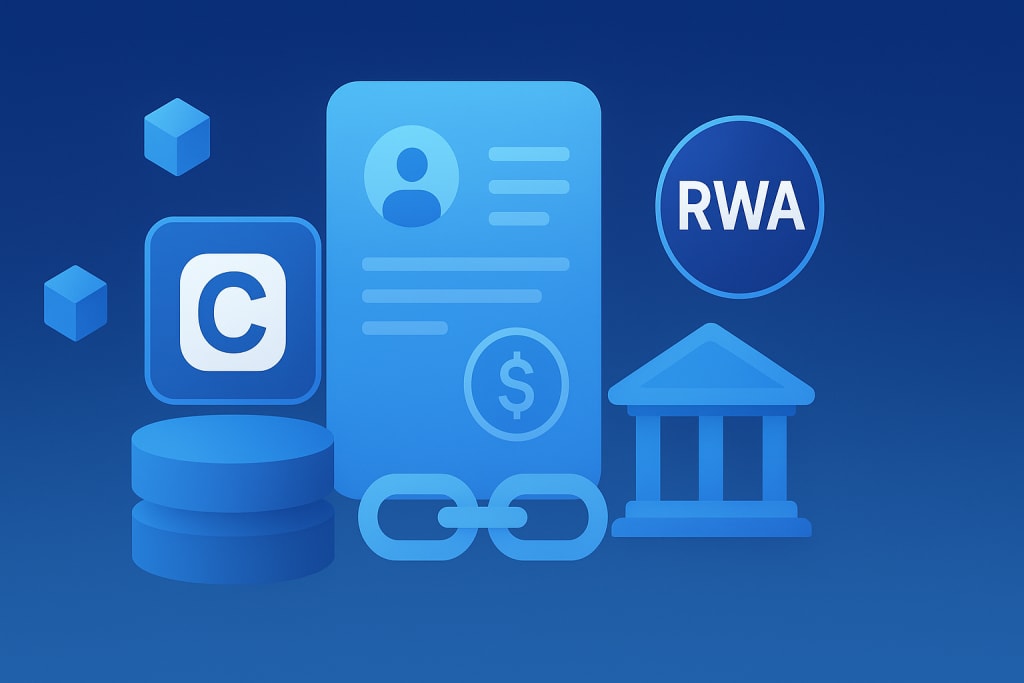
The tokenization of real-world assets such as bonds, equities, cash instruments, commodities, funds, and loans has unlocked a new era of liquidity, accessibility, and programmability. However, the global financial system has struggled to onboard RWAs to blockchain due to challenges like privacy, compliance, governance, interoperability, and the risks associated with public-chain transparency. Canton Network solves this exact gap. Instead of forcing institutions to expose sensitive data on public ledgers or adopt siloed private blockchains, Canton delivers a hybrid architecture that ensures privacy, enforceable workflows, auditability, and multi-party settlement all in a unified network. As 2026 continues to shift RWA adoption into mainstream systems, Canton has become the default choice for banks, asset managers, custodians, and fintech builders.
Understanding Canton Network as a Privacy-First Institutional Blockchain
Canton Network is a privacy-enabled, permission-aware blockchain ecosystem designed to support institutional-grade applications. Unlike traditional blockchains where all transactions are visible to every participant, Canton ensures that only the parties involved in a transaction can view it. The network uses Daml smart contracts purpose-built for the financial sector to encode legal, operational, and compliance requirements directly into blockchain workflows. Canton acts like a network of interconnected, application-specific ledgers that synchronize securely and privately. This allows institutions to maintain confidentiality while still benefiting from shared settlement, interoperability, and multi-party automation. For RWAs where sensitive identity data, contractual rights, and regulatory obligations must be protected this architecture makes Canton uniquely capable.
How Canton Network Enables End-to-End Privacy in RWA Tokenization
One of the biggest challenges of RWA tokenization is privacy. Public blockchains expose addresses, balances, and transaction history, which is unacceptable for regulated markets. Private chains solve privacy but fail to offer interoperability. Canton Network offers the best of both worlds. Its architecture ensures data is visible strictly on a need-to-know basis. Instead of broadcasting transactions globally, Canton uses “synchronization domains” that maintain privacy while still enabling multi-party workflows. This creates a secure environment where issuers, investors, custodians, and regulators share only what is necessary. Sensitive information like identity, transaction size, or portfolio composition remains confidential. This is vital for compliance with financial regulations, especially in cross-border RWA offerings.
Achieving Interoperability Across Institutions Through Canton’s Ledger Model
Interoperability is another major requirement for RWA tokenization. Institutions need to interact across different systems custodians, exchanges, settlement providers, asset managers, and liquidity networks. Traditional blockchains cannot easily support these multi-institution flows because they either lack privacy or require full visibility across the network. Canton solves this with a groundbreaking “network of networks” structure. Every application runs its own privacy-preserving ledger, but they can interoperate through synchronized workflows. For example, a fund tokenization platform can interact with a collateral management system or a payments platform without exposing all transaction data. This interconnected architecture forms what feels like a unified global ledger without forcing institutions to compromise privacy or control.
Scalable Architecture That Supports Institutional Volumes
Tokenization at scale requires infrastructure capable of handling thousands of transactions per second across different institutions. Traditional chains face scaling issues because every node processes every transaction, even unrelated ones. Canton avoids this by processing only relevant transactions on relevant nodes. This significantly reduces the load on infrastructure and allows networks to expand horizontally. As more institutions adopt Canton in 2026, the network’s architecture ensures that the scaling bottlenecks common in public blockchains do not affect institutional RWA activity. This scalability enables everything from tokenized bond settlements to high-frequency collateral operations and secondary market trading.
Atomic Settlement and Advanced Financial Workflows
Settlement risk remains one of the biggest bottlenecks in traditional markets. RWA tokenization only works at scale if settlement is verifiable, atomic, and instant. Canton enables atomic settlement across different applications and institutions, ensuring that multi-step financial operations either complete entirely or not at all. This is particularly important for workflows such as bond issuance, repo transactions, securities lending, FX swaps, or derivatives margining. With Canton, a transfer of a tokenized bond and corresponding cash token can settle simultaneously, removing counterparty risk and eliminating reconciliation issues. This atomic composability positions Canton as a superior alternative to traditional DvP (Delivery vs Payment) systems.
Governance and Compliance Built for Regulated Markets
Unlike permissionless networks that rely on broad validator sets and open access, Canton allows institutions to configure governance models tailored to legal and operational requirements. Governance can be customized based on jurisdiction, asset class, stakeholder roles, and regulatory expectations. With Daml smart contracts, compliance rules can be built directly into the contract logic, ensuring automatic enforcement of regulatory requirements such as KYC verification, portfolio limits, reporting obligations, or investor eligibility. Canton also supports regulatory observers nodes that regulators can use to monitor activity without accessing private transactional details. This compliance-by-design architecture gives Canton a significant advantage for financial institutions in 2026.
Real-World Adoption Signals Maturity and Institutional Trust
By 2026, Canton Network has been integrated into major pilots and production workflows across asset classes. Banks have used Canton to tokenize government bonds, custodians have tested tokenized gold movements, and buy-side institutions have explored money market tokenization and collateral management. These real-world use cases demonstrate that Canton is not experimental it is already solving high-stakes institutional problems. In addition, growing institutional investment into the Canton ecosystem signals that the network is seen as a foundational layer of institutional blockchain transformation.
How Canton Improves Liquidity and Collateral Mobility
One of the most valuable aspects of RWA tokenization is improved liquidity and collateral utility. Canton enables faster settlement and real-time collateral mobility by allowing institutions to move tokenized assets across various applications within the network. Whether a firm wants to pledge assets as collateral, trade them in secondary markets, or use them in structured products, Canton’s architecture supports seamless movement with the relevant permissions and privacy intact. This improves funding efficiency, reduces borrowing costs, and enhances capital utilization critical advantages for banks and asset managers.
Auditability and Regulatory Reporting with Protocol-Level Controls
Canton is built not only for privacy but also for controlled transparency. Regulators and auditors require visibility into transactions without compromising participant confidentiality. Canton’s design allows institutions to grant specific visibility rights to regulators while hiding private details like trade size or counterparties. This selective transparency enables compliant RWA operations and reduces the burden of manual reporting. Since Daml contracts can encode reporting and audit rules, institutions can automate reconciliation and compliance. This programmable auditability is essential as global regulatory bodies tighten rules around blockchain-based assets.
Developer Experience Using Daml and Canton Tooling
Canton’s technical foundation is Daml, a smart contract language designed specifically for financial workflows. Developers use Daml to encode legal rights, obligations, and multi-party workflows in a secure and deterministic way. Daml provides strict authorization controls, eliminating ambiguity and reducing vulnerabilities. Builders benefit from a full-suite development environment, including SDKs, local networks, testing frameworks, integration libraries, and devnets. Daml’s language structure makes it easier for enterprises to model complex financial agreements, which is a major advantage for RWA tokenization where legal accuracy is critical. By 2026, Daml has become a known standard for institutional smart-contract engineering.
Ecosystem Support and Enterprise Integrations
Canton's strength extends beyond its technical architecture it benefits from a rapidly growing ecosystem of partners, service providers, custodians, financial institutions, and infrastructure players. This ecosystem enables faster integration of key components such as identity verification, custodial services, price oracles, market data providers, and settlement systems. Enterprises adopting Canton can connect seamlessly to existing financial infrastructure, reducing deployment time and operational overhead. Ecosystem momentum is one of the strongest reasons for Canton’s dominance in RWA tokenization in 2026.
Step-by-Step View of Tokenizing RWAs on Canton Network
The process of tokenizing real-world assets on Canton involves several coordinated phases. It begins with the legal structuring of the asset and the creation of the corresponding Daml contract that defines ownership rights, transfer conditions, and lifecycle events. The next step involves configuring governance, permissions, and access rules within the Canton environment. Institutions then integrate custodial and settlement systems into the workflow, allowing tokenized assets to be represented and moved securely. A pilot program is usually conducted to test multi-party transactions, privacy controls, and regulator visibility. After successful testing, the platform scales into production where monitoring, reporting, and lifecycle management continue seamlessly. This phased process ensures an institutionally sound RWA launch.
Comparing Canton with Other Tokenization Platforms
Canton’s unique value lies in its privacy-preserving architecture, institutional governance, and inter-organizational interoperability. Unlike public chains where privacy is limited, Canton ensures data confidentiality at the protocol level. Unlike private chains that operate in silos, Canton enables cross-application composability. And unlike enterprise blockchains with limited ecosystem adoption, Canton integrates with multiple financial institutions simultaneously. For regulated markets, this combination makes Canton an unmatched platform for secure, scalable RWA tokenization in 2026.
Ideal Use Cases for Canton-Based Tokenization
Canton Network is especially powerful for tokenizing asset classes requiring strict controls. Sovereign and corporate bonds benefit from Canton’s settlement finality and privacy protections. Money market funds and institutional liquidity funds benefit from programmability and instant settlement. Commodities like gold can be tokenized with institutional custody models embedded in Daml. Loans and credit instruments can be modeled with detailed workflows and multi-lender visibility rules. Collateralized instruments like repos, securities lending contracts, and structured financial products gain efficiency from atomic settlement. These use cases highlight Canton’s alignment with financial industry needs.
Regulatory Preparedness and Future-Proof Compliance
As RWA regulation evolves globally, institutions need a blockchain platform capable of adapting to new compliance requirements. Canton’s governance, permissioning, and audit capabilities support future regulatory changes without requiring a redesign of the entire system. Institutions can add or adjust regulator access, compliance logic, or reporting workflows through Daml smart contracts. This adaptability is crucial for long-term RWA strategies where regulatory clarity continues to evolve.
Understanding Canton’s Economic and Network Design
Canton employs a responsible economic model designed for long-term sustainability. Its architecture supports validator incentives, application providers, domain operators, and service firms. Because transactions are privacy-scoped, the economic model is adaptable to enterprise workflows. Developers and institutions do not need to rely on unpredictable gas fees or shared global resources. Instead, Canton ensures predictable performance, institutional-grade governance, and controlled economic operations ideal for large financial institutions.
Limitations and Considerations When Choosing Canton
While Canton offers unmatched institutional capabilities, institutions must consider integration complexity and the learning curve of Daml. The platform requires legal structuring of assets and alignment with regulators, meaning deployment is not plug-and-play. However, these requirements are unavoidable for compliant RWA tokenization, and Canton significantly reduces technical and operational risk compared to public blockchains. Institutions must also ensure proper node governance and secure operational processes when joining the network.
Future Outlook: Canton’s Growing Influence in Global Finance
Canton Network is on track to become a core layer of the institutional digital asset landscape. As RWAs continue to expand globally, Canton’s architecture will support new asset classes, cross-border settlement networks, and collaborative financial products. The growth of enterprise adoption, regulatory partnerships, and ecosystem expansion reinforces Canton’s position as the most advanced platform for RWA tokenization in 2026. Its privacy-focused, interoperability-driven, and compliance-ready model makes it the foundation for future digital financial infrastructure.
Conclusion
Canton Network stands out as the premier choice for RWA tokenization in 2026 because it meets the exact needs of regulated financial institutions privacy, governance, interoperability, scalability, and compliance. Its architecture resolves the challenges that have historically limited blockchain adoption in institutional markets. With real-world pilots, strong ecosystem growth, advanced settlement capabilities, and enterprise-ready workflows, Canton is clearly positioned as the most reliable platform for secure and scalable RWA tokenization. Financial institutions, fintech innovators, and Web3 builders looking to enter the RWA space will find Canton to be the most future-proof and institutionally aligned network available today.
About the Creator
Jack santo
I am a Blockchain, Crypto, NFT, Metaverse, etc., enthusiast.
Keep reading
More stories from Jack santo and writers in 01 and other communities.
How Decentralized Identity Can 10× the Revenue of Crypto Exchange Software?
In the rapidly evolving world of blockchain and digital finance, security, compliance, and user experience have become the cornerstones of sustainable business growth. For crypto exchanges, ensuring these factors is not just a matter of trust but a direct determinant of profitability. As cyber threats and data privacy issues rise, traditional identity management systems are showing their limitations. Here, Decentralized Identity (DID) emerges as a game-changer a blockchain-based identity solution that empowers users to control their personal data while providing exchanges with enhanced security, compliance automation, and business scalability.
By Jack santo2 months ago in 01
Upgrading Batch Asphalt Plants for Polar Conditions
Manufacturers are increasingly focused on enhancing the capabilities of batch asphalt plants to meet the unique challenges posed by polar region road construction. Upgrades to the anti-freeze batching system and thermal insulation components are pivotal in ensuring that these plants operate effectively in extremely cold conditions. This article explores how these technical optimizations impact the performance of asphalt batch mix plants and their overall pricing.
By Macroad Asphalt Plant7 days ago in 01
Replica Designer Bags: Function, Ethics, and Cultural Context
Handbags occupy a distinctive place in everyday life. They are used daily, relied upon for organization, and shaped by routine rather than spectacle. Although handbags are often discussed through the lens of fashion, their relevance extends well beyond appearance. From historical necessity to modern cultural symbol, handbags reflect how people move, work, and live. Within this wider discussion, topics such as Replica Designer Bags and Luxury Designer Bags raise questions about access, ethics, craftsmanship, and personal priorities rather than purely aesthetic value.
By charliesamuel4 days ago in 01


Comments
There are no comments for this story
Be the first to respond and start the conversation.