
Why Are HVAC BIM Services Essential for Modern Engineering Projects?
Why Are HVAC BIM Services Essential for Modern Engineering Projects?

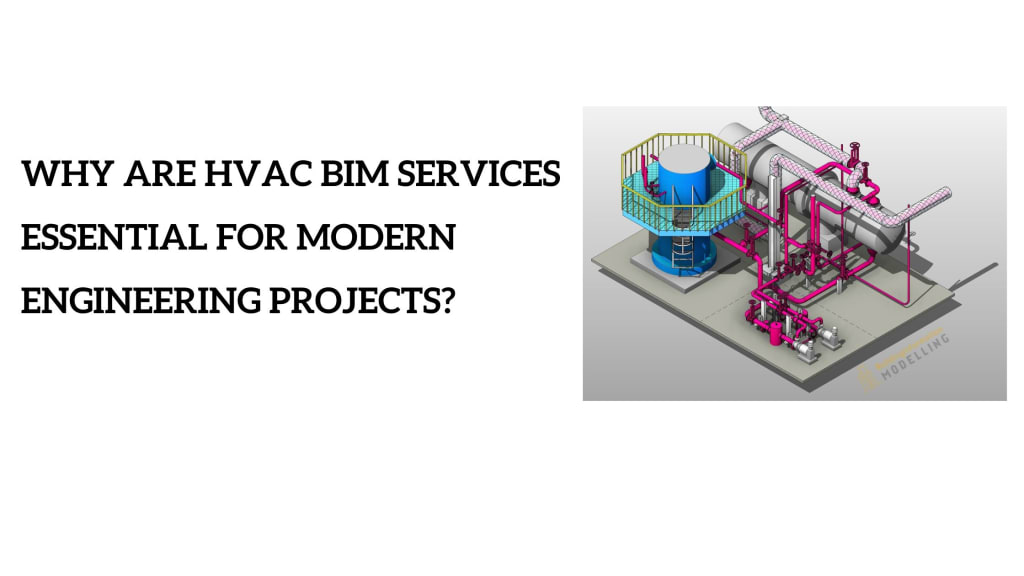
This is the real-world scenario every engineer, builder, modeler, and drafter knows well. When mechanical systems like HVAC ductwork collide with plumbing or structural components on-site, it is not just a technical issue. It becomes a delay, a cost spike, and often, a complete design rethink.
That is where HVAC BIM Services come in. Not as a luxury, but as a necessity. Not just for planning, but for solving problems before they happen.
Let’s break it down.
Coordination of HVAC Systems with Real-Time Accuracy
In traditional methods, coordination between different trades often happens late. By then, design changes are expensive and inconvenient. HVAC BIM Modeling Services completely change this approach.
When a detailed HVAC BIM Model is integrated with structural and electrical systems, conflicts can be detected and resolved during the design phase, not on-site. The ability to identify spatial clashes or routing challenges during modeling prevents rework, which is often the costliest part of any engineering project.
Whether it is aligning HVAC ductwork above a dropped ceiling or finding clear paths for chiller lines in tight shafts, BIM Services handle it virtually first.
Discipline-Specific Detailing for Installers and Fabricators
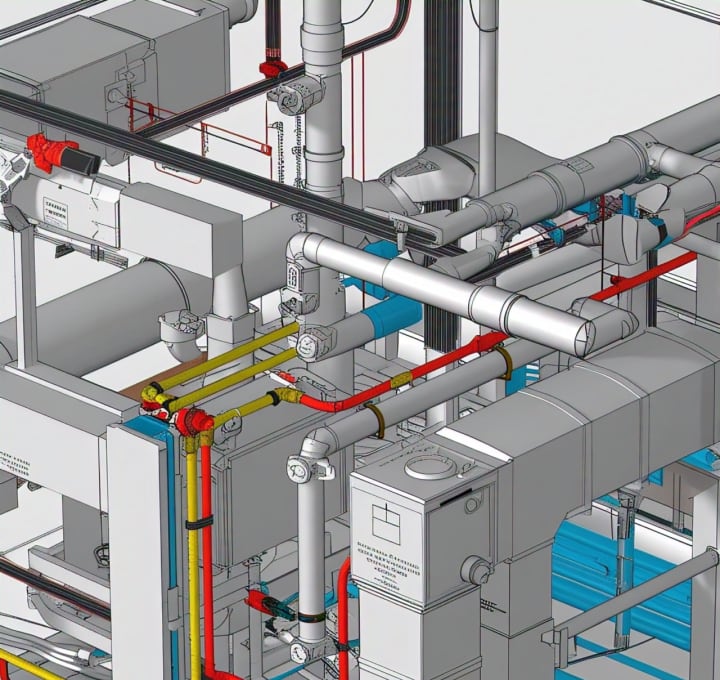
Most field crews do not want to decode design intent. They want clear, direct instructions. HVAC BIM Models provide exactly that. These models are not abstract concepts. They include data-rich details such as duct sizing, airflow rates, insulation thicknesses, hanger locations, and even equipment access zones.
This level of detail feeds directly into fabrication drawings and shop tickets. Drafters no longer need to guess at transitions or fittings. Fabricators do not waste time re-cutting parts. Installers arrive on-site with a digital twin that reflects the reality they need to build.
With accurate dimensions and field-ready detailing, HVAC Engineering Services reduce interpretation errors, speed up the build process, and contribute to a smoother site flow.
Scalable Models for Complex Multi-Zone HVAC Systems
For large-scale engineering projects like airports, hospitals, or manufacturing plants, HVAC zoning is intricate. You are dealing with multiple systems such as VAVs, AHUs, chillers, heat exchangers, and custom duct routing. Coordinating all of these in 2D is nearly impossible without missed connections or flow imbalances.
Through HVAC BIM Services, each mechanical zone can be modeled, tracked, and revised independently while remaining part of a single federated model. This allows MEP coordinators to manage multiple teams and systems without losing oversight.
Model scalability also helps with design versioning. As energy models change or architectural revisions come in, HVAC layouts can be adjusted dynamically without being re-drawn from scratch.
Reduced RFIs and Fewer Change Orders
Inaccurate or incomplete designs generate confusion. That confusion leads to RFIs. RFIs delay decision-making. Delays turn into change orders. And change orders reduces profit margins.
Using HVAC BIM Modeling Services significantly reduces this chain reaction. When models are rich in design logic, sizing data, spatial constraints, and system hierarchy, field crews ask fewer questions. Decisions are built into the model.
When RFIs do occur, having a centralized Building Information Modelling environment means the response can be visually and logically validated. That avoids the "let’s try it and see if it works" approach, which no serious engineer wants to rely on.
Faster Prefabrication and On-Site Installation
In modern projects, prefabrication is a game-changer. But prefabrication depends on one thing: accuracy. Misaligned hangers, poorly dimensioned risers, or ambiguous duct slopes will stall a prefab job instantly.
HVAC BIM Models provide the detailed geometric and spatial data needed for prefabrication to succeed. Lengths are exact. Offsets are measurable. Angles are verified. Materials are tagged.
Prefabrication becomes an assembly process, not a design process. And because the HVAC Engineering Services generate coordinated clash-free data, on-site work becomes installation instead of troubleshooting.
Integration with Other Disciplines for a Unified Workflow
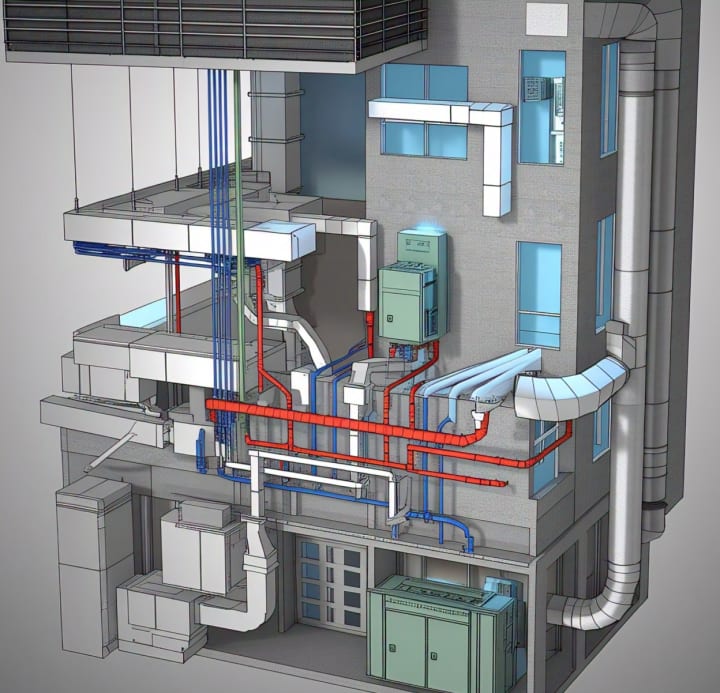
HVAC systems do not operate in isolation. They intersect with structural framing, electrical raceways, plumbing, and architectural finishes. Without integration, these systems compete for space. With HVAC BIM Services, the model communicates with every other trade.
This integration eliminates silos. Engineers can test airflow alongside lighting layouts. Fire protection experts can work around chilled beams. Architects can assess ceiling impacts before duct paths are finalized.
Instead of working backward from problems, BIM Services help teams move forward with confidence, knowing their decisions fit into a larger whole.
Transparent Lifecycle Data for Facility Managers
The role of HVAC BIM Services does not stop at project handover. For facility managers, maintaining systems depends on data such as filter change cycles, damper access points, equipment service zones, and sensor locations.
A well-structured HVAC BIM Model stores all of this information. Every component is tagged with metadata including make, model, specs, and maintenance cycles. This model becomes a long-term reference tool, reducing guesswork during future repairs or retrofits.
Unlike paper records or incomplete PDFs, a BIM model is a living record. It grows with the building and supports continuous optimization. This is especially critical for complex or regulated environments like labs, airports, or healthcare centers.
Smarter Energy Modeling and Load Calculations
Energy consumption is not a side note. It is a driving factor in system selection. Using HVAC Design Services through a BIM workflow allows thermal zoning, airflow simulations, and load calculations to be modeled before final equipment choices are made.
This data-informed approach helps teams select properly sized HVAC systems. Oversizing leads to energy waste. Undersizing causes occupant discomfort and mechanical stress. Building Information Modelling links design intent directly to performance outcomes.
By integrating real usage patterns and environmental conditions, design teams can better forecast system efficiency before anything is installed.
Error-Free Documentation for Regulatory and QA Needs
Designs must not only work but also meet standards. That includes local codes, ASHRAE guidelines, ventilation norms, and fire safety compliance.
Manual documentation methods often miss key metrics. With HVAC Engineering Services based on BIM, documentation is auto-generated from the model itself. Duct lengths, diffuser counts, airflow rates everything is traceable and verifiable.
This traceability streamlines QA and QC workflows and helps during third-party audits. It also supports compliance reports, project close-out packages, and warranty documentation.
Model-Based Estimation for Smarter Budgeting
Estimation based on 2D drawings and markups is slow and error-prone. HVAC BIM Services allow quantity takeoffs and budget estimates to be extracted directly from the model.
This not only speeds up bidding but also adds transparency. Estimators can track material counts, fitting types, and labor units with full clarity. When design changes occur, the updated quantities flow automatically without backtracking.
By reducing unknowns in estimation, HVAC Design Services support better planning and tighter financial control.
Final Thoughts: No More Guesswork in Mechanical Design
The shift toward HVAC BIM Modeling Services is not just a tech trend. It is a response to real-world challenges like missed deadlines, layout clashes, budget overruns, and inefficiencies in mechanical system planning.
Professionals across the board engineers, builders, BIM modelers, and drafters, need more than visual representations. They need models that function as the blueprint, instruction manual, and source of truth.
HVAC BIM Services meet this need by translating engineering complexity into coordinated, build-ready, and maintainable digital workflows.
It is not about innovation for its own sake. It is about control, clarity, and consistency on every job, every time.
About the Creator
lisa Brown
Building Information Modelling delivers high quality out performing designs in Electrical BIM Services. We collectively work as a team and we believe in delivering end to end solutions in electrical designs and drawings.
Keep reading
More stories from lisa Brown and writers in 01 and other communities.
What Engineers Get Wrong About 4D BIM Scheduling And How to Correct It
4D BIM Scheduling is one of the most effective tools for managing complex projects, yet many professionals misapply it, leading to inefficient workflows, delays, and budget overruns. The issue is not with the technology but with how it is implemented.
By lisa Brown10 months ago in 01
2026 Platform Choice Mobile App Development Native vs Hybrid
In 2026, mobile app development native vs hybrid is no longer a framework debate. It reflects a tectonic shift inside the Google ecosystem where AI Retrieval, Zero Click discovery, and entity-level evaluation now shape risk exposure, authority loss, and strategic realignment for every mobile product.
By Samantha Blake6 days ago in 01
How James Kodrowski Builds Scalable Businesses and Long-Term Investments
James Kodrowski is widely recognized as an Entrepreneur, Business Leader & Investor known for building scalable businesses while maintaining a disciplined, long-term investment mindset. His approach combines financial intelligence, operational excellence, and leadership-driven strategy, making his work highly relevant across Finance & Financial Services, Business Strategy & Operations, and Entrepreneurship & Leadership.
By James Kodrowski6 days ago in 01




Comments
There are no comments for this story
Be the first to respond and start the conversation.