
When Supply Chains Snap: The Quiet AI Revolution That Turns Chaos Into Cash
What happens when the trucks stop and the boardroom panic begins?

Introduction
Sudden disruptions can shake the very bones of global trade. From COVID-19 to conflicts overseas, traditional supply chains often buckle under pressure. This fragility has exposed how vulnerable our systems really are. But here’s the twist: artificial intelligence is quietly changing how companies handle these shocks. It’s no longer just a tool for tech firms—AI now helps keep supply chains moving, even when chaos hits. Understanding this shift could be what keeps your business afloat in future crises. It’s a quiet revolution that turns unpredictable chaos into steady cash.
The State of Global Supply Chains: Challenges and Disruptions
The Increasing Complexity of Supply Networks
Global trade has grown wildly over the past decades. Companies source materials from dozens of countries, making supply networks longer and more tangled. This kind of growth invites trouble. When one part hits a snag, the ripple effect is huge. Recent examples include port congestion in Los Angeles and factory shutdowns in China. These issues slow down delivery, raise costs, and create shortages.
Impact of Recent Disruptions on Business Operations
Supply chain delays now cost companies billions each year. For example, the Suez Canal blockage in 2021 blocked a ship for nearly a week. This tiny event caused global trade to slow down drastically. Businesses faced stockouts, missed deadlines, and higher prices. Data shows that supply chain delays have doubled compared to five years ago. Shipping costs soared, and consumers felt the pinch through higher prices and stock shortages.
Traditional Supply Chain Management Limitations
Using old methods like manual forecasting isn’t enough anymore. These systems can’t keep up with rapid changes or unpredictable events. Many companies still rely on static plans that assume everything stays normal. But reality is different. To stay ahead, businesses need tools that offer real-time insights. This is where old methods fall short and AI steps in.
The AI-Driven Transformation of Supply Chains
How AI Is Reshaping Supply Chain Operations
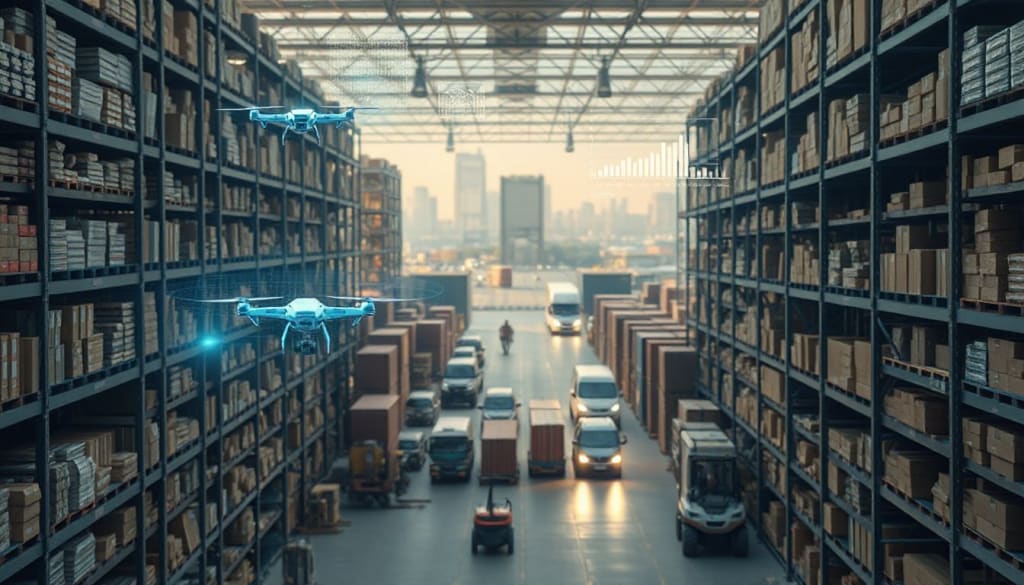
AI is transforming supply chains by making them smarter. Algorithms now predict demand more accurately, plan routes better, and even manage inventory autonomously. For example, Amazon uses AI to track how many products are in warehouses. When a customer orders, AI decides what to ship and from where—all almost instantly. These smart systems help companies respond faster to sudden changes.
- Key Technologies Powering the Revolution
- Machine Learning and Deep Learning: These systems analyze tons of data to find patterns, helping forecast future demand.
- IoT and Sensor Data: Sensors placed on goods, vehicles, and warehouses provide real-time updates.
- Natural Language Processing (NLP): This tech improves communication with suppliers and customers, catching issues early.
Benefits of AI Integration
Adding AI means supply chains are more flexible, capable of handling surprises. Costs drop because waste and delays decrease. Companies can also speed up decision-making, thanks to instant data analysis. Overall, integrating AI helps firms stay ahead during tough times and reduce risks.
Turning Supply Chain Chaos into Cash: Strategies and Best Practices
Implementing AI-Powered Forecasting and Planning
One smart move is investing in platforms that use big data and machine learning. These tools give you more accurate demand predictions. For instance, a retail chain used predictive analytics to improve stock levels, reducing overstock and stockouts. It boosted inventory turnover and saved money.
Enhancing Visibility and Traceability
Sensors and IoT devices let businesses track shipments in real time. When a shipment faces delays or damage, companies react quickly. Customers also appreciate better transparency about delivery times. This visibility makes supply chains more responsive and trustworthy.
Building Resilient and Agile Supply Chains
AI can also help diversify suppliers and routes. If one supplier goes offline, others pick up the slack. Companies can run scenarios and simulations with AI tools to prepare for different disruptions. This way, they keep moving forward even when problems pop up unexpectedly.
Challenges and Considerations in Adopting AI
Data Privacy and Security Concerns
Sharing data with AI systems raises risks. Cyberattacks, data breaches—these are real threats. It’s vital to protect sensitive information and follow security best practices.
Integration with Legacy Systems
Many companies still run on old tech. Combining new AI tools with existing systems isn’t always easy. Proper planning and testing are key to smooth integration.
Skill Gap and Talent Acquisition
Finding people who understand both AI and supply chains isn’t simple. Companies need experts to set up, manage, and interpret AI tools. Without the right talent, AI efforts may fall flat.
The Future of Supply Chains: Embracing the AI Revolution
Emerging Trends and Innovations
Soon, autonomous vehicles and drones will deliver goods more efficiently. Blockchain technology will also add extra trust, making transactions transparent. These innovations are no longer distant dreams—they’re shaping the future.
Expert Insights and Predictions
Industry leaders say AI will become the backbone of logistics. As one executive put it, “AI will turn supply chains into living entities, constantly adapting and improving.” Expect smarter, faster, and more reliable networks ahead.
Actionable Tips for Businesses
Start small. Pilot AI projects to learn what works best for your needs. Please ensure that departments such as IT, operations, and supply chain communicate regularly. Monitor emerging AI trends to avoid falling behind. Adapt gradually, and watch how AI transforms your operations.
Conclusion
When supply chains fall apart, AI quietly steps in. It offers solutions that turn chaos into opportunity. Early adoption and smart strategies allow businesses to stay profitable during tough times. If you want to future-proof, investing in AI-enabled supply chain tools isn’t just smart—it’s essential. Embrace this quiet revolution and let your company thrive—even when the world throws disruptions your way.
🙌 If you enjoyed this story, don’t forget to follow my Vocal profile for more fresh and honest content every day. Your support means the world!
About the Creator
vijay sam
🚀 Sharing proven affiliate marketing tips, smartlink strategies, and traffic hacks that convert. Follow for insights, tools, and real results to help you earn smarter—whether you're just starting or scaling up!
Trade Finance on the Blockchain: How Tokenization Is Reshaping Global Commerce
Blockchain technology is gradually moving beyond speculative trading and decentralized finance into real-world economic infrastructure. One of the most promising areas where this shift is taking place is trade finance, a sector responsible for facilitating trillions of dollars in global commerce every year.
By Muhammad Irfan Afzal3 days ago in 01




Comments
There are no comments for this story
Be the first to respond and start the conversation.