
What Is Tokenomics? Understanding the Economics of Crypto Tokens
By Jay Phoenix
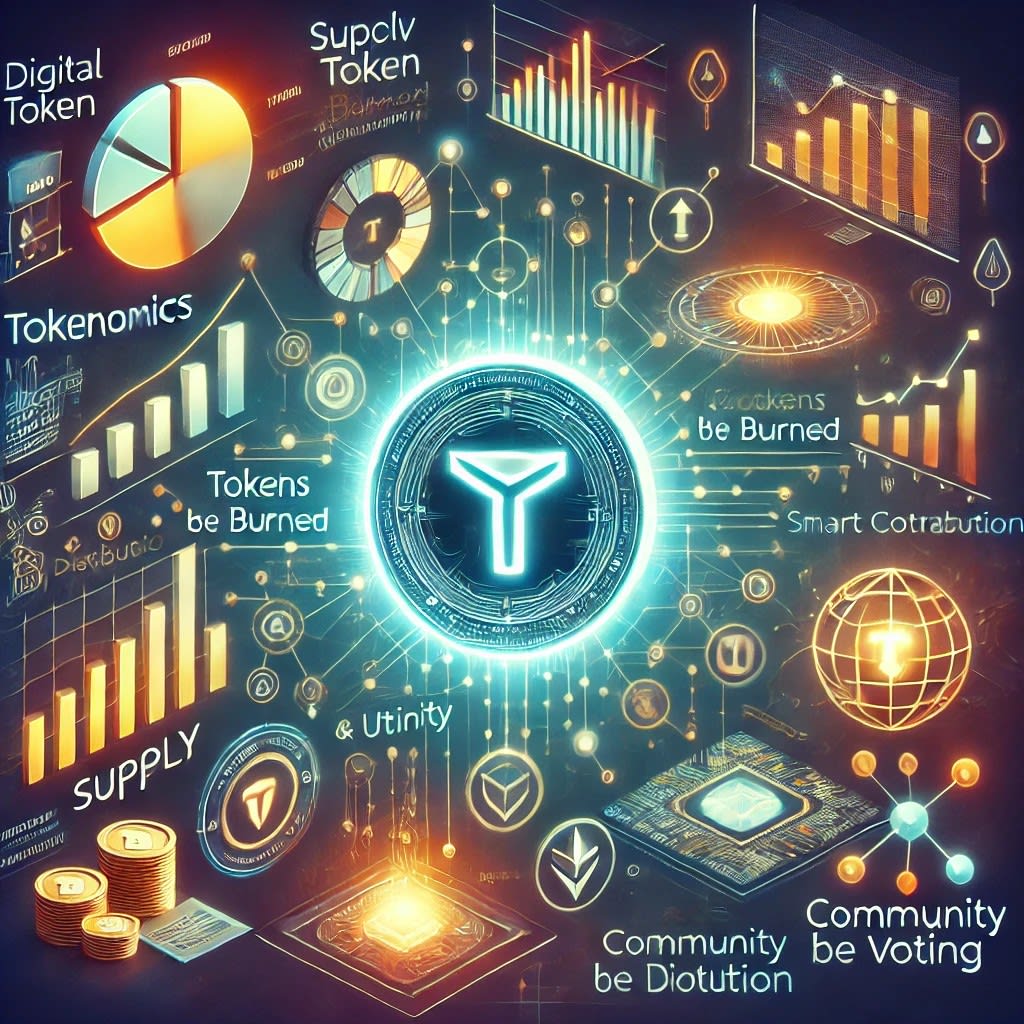
Cryptocurrencies have revolutionized the financial world, and at the heart of every successful crypto project lies a concept known as "tokenomics." Short for token economics, tokenomics refers to the study of the economic model behind a cryptocurrency or token. It explains how a token’s supply, demand, and utility impact its value, making it a critical factor for investors and developers alike.
Whether you’re a seasoned crypto enthusiast or a newcomer, understanding tokenomics can help you make smarter investment decisions and evaluate the long-term viability of a project. Let’s break down tokenomics and explore why it’s so important.
What Is Tokenomics?
Tokenomics encompasses all the factors that influence a token’s value and functionality within its ecosystem. It includes:
Supply Dynamics:
The total supply of tokens and how they are issued over time.
Utility:
The specific use cases for the token within the platform or ecosystem.
Incentives:
Mechanisms to encourage user participation, such as staking rewards or governance rights.
Burn Mechanisms:
Processes that permanently remove tokens from circulation to create scarcity.
Distribution Models:
How tokens are allocated, including to developers, early investors, and the community.
Together, these elements create the foundation for a token’s economic model.
Key Components of Tokenomics
Token Supply:
Total Supply: The maximum number of tokens that will ever exist.
Circulating Supply: The number of tokens currently available in the market.
Inflation/Deflation: How the supply changes over time. Some tokens are inflationary, while others are deflationary.
Utility:
Tokens must serve a purpose within their ecosystem to have value. Examples include:
Payments: Used as currency within a platform (e.g., Ethereum for transaction fees).
Governance: Allows holders to vote on project decisions (e.g., Uniswap’s UNI).
Access: Grants access to specific features or services (e.g., Basic Attention Token for ad rewards).
Incentives:
Incentive mechanisms ensure network participation and security. Examples include:
Staking Rewards: Users earn rewards for locking their tokens in the network.
Liquidity Mining: Users provide liquidity to decentralized exchanges and earn tokens in return.
Token Distribution:
How tokens are initially allocated can significantly impact a project’s success. Common allocations include:
Private/Seed Investors: Early funding rounds.
Team and Developers: Reserved for project builders.
Community: Distributed via airdrops, mining, or public sales.
Burn Mechanisms:
Token burning reduces supply by destroying tokens. This creates scarcity and can increase value over time.
Example: Binance Coin (BNB) burns tokens quarterly based on trading volume.
Why Is Tokenomics Important?
Determining Value:
Tokenomics helps investors assess whether a token is undervalued or overvalued based on its supply, demand, and utility.
Sustainability:
A well-designed tokenomics model ensures long-term project viability by aligning incentives for all participants.
Attracting Investors:
Clear and fair tokenomics can attract more investors and build trust in the project.
Encouraging Adoption:
Strong utility and incentive mechanisms drive user adoption and network growth.
Market Behavior:
Understanding tokenomics can help predict how a token’s price might react to events like token burns or new issuance.
Examples of Strong Tokenomics
Bitcoin (BTC):
Bitcoin’s fixed supply of 21 million coins and predictable halving events create scarcity, driving long-term value.
Ethereum (ETH):
With the transition to Ethereum 2.0, staking rewards incentivize network security while the EIP-1559 burn mechanism reduces supply.
Uniswap (UNI):
UNI tokens provide governance rights, allowing holders to vote on the platform’s future developments.
Binance Coin (BNB):
BNB’s quarterly burn mechanism and wide utility within the Binance ecosystem make it a highly valued token.
How to Evaluate Tokenomics Before Investing
Examine Supply Dynamics:
Check the total supply, circulating supply, and inflation/deflation mechanisms. Tokens with a capped supply often have greater scarcity.
Understand Utility:
Evaluate the token’s purpose. Does it solve a real problem or add value to its ecosystem?
Analyze Incentives:
Look for staking rewards, governance features, or other mechanisms that encourage participation.
Study Distribution:
Ensure the initial allocation is fair. Over-concentration in the hands of a few could lead to price manipulation.
Review the Whitepaper:
The project’s whitepaper should clearly outline its tokenomics model. Be wary of vague or overly complicated explanations.
Challenges in Tokenomics
Over-Inflation:
Excessive token issuance can dilute value.
Poor Incentive Design:
Misaligned incentives can discourage participation or lead to token hoarding.
Lack of Utility:
Tokens without meaningful use cases are unlikely to retain value.
Market Manipulation:
Uneven token distribution can enable large holders to manipulate prices.
Final Thoughts
Tokenomics is the backbone of any cryptocurrency project. It determines how tokens function within an ecosystem, their value, and their potential for growth. For investors, understanding tokenomics is essential for identifying promising projects and avoiding pitfalls.
As the crypto market evolves, projects with strong tokenomics will stand out, attracting users and investors alike. Whether you’re a developer building a new platform or an investor looking for your next big opportunity, tokenomics is a concept you can’t afford to ignore.
About the Creator
Keep reading
More stories from Jay Phoenix and writers in 01 and other communities.
The Importance of Privacy Coins in a Transparent Blockchain World
Blockchain technology has brought unprecedented transparency to the world of finance. Transactions on networks like Bitcoin and Ethereum are visible to anyone, providing a level of openness that traditional systems lack. But this transparency comes at a cost: privacy.
By Jay Phoenixabout a year ago in 01
How Much Does App Development Cost in Colorado?
You are probably staring at a napkin sketch thinking you’ve found the next big thing. Good for you. Truly. But I reckon your first real hurdle isn't the code. It is the cold, hard cash required for app development cost in Colorado.
By Sherry Walker7 days ago in 01
How to Choose a Mobile App Development Company in 2026
The Google ecosystem is currently undergoing a structural realignment that fundamentally changes how mobile applications are discovered and validated. We are witnessing a tectonic movement away from traditional index-based search toward a unified Trust Graph where Entity Signals dictate market survival.
By Devin Rosario6 days ago in 01




Comments
There are no comments for this story
Be the first to respond and start the conversation.