
What is the Process Involved in Back Boiler Replacement?
In this comprehensive article, we'll explore the back boiler replacement process and the benefits of upgrading your home with a new boiler.

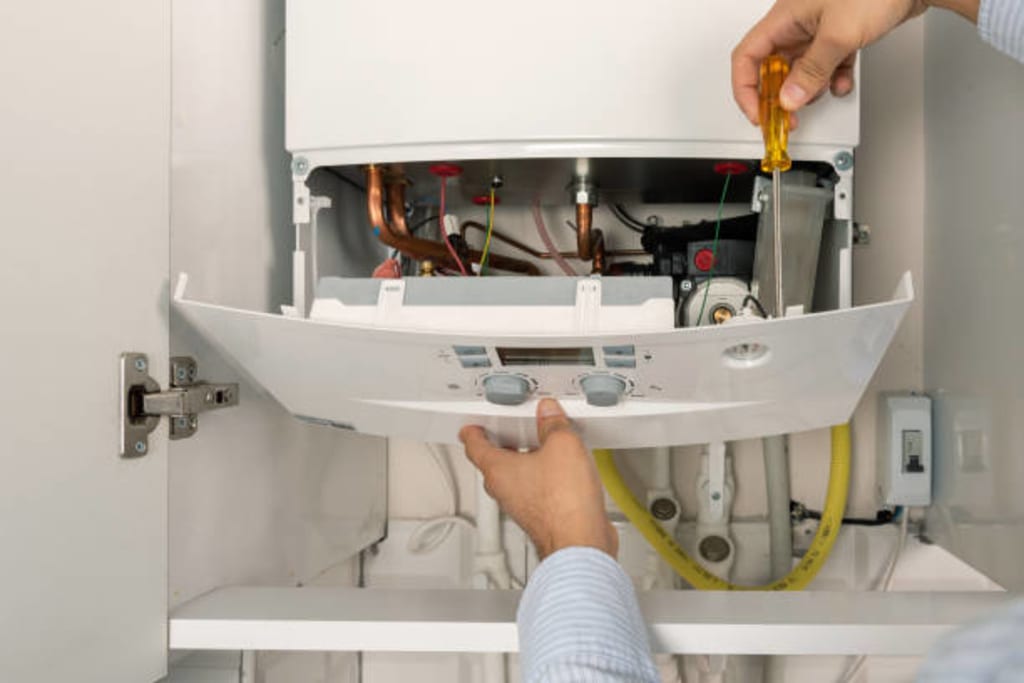
Replacing a back boiler can be a bit of an undertaking, and there are lots more questions to answer as a customer looking to replace a back boiler—‘Will they have to rip my fireplace up?’ ‘Will I need to have my entire system re-piped?’, and most importantly, ‘How much do I have to pay to replace my back boiler?’
Don’t worry; we’ll answer all these questions and guide you through the government ECO4 scheme to get free back boiler replacement with a new combi boiler. The UK government also discourages the use of back boilers. They are becoming increasingly rare because they are inefficient and are not installed anymore. You can no longer get parts for them if they break down.
In this guide, we will hold your hand and lead you through the replacement of a back boiler.
What is a Back Boiler?
Back boilers are obsolete. It is behind a gas fire in the chimney's heart. Back boilers were popular in the 1960s when people switched from coal/wood open fireplaces to gas fires, which were more convenient and energy-efficient.
The back boiler filled the huge area left by removing an open coal or wood fire, making them the perfect house heating progression. The chimney is a natural back boiler flue—perfect, right? Well, for the ’60s, maybe even the ’70s and ’80s, but in current times, the back boiler has been left behind in terms of energy efficiency and productivity by combi boilers.
Heating professionals no longer install back boilers since rules surrounding energy efficiency have made them outdated.
Why Should I Replace My Back Boiler?
We understand the connectivity to your old back boiler. They were constructed to endure, offering over 25 years of loyal service, compared to the 10-15 years of service you may anticipate from a quality combi. If you still have a back boiler, then there’s a strong chance you have an immensely popular Baxi Bermuda back boiler; these back boilers ruled the market back in the day. Another popular back boiler was the Glow Worm back boiler, which was not in the same category as the Baxi Bermuda but was nevertheless a respectable selection.
Given the duration of service and dependability, why would you choose to replace your back boiler? Well, there are some reasons why you would:
Energy Efficiency
Back boilers are highly inefficient compared to modern combi boilers. They are hardly 78% energy-efficient, whereas newer combi boilers are over 90% efficient. Government laws demand that a boiler installed be above 86% efficient; therefore, it wouldn't be feasible even if you wanted a new back boiler built.
Saving on Utility Bills
When replacing a back boiler with a combi boiler, you may save roughly £300 per year. As indicated previously, back boilers are only 78% efficient, so 22% of your heating cost is wasted energy.
Environmentally Friendly
A modern combi will save you a lot of money on heating costs and, due to its increased energy efficiency, be better for the environment.
Spare parts
As back boilers are no longer made, so are their components. So, if anything goes wrong with your back boiler, you will either struggle to locate the component or wait a few weeks until it comes in. You don’t want to be in a situation where your heating breaks down before you find out you need a new back boiler.
Home aesthetics
If you have a gas back boiler, you’ve probably got one of those old-fashioned gas fires in front of it messing up the design flow in your living room that you’ve cultivated so quickly and idiously.
Does the Back Boiler Need to be Removed While Replacing?
If you’re removing your gas fire and simply bricking up and drawing the chimney heart, you’ll almost certainly have to remove the old back boiler and cap off the gas pipe. Leaving an old boiler in place and depending on its ageing and corroding valves to stop gas leaks is a texture for disaster.
If the unit is completely separated from the gas, water, and power sources, and removing it from its setting would cause structural damage, it might be okay to keep it in place. As we said earlier, you’d be going quite a big area of your room as lost space, as the chimney heart would be doing nothing. It’s much better to remove the old boiler and think of a better use for the room.
Steps Involved in the Boiler Replacement Process
Assess Your Current Boiler
Start by examining the condition and efficiency of your current back boiler. Consider aspects such as its age, performance, and energy efficiency rating. If your boiler is old and inefficient, it’s likely time for a replacement.
Research Replacement Schemes
Research available replacement schemes and incentives are given by the government or energy suppliers. Determine which programmes you qualify for based on your eligibility requirements and financial condition.
Schedule a Survey
Contact a reliable heating professional to organise a survey of your house and current boiler. During the survey, the expert will analyse your heating needs, offer feasible replacement choices, and give an estimate for the installation.
Apply for Funding
Once you’ve picked a new boiler and gotten a price from the heating expert, apply for financing via the right scheme or grant source. Be careful to send all essential papers and information to support your application.
Arrange Installation
Upon acceptance of your finance application, plan a date for installing your new boiler. Ensure you choose a gas-safe licenced engineer to carry out the installation to assure compliance with safety requirements and standards.
Enjoy Improved Heating
Once your new boiler is installed, sit back, relax, and enjoy the advantages of better heating efficiency and performance in your house. Say goodbye to chilly areas and expensive energy costs, and welcome to a warm, pleasant living environment.
Conclusion
Back Boiler Replacement to a modern, energy-efficient system is an intelligent investment that offers numerous benefits, including enhanced energy efficiency, better heating performance, and cost savings. If you own a house in the UK with a back boiler put in before 2005, you can be qualified for a free boiler grant scheme. Follow the steps described in this guide to start the process and enjoy a better, more energy-efficient home today.
About the Creator
Louis C. Johnson
I'm a digital marketing expert, I specialize in providing top-notch digital marketing services to help businesses succeed online. I create strategies that boost online visibility and engage customers effectively.
Keep reading
More stories from writers in 01 and other communities.
melania trump documentary
The release of Melania, a new documentary centered on First Lady Melania Trump, has drawn global attention even before its official debut. Promoted as an intimate portrait of one of the most private figures in modern American politics, the film aims to offer audiences a rare glimpse into her personal and public life. Yet the project has sparked discussion not only about its subject but also about the evolving role of political storytelling in contemporary media.
By Saboor Brohi 6 days ago in 01
OpenClaw Review: An AI Agent That Truly Controls Your PC in 2026
Look, I’m going to be real with you. I am absolutely exhausted by subscriptions. It’s 2026. We were promised flying cars, or at least a robotic butler that could fold laundry. Instead, we got a dozen different AI chatbots that all cost $20 a month and hallucinate when you ask them to do basic math.
By Sherry Walker2 days ago in 01
Cabin Fever Because of Snow, Sleet, and Freezing Rain That Turned to Icy Roads
What Is Cabin Fever? The short answer is that cabin fever is restlessness from being in a confined area. Cabin fever is the distressing irritability or restlessness experienced when a person or group is stuck at an isolated location or in confined quarters for an extended time. Research shows that prolonged cold, gray skies, and being stuck indoors can trigger mood shifts similar to “winter blues.”
By Margaret Minnicks4 days ago in Humans




Comments