
What is The Difference Between Blockchain And Cryptocurrency?
This blog will discuss the definitions of blockchain and cryptocurrencies, their differences, and how they complement one another to influence the future of different industries.

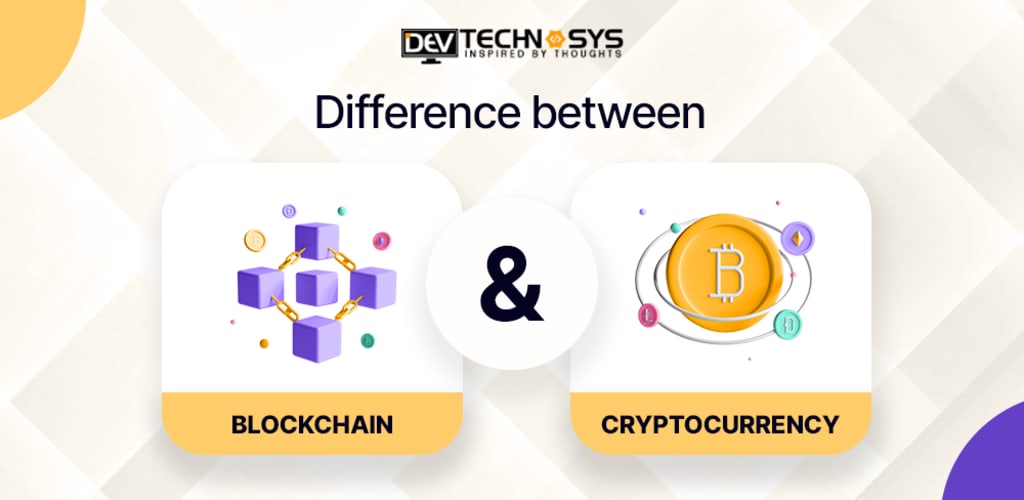
Two of the most discussed phrases in the banking and technology industries in recent years are blockchain and cryptocurrency. Despite their frequent interchangeability, they stand for two different but related ideas that are not the same.
Although blockchain technology is the foundation of numerous cryptocurrencies, including Bitcoin and Ethereum, its uses go much beyond virtual money.
Knowing the distinction between blockchain and cryptocurrencies is essential to appreciating their separate and combined effects on a range of sectors, such as supply chain, healthcare, banking, and more.
What is Blockchain?
Fundamentally, blockchain is a distributed, decentralized digital database that securely, openly, and irrevocably logs transactions across numerous computers.
Blockchain works on a peer-to-peer network, where several nodes (computers) keep identical copies of the data, in contrast to traditional databases that are kept in a single location (such as a bank or business server).
By preventing any one party from having complete access over the data, this decentralized strategy lowers the possibility of fraud and manipulation.
The way blockchain technology operates is by organizing transactions into "blocks," which are then connected chronologically to create a "chain"—thus the name "blockchain."
A block is cryptographically secured after it is added to the chain, making it nearly difficult to change or tamper with the data that has been recorded. The strong security and dependability of blockchain are attributed to its immutability and transparency.
What is Cryptocurrency?
The term "cryptocurrency" describes a digital or virtual currency that uses cryptographic methods to control the generation of new units, safeguard transactions, and confirm asset transfers.
Cryptocurrencies are decentralized and run on blockchain technology, in contrast to conventional currencies issued by governments (such the US dollar or euro). They verify transactions independently of centralized entities such as governments or banks.
Blockchain platforms are used to store and exchange cryptocurrencies. Every cryptocurrency transaction is documented on the blockchain, which offers security and transparency.
The most well-known cryptocurrency is Bitcoin, which was first made available in 2009 by Satoshi Nakamoto, an unidentified individual or organization.
Since then, Litecoin, Cardano, Ethereum, and Ripple (XRP) have been just a few of the thousands of different cryptocurrencies that have been created.
The Key Differences Between Blockchain and Cryptocurrency
While blockchain and cryptocurrency are closely related, they differ in several fundamental ways. Let's break down their primary distinctions:
1. Nature and Purpose
● Blockchain:
Blockchain is a protocol or technology that is basically a safe, decentralized method of transferring and storing data. Its goal is to offer an unchangeable, transparent record of information or transactions.
It can be used in a number of sectors where safe, transparent, and verifiable data storage is required, including voting systems, healthcare, finance, and supply chains.
● Cryptocurrency:
Cryptocurrency is a type of digital asset or money that facilitates safe, peer-to-peer transactions via blockchain technology. Its main objective is to serve as an investment vehicle, store of value, or means of trade.
Although they are expressly made to be used for financial transactions, cryptocurrencies function inside the environment that blockchain has created.
2. Functionality
● Blockchain:
One way to conceptualize blockchain is as the backbone or infrastructure that underpins many different applications, including cryptocurrency. It is a distributed ledger in which information is recorded and stored in cryptographically connected blocks.
Beyond only cryptocurrencies, blockchain can be used to store medical information, track products in supply lines, and securely and transparently enable voting.
● Cryptocurrency:
Contrarily, cryptocurrencies are particular kinds of digital money that rely on blockchain technology to guarantee decentralization, security, and transparency.
According to the cryptocurrency development company, transactions are immutable, transparent, and peer-to-peer without the need for intermediaries like banks.
3. Control and Centralization
● Blockchain:
Since blockchain technology is decentralized, no one organization or institution has complete control over the data that is kept on it. Rather, a network of nodes (computers) shares control, and each node keeps a copy of the blockchain.
Blockchain's decentralized structure provides a high degree of security and trust by making it impervious to censorship and manipulation.
● Cryptocurrency:
Although cryptocurrencies are also decentralized, their primary function is to function as a medium of exchange for assets or money.
Cryptocurrencies function similarly to blockchain in that there is no central authority and user-to-user transactions take place. But when it comes to its governance (such as the creation of new coins or the protocol), different cryptocurrencies could have differing degrees of centralization.
4. Use Cases
● Blockchain:
Blockchain technology has several applications outside of bitcoin. Blockchain is being utilized in voting systems (ensuring election integrity), healthcare (keeping medical records), digital identity verification (securing personal data), and supply chain management (tracking the movement of items). Hire blockchain developers to create transparent, secure, and immutable records of data and transactions.
● Cryptocurrency:
Financial transactions are the main application for cryptocurrencies. They can be held as investments, traded on online marketplaces, or exchanged for products and services.
Cross-border transactions can also be conducted using cryptocurrencies, which eliminates the need for middlemen and provides an alternative to conventional banking systems.
5. Security and Transparency
● Blockchain:
Blockchain's decentralized structure and cryptographic methods make it extremely safe. Multiple nodes in the network validate each transaction or record, and once it is put to the blockchain, it cannot be removed or changed without the network's consent.
As a result, it is practically difficult for bad actors to alter the system because transparency and immutability are guaranteed.
● Cryptocurrency:
Blockchain technology is essential to the security of cryptocurrencies. The blockchain maintains an unchangeable and transparent database of all cryptocurrency transactions.
Network users encrypt and validate transactions to make sure they are secure and authentic. But cryptocurrencies are also vulnerable to threats like theft or hacking, especially if they are kept on unreliable systems or wallets.
6. Governance and Development
● Blockchain:
The majority of blockchain protocols are open-source, which means that a community of developers and contributors creates and maintains them.
A blockchain network's governance may be more centralized in certain situations (such as private blockchains used by enterprises) or decentralized (decisions are reached by consensus).
● Cryptocurrency:
The regulations of the blockchain system, upon which cryptocurrencies are based, control them. Depending on the particular cryptocurrency, its governance may be either centralized or decentralized.
While some other cryptocurrencies may have a more centralized development team making decisions on the protocol's future path, Bitcoin, for example, is governed by a decentralized network.
How Blockchain and Cryptocurrency Work Together?
Cryptocurrency and blockchain are inextricably interwoven. The underlying technology that makes it possible for cryptocurrencies to operate in a safe, decentralized fashion is blockchain.
Cryptocurrencies would not be able to offer the immutability, security, and transparency for which they are renowned without blockchain.
Blockchain development company can create the foundation for cryptocurrency transactions, validating and recording them on an immutable, transparent ledger.
Conclusion
Although they are frequently discussed together, blockchain technology and cryptocurrencies have different uses and functions.
Cryptocurrency is a digital asset that leverages blockchain technology to allow financial transactions, whereas blockchain is the ground-breaking technology that makes it possible for safe, transparent, and decentralized data storage and transactions.
Understanding the difference between blockchain and cryptocurrency is crucial, especially as both continue to evolve and reshape industries.
Blockchain's potential goes well beyond cryptocurrencies; it may be used to solve problems in a variety of sectors, including supply chain management, healthcare, and banking.
About the Creator
Anurag Jain
Anurag Jain is the Senior SEO Analyst at Dev Technosy, a global ranking custom software development company.
website: https://devtechnosys.com/
Keep reading
More stories from Anurag Jain and writers in 01 and other communities.
A Comprehensive Guide To Developing A Decentralized Exchange
The rise of decentralized exchanges (DEXs), which allow peer-to-peer trading of digital assets without the need for middlemen like centralized exchanges (CEXs), is one of the most important developments in the cryptocurrency ecosystem.
By Anurag Jainabout a year ago in 01
Cost to Develop an App Like TikTok: Full Guide (2026)
So, you reckon you have the next billion-dollar idea? You want to build a TikTok killer. Join the club, mate. In 2026, everyone and their grandmother is trying to pivot to video, thinking a simple app wrapper and a few API calls will print money.
By Sherry Walker7 days ago in 01
Jeff Bezos Says Your Answer To This One Question Determines Just How Successful You’ll Be, & Psychology Agrees
According to a former Amazon executive, Jeff Bezos believed the way someone answers his "favorite" interview question reveals just how successful they'll be. And, it turns out, psychology backs him up.
By Dena Falken Esq3 days ago in 01




Comments
There are no comments for this story
Be the first to respond and start the conversation.