
What is data integration? How Does Data Integration Work?
Unlocking Business Potential by Unifying Disparate Data Sources.

In today's data-oriented world, organizations are reliant on data for making informed decisions, guiding business strategies, and enhancing customer experiences.
The problem with handling data from various sources is the differences in format, quality, and location. The solution lies with data integration, which is the critical process by which data from various sources are combined into a unified coherent format. With this article, we shall explore the concept of data integration, how it works, and the role it plays within the operations of the modern-day business.
What is Data Integration?
Integration of data is the process by which various sources are combined into a single dataset with users provided with uniform access and delivery of data across the various topics and structure types. The process is required for the fulfilment of the needs of various applications and organizational business processes. It involves a series of technical and business processes whose purpose is the construction of a single view of data and can be employed for operational and analytic activities.
Integration of data is not just data collection but also the process of transforming and harmonizing the data into a single structure for ease of use and analysis for making informed decisions. It helps get around the data silos and inconsistency problems, which typically hinder proper data usage and analysis.
How does data integration work?
The process of integrating data generally includes the following major steps:
1. Data Ingestion
Definition: It is the initial step where data is gathered from various sources such as databases, apps, and cloud services.
Process: The data is moved into a centralized location, typically a cloud data warehouse or data lake, where it can be stored and retrieved with ease.
2. Data Transformation
Definition: Once the data is centralized into a single location, it is transformed.
Process: It involves data cleaning, standardization, and enrichment. Some activities are the conversion of formats, removal of duplicates, imputation of missing values, and data type conversion for the data to be correct, consistent, and useful.
3. Loading Data
Definition: The target system is loaded with the data after the transformation.
Process: It could be a data analytics platform, a business intelligence solution, or any software where the data is applied for reporting and insights. The goal is making the data useful and accessible for the teams who need it.
Types of Data Integration
There are a number of data integration solution approaches with their respective advantages and disadvantages:
1. Data Warehousing
Definition: Stores integrated data within a common repository.
Benefit: Cleanses, organizes, and stores data from different sources and makes it accessible and useful for analysts. It provides end-to-end analytics and produces valuable insights from a single source of unified data.
2. Middleware Data Integration
Description: Acts as a bridge between the disparate data sources and the central repository.
Advantages: Enables data transfer through formatting and validating the data prior to transmitting it to the destination. It ensures consistency and accuracy across platforms.
3. Data Consolidation
Definition: It combines data from many different systems into a single source.
Advantages: Usually backed by ETL (Extract, Transform, Load) software, it provides a complete picture of the company's data, facilitating enhanced decision-making and reporting.
4. Application-Based Integration
Definition: Employs software packages for finding, extracting and combining data from different sources.
Benefits: Maintains compatibility between data sets from various systems and the destination system. It's particularly useful for integrating data in real-time.
5. Data Virtualization
Definition: Provides a near real-time picture of the data without actually moving or copying it.
Advantages: Enables users to query data from its original sources using a single interface, minimizing the need for data replication and simplifying the management and usage of data.
Importance of Data Integration
Data integration plays a vital role in modern business operations by:
Enhancing Decisions: With the combined data view provided by data virtualization, organizations are better positioned to make informed decisions with complete insights.
Enhancing Operational Efficiency: With integrated data, the process is streamlined and data inconsistency is minimized, resulting in smooth operations.
Underlying Business Intelligence: Data Integration is critical for business intelligence (BI) and analytics to enable organizations to effectively analyze data and inform strategic actions.
Also Read: Importance of Enterprise System Integration for Business Transformation
Uses of Data Integration
Below are someData integration is applied across various fields:
Machine Learning: Data Integration combines data into a centralized repository for machine learning model training.
Predictive Analytics: It assists predictive analytics by bringing together past data for forecasting trends.
Cloud migration: demands data integration for cloud platforms to be transferred successfully.
E-commerce: Integrates customer, inventory, and supplier data to enhance shopping experiences and streamline operations.
Healthcare: Combines clinical, laboratory, and insurance data to improve patient care and operational efficiency.
Best Practices for Data Integration
In order to facilitate successful data unification, follow these best practices:
Establish Clear Business Objectives: Tie data unification with strategic goals to ensure it aligns with strategic plans.
Understand the structure, format, and quality of the data sources in order to determine the right integration techniques.
Ensure Data Quality: Prioritize data quality testing for reliability and accuracy within the process of integrating.
Monitor the Integration Process: Keep the process of integration under constant surveillance for smooth data transfer and successful incorporation
In short, data integration is a critical process through which organizations are able to maximize their data. With the understanding of how data integration works and strategically leveraging it, organizations are able to maximize the potential of their data, drive innovations, and stay ahead of the game in the data-oriented world. Whether the goal is better decision making, simplifying operations, or driving advanced analytics, data integration is a fundamental element of successful business.
About the Creator
Laxmi Williams
Laxmi is a Digital Marketing Manager with 7+ years of experience. She has a proven track record of success in developing and executing data-driven digital marketing strategies that increase brand awareness, generate leads, and drive sales.
Keep reading
More stories from Laxmi Williams and writers in 01 and other communities.
The Role of Data Analytics in Shaping Digital Transformation Strategies
It goes without saying that data analytics is now part of any digital transformation strategy that can help organizations unlock the true power of data-to-insight-to-action, optimize operations, and create customer experiences.
By Laxmi Williamsabout a year ago in 01
The Rise of AI Gigafactories: What They Are and How They Operate
Artificial Intelligence has become a defining force in technology, industry, and economic competition. That’s why every country wants to position itself as a leader in providing AI-ready compute infrastructure. And the European Union (EU) knows it can’t just afford to sit on the sidelines. So, Europe has taken a big step forward with something called AI Gigafactories to strengthen technological sovereignty.
By Shikharsparxa day ago in 01
Asia Pacific Prebiotics Market Size and Forecast 2025
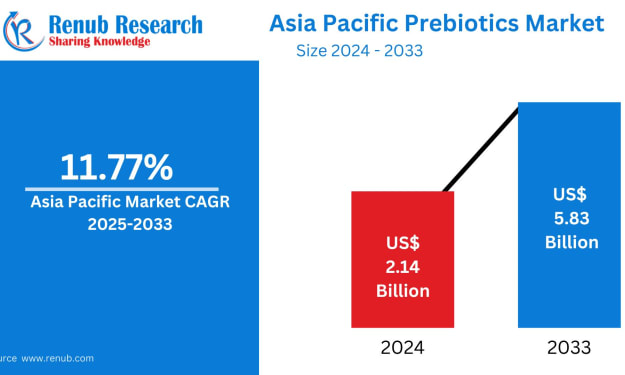
Asia Pacific Prebiotics Market: A Region Poised for Gut-Health Revolution The Asia Pacific prebiotics market is entering a transformative decade. With rising health awareness, aging populations, expanding functional food industries, and rapid advancements in biotechnology, prebiotics have become a central ingredient in modern nutrition strategies across the region. According to Renub Research, the Asia Pacific Prebiotics Market is expected to reach US$ 5.83 billion by 2033, growing from US$ 2.14 billion in 2024, at a robust CAGR of 11.77% from 2025 to 2033.
By Janine Root 6 days ago in 01
Smart phones, Humans and Aliens.
WARNING. I will be tapping into one of your favorite creative tensions: The absurdity of humans worshipping their glowing rectangles as if they were tiny oracles. There’s something deliciously poetic about that contradiction, and it lends itself beautifully to an instructive proviso.
By Novel Allen6 days ago in Poets



Comments (1)
Hello, just wanna let you know that if we use AI, then we have to choose the AI-Generated tag before publishing 😊