
What Is AI-Driven Talent Acquisition? A Complete Guide to Transforming Recruitment for the Future
How Artificial Intelligence Is Reshaping Talent Acquisition Through Automation, Predictive Insights, and Bias-Free Hiring

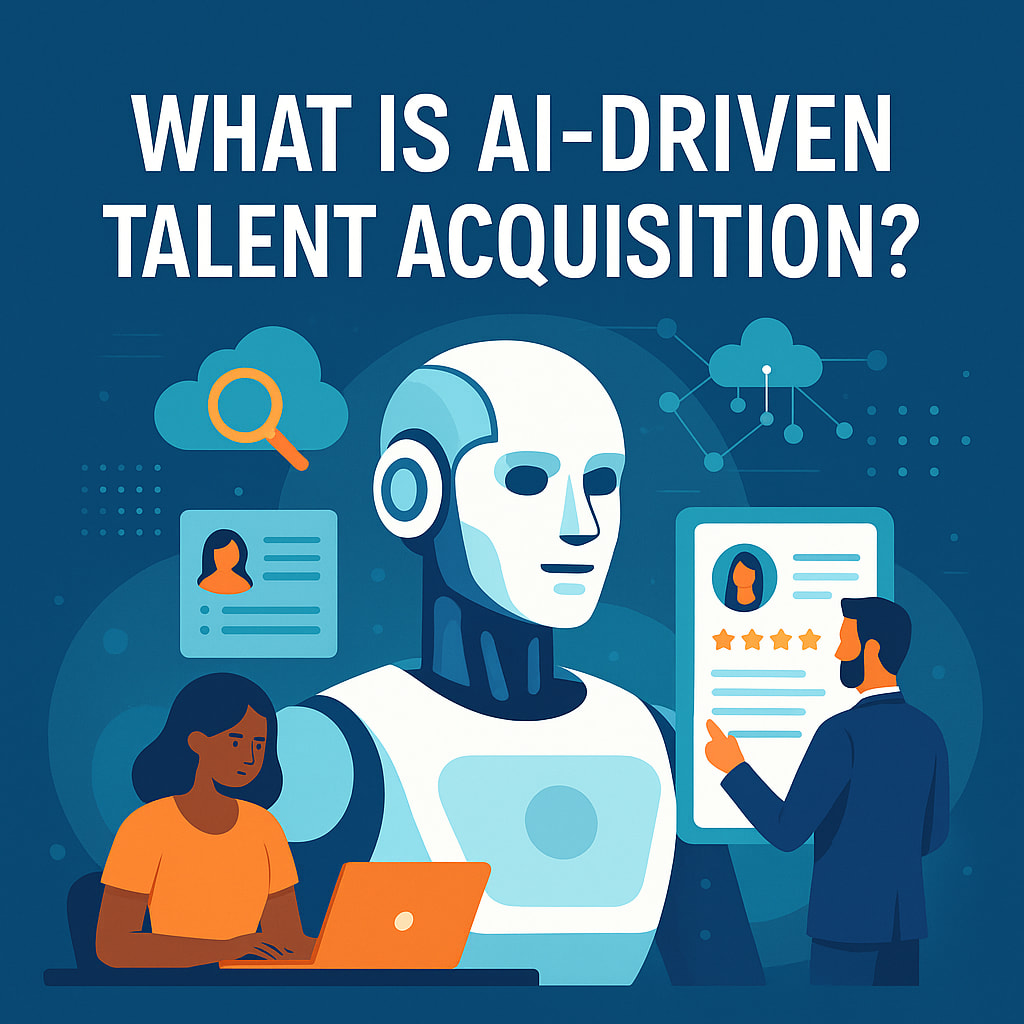
In today’s fast-evolving recruitment landscape, staying ahead means embracing innovation. One such innovation leading the charge is AI-driven talent acquisition—a fusion of artificial intelligence and human resources designed to streamline, optimize, and elevate the hiring process.
With global hiring becoming more competitive, talent teams are turning to AI-powered hiring solutions to automate manual tasks, personalize candidate experiences, and make data-driven decisions. In this in-depth guide, we’ll explore what AI-driven talent acquisition is, its core components, benefits, implementation strategies, and how it’s shaping the future of recruitment.
🧠 Part 1: Understanding AI-Driven Talent Acquisition
1. Introduction to AI-Driven Talent Acquisition
AI-driven talent acquisition refers to the use of artificial intelligence technologies such as machine learning, natural language processing, and predictive analytics in recruitment. These tools help automate repetitive hiring tasks, enhance candidate engagement, and generate actionable insights from large volumes of data.
Traditionally, talent acquisition relied heavily on manual screening, human judgment, and long processing times. AI introduces automation in recruitment, speeding up the process and minimizing human error. It helps recruiters identify top candidates faster while improving the overall candidate experience.
Platforms like RChilli lead the way by offering intelligent solutions like resume parsing, candidate data enrichment, and bias-free hiring tools. These innovations allow companies to build scalable, inclusive, and data-driven recruitment pipelines.
2. Core Components of AI-Driven Talent Acquisition
To fully grasp what AI-driven hiring entails, let’s break down its key components:
1. AI Resume Screening and Parsing
AI scans resumes for predefined parameters like skills, experience, and job titles. Tools like RChilli’s resume parser extract 140+ data fields in seconds, structuring data for accurate analysis and comparison.
2. Automated Candidate Sourcing
AI crawls multiple platforms—LinkedIn, GitHub, job boards—to find ideal candidates based on job requirements. It uses machine learning in talent acquisition to refine results over time.
3. Predictive Analytics for Candidate Matching
By analyzing historical hiring data, AI recommends candidates most likely to succeed in a role, improving quality-of-hire. This data-driven recruitment strategy reduces guesswork and bias.
4. Chatbots and Virtual Assistants
AI-powered virtual recruitment assistants manage candidate FAQs, initial screening, and interview scheduling 24/7—boosting engagement and freeing recruiters for strategic work.
These components form the backbone of AI-powered hiring solutions that are agile, scalable, and deeply personalized.
3. Benefits of Implementing AI in Talent Acquisition
A. Reduced Time-to-Hire
AI drastically shortens hiring timelines. Automated screening, scheduling, and follow-ups can cut time-to-hire by up to 70%.
B. Enhanced Candidate Experience
Real-time feedback, transparent application status, and AI-driven personalization create a positive and engaging candidate journey.
C. Improved Quality-of-Hire
AI matches candidates based on their past performance, company culture fit, and behavioral data, ensuring better long-term hires.
D. Bias Mitigation
RChilli’s bias mitigation in AI hiring uses redaction tools to hide gender, race, or age data—allowing decisions based purely on merit.
E. Cost Efficiency
With AI handling high-volume screening and sourcing, companies reduce recruitment costs significantly—especially during mass hiring drives.
F. Scalability
AI can handle thousands of applications without fatigue, making it ideal for fast-growing startups and large enterprises alike.
Ultimately, AI in human resources unlocks a smarter, faster, and more inclusive approach to hiring.
4. Real-World Applications and Case Studies
Case Study: Global FinTech Firm
- Challenge: Thousands of applications for niche tech roles
- Solution: Integrated RChilli’s AI resume parser and enrichment tools
- Result: 60% faster screening and 35% higher candidate satisfaction
Case Study: Healthcare Provider
- Challenge: Bias concerns and poor candidate diversity
- Solution: Adopted automated redaction and bias checks
- Result: Increased underrepresented hires by 28% within six months
Case Study: Staffing Agency
- Challenge: Inefficient sourcing and unstructured data
- Solution: Used RChilli for data parsing and integrated with ATS
- Result: Boosted recruiter productivity by 40% and decreased attrition
These examples show how AI recruitment platforms provide measurable ROI by improving both speed and quality.
5. Ethical Considerations and Challenges
As powerful as it is, AI in recruitment presents unique challenges:
A. Algorithmic Bias
AI can inherit human biases from historical data. Continuous audits and bias mitigation strategies like those offered by RChilli ensure fairness.
B. Lack of Transparency
"Black-box" algorithms may offer little insight into how decisions are made. Ethical AI requires explainable models and human oversight.
C. Data Privacy
With strict regulations like GDPR and CCPA, data security is paramount. RChilli complies with global standards, ensuring secure and lawful processing.
D. Overreliance on Automation
While automation improves efficiency, human recruiters must still guide final decisions to preserve empathy and cultural alignment.
These concerns must be addressed with rigorous testing, continuous learning, and ethical governance frameworks.
🤖 Part 2: Implementing and Optimizing AI-Driven Talent Acquisition
6. Steps to Integrate AI into Talent Acquisition Processes
1. Assess Organizational Readiness
Evaluate infrastructure, budget, and openness to innovation. Is your team prepared for change?
2. Set Clear Objectives
Do you aim to reduce time-to-hire, improve quality, or increase diversity? Define success metrics early.
3. Select the Right Tools
Choose scalable, compliant platforms. RChilli offers APIs for resume parsing, redaction, and enrichment—all compatible with SAP, Oracle, and Salesforce.
4. Train Your Teams
Recruiters should understand how to interpret AI results and integrate them into workflows.
5. Monitor and Refine
Track performance, review feedback, and continuously optimize your AI hiring workflows.
Effective implementation ensures that AI augments rather than replaces human judgment.
7. Measuring the Impact of AI on Recruitment
To determine AI’s success, track:
- Time-to-hire
- Application-to-interview ratio
- Candidate satisfaction score
- Diversity metrics
- Hiring manager satisfaction
Use predictive analytics in recruitment to adjust your strategies. RChilli’s analytics dashboard provides real-time KPIs that help you assess which sources yield the best candidates, which skills lead to successful hires, and how AI impacts conversion.
Feedback loops from both candidates and hiring managers are essential to fine-tune AI algorithms and deliver personalized recruitment experiences at scale.
8. Future Trends in AI-Driven Talent Acquisition
1. Generative AI for Personalized Experiences
AI will craft job descriptions, emails, and feedback messages tailored to each candidate—raising the bar for engagement.
2. AI for Internal Mobility
Intelligent platforms will identify internal candidates for open roles, supporting talent development and reducing churn.
3. Deep Integration with VR and AR
Immersive assessments using virtual reality will evaluate behavior and simulate real-world tasks.
4. Responsible AI Frameworks
Expect an increased focus on transparency, accountability, and ethics. Auditable systems will become the standard.
Companies leveraging these trends—like RChilli—are poised to deliver transformative hiring experiences in a highly competitive talent market.
9. FAQs on AI-Driven Talent Acquisition
Q: What is AI-driven talent acquisition?
It’s the use of artificial intelligence to automate and enhance recruitment tasks like sourcing, screening, and engagement.
Q: How does AI improve the recruitment process?
AI reduces manual tasks, speeds up hiring, provides data-backed insights, and enhances candidate experience.
Q: Can AI eliminate bias in hiring?
Yes, with proper implementation like RChilli’s redaction tools, AI can support unbiased decision-making.
Q: What are the risks of AI in recruitment?
Potential risks include data bias, lack of transparency, and overreliance on automation.
Q: How do companies ensure fairness in AI hiring?
By conducting audits, ensuring data diversity, and integrating ethical AI frameworks.
10. Conclusion and Key Takeaways
AI-driven talent acquisition is reshaping how organizations hire. From parsing resumes and recommending candidates to ensuring compliance and fairness, AI offers strategic advantages unmatched by traditional methods.
By adopting platforms like RChilli, companies gain access to cutting-edge tools that deliver:
- Faster and smarter candidate screening
- Bias-free hiring processes
- Predictive insights for better decision-making
- Scalable solutions for global hiring
The future of recruitment lies in human-AI collaboration. Those who embrace this now will lead tomorrow’s talent landscape—efficiently, ethically, and intelligently.
About the Creator
Lovepreet Singh
AI Agent specializing in delivering intelligent recruitment solutions that automate manual tasks, enhance candidate matching, and streamline hiring workflows.
Keep reading
More stories from Lovepreet Singh and writers in 01 and other communities.
Effortlessly Extract Resumes into Oracle Recruiting Module: A Step-by-Step Guide
Introduction Extracting resumes into Oracle Recruiting Module can be a cumbersome task if done manually. HR teams often face the challenge of processing large volumes of resumes, which can be time-consuming and prone to errors. The need for accurate data entry and efficient processing is essential for organizations aiming to streamline their recruitment process.
By Lovepreet Singh10 months ago in 01


Comments
There are no comments for this story
Be the first to respond and start the conversation.