
What Is a Security Operations Center (SOC) and Why Businesses Are Moving to Managed SOC Services
How continuous monitoring, expert-led response, and outsourced security operations help organizations strengthen cyber resilience
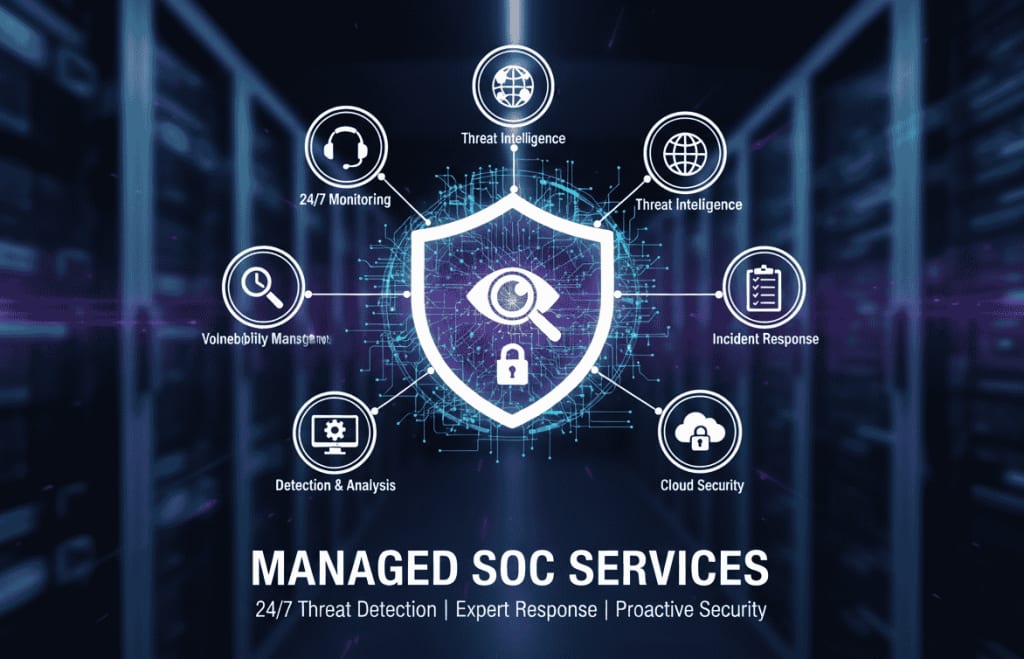
In today’s highly connected digital world, cybersecurity is no longer just an IT concern—it is a core business priority. Organizations rely on digital systems for daily operations, customer communication, financial transactions, and data storage. As businesses grow more dependent on technology, cyber threats grow more frequent, more complex, and more damaging. This has led many organisations, especially those operating in fast-paced markets like the United Arab Emirates, to rethink how they monitor and protect their digital environments. One of the most effective approaches to modern cybersecurity is the use of a Security Operations Center, commonly known as a SOC.
A Security Operations Center is a centralized function responsible for continuously monitoring, detecting, investigating, and responding to cybersecurity threats. It combines skilled security professionals, advanced monitoring tools, and structured processes to protect an organization's IT infrastructure. Unlike traditional security measures that operate in isolation, a SOC provides a unified view of security events across networks, servers, endpoints, cloud platforms, and applications. This centralized visibility is critical because modern cyber attacks rarely target a single system. Instead, attackers move laterally, exploit small weaknesses, and remain hidden for extended periods if they are not actively monitored.
The primary role of a SOC is to identify suspicious activity as early as possible and respond before damage escalates. This includes monitoring logs, analyzing alerts, investigating anomalies, and taking action when a real threat is confirmed. A SOC operates around the clock, ensuring that threats are detected even outside business hours. This continuous vigilance is essential because cyber attacks do not follow a schedule. Many breaches occur at night, on weekends, or during holidays when internal IT teams may not be fully available.
While having an in-house SOC can be effective, it is also resource-intensive. Building and maintaining a SOC requires skilled cybersecurity professionals, expensive tools, ongoing training, and constant process improvement. For many organizations, especially small to mid-sized businesses, this level of investment is not realistic. This is where Managed SOC services play a critical role. A Managed SOC provides all the core capabilities of a traditional SOC but delivers them as an outsourced service, allowing businesses to benefit from enterprise-level security without the associated complexity and cost.
Managed SOC centers help businesses enhance security by providing access to experienced security analysts who specialize in threat detection and incident response. These analysts monitor systems 24/7, investigate alerts, and respond to incidents on behalf of the organization. This means businesses no longer need to rely solely on internal IT teams that may already be stretched thin with operational responsibilities. Instead, they gain a dedicated security team focused entirely on protecting their digital assets.
Another key advantage of Managed SOC services is improved threat detection accuracy. Modern security environments generate thousands of alerts every day, many of which are false positives. Without expert analysis, important warnings can be overlooked while teams chase non-threatening events. Managed SOC providers use advanced correlation techniques, threat intelligence, and contextual analysis to separate real threats from background noise. This results in faster identification of genuine risks and fewer unnecessary disruptions to business operations.
Incident response is another area where Managed SOC centers significantly enhance security. Detecting a threat is only the first step; how quickly and effectively it is handled determines the level of impact on the business. Managed SOC teams follow structured response processes to contain threats, isolate affected systems, and prevent further spread. Because these teams deal with incidents daily across multiple industries, they bring valuable experience and proven methodologies that internal teams may lack. This structured approach reduces downtime, limits data exposure, and supports faster recovery.
Managed SOC services in Dubai ad UAE also provide better visibility and reporting for business leaders. Cybersecurity is often difficult for non-technical decision-makers to understand, which can make risk assessment and investment planning challenging. Managed SOC providers deliver clear reports on security incidents, trends, response times, and overall risk posture. This visibility helps leadership make informed decisions, demonstrate compliance, and align cybersecurity efforts with business objectives.
Compliance and regulatory requirements are another important factor driving the adoption of Managed SOC services. Many industries are subject to strict data protection and cybersecurity regulations. Failure to detect and respond to threats in a timely manner can lead to compliance violations, fines, and legal consequences. A Managed SOC helps organizations maintain continuous monitoring and documented response processes, which are essential for meeting regulatory expectations and audit requirements.
One of the most valuable benefits of a Managed SOC is its ability to scale with the business. As organization's grow, adopt cloud services, enable remote work, or expand into new markets, their security environment becomes more complex. Managed SOC services are designed to adapt to these changes without requiring major internal restructuring. This scalability ensures that security capabilities keep pace with business growth rather than becoming a limiting factor.
It is also important to address a common misconception: Managed SOC services do not remove control from the business. Instead, they enhance it. Organizations retain ownership of their systems and decision-making authority while gaining expert support and continuous monitoring. Managed SOC teams work collaboratively with internal stakeholders, providing recommendations, alerts, and response actions based on agreed procedures. This partnership approach ensures alignment with business priorities and risk tolerance.
In an era where cyber threats are evolving faster than ever, relying solely on basic security tools is no longer sufficient. Businesses need continuous monitoring, expert analysis, and rapid response capabilities to protect their operations, customers, and reputation. A Security Operations Center provides the foundation for this protection, while a Managed SOC makes it accessible, scalable, and effective for organizations of all sizes.
In conclusion, a SOC plays a critical role in modern cybersecurity by centralizing threat detection and response, while Managed SOC centers extend these benefits by delivering expert-driven security as a service. By improving visibility, accelerating response, reducing risk, and supporting compliance, Managed SOC services help businesses strengthen their security posture without overwhelming internal resources. For organization's looking to operate confidently in today’s digital landscape, adopting a Managed SOC is not just a technical decision—it is a strategic investment in long-term resilience and trust.
About the Creator
Preethu Sonu
Aspiring content writer specializing in SEO. Join me on a journey of impactful storytelling and effective online visibility. Let's thrive together!
Keep reading
More stories from Preethu Sonu and writers in 01 and other communities.
How to Choose the Right Used Car Dealer in Dubai
Buying a used car in Dubai is no longer just about finding the lowest price. With thousands of listings available online and offline, today’s buyers are more careful and informed than ever before. They want reliability, transparency, fair pricing, and long-term peace of mind. This guide explains what truly makes a great used car dealer in Dubai and how choosing the right dealership can completely change your car-buying experience.
By Preethu Sonuabout a month ago in 01
How Tax Outsourcing Companies Are Helping U.S. Businesses Stay Compliant and Profitable
Taxes are one of the most unavoidable parts of doing business in the United States. Whether you’re running a small startup or managing a growing company, tax compliance can quickly turn into a major headache. This is where Tax Outsourcing Companies have become a game-changer for businesses across the USA. By handing over complex tax responsibilities to professionals, companies are finding smarter ways to save time, reduce errors, and stay compliant with ever-changing tax laws.
By Outsourced Bookkeeping Solutions6 days ago in 01
Elon Musk called medical school "pointless," but Jeff Bezos wants Gen Z to finish college before starting their own companies — as AI threatens entry-level jobs
The job market is becoming volatile by the minute as generative AI becomes more prevalent and gains broad adoption across organizations worldwide. Last year, Salesforce CEO Marc Benioff revealed that the company is seriously debating hiring software engineers, citing "incredible productivity gains" from agentic AIs.
By Dena Falken Esq2 days ago in 01




Comments
There are no comments for this story
Be the first to respond and start the conversation.