
What Is a Residential Proxy? A Beginner’s Guide (2025 Update)
Everything You Need to Know About Residential Proxies in 2025
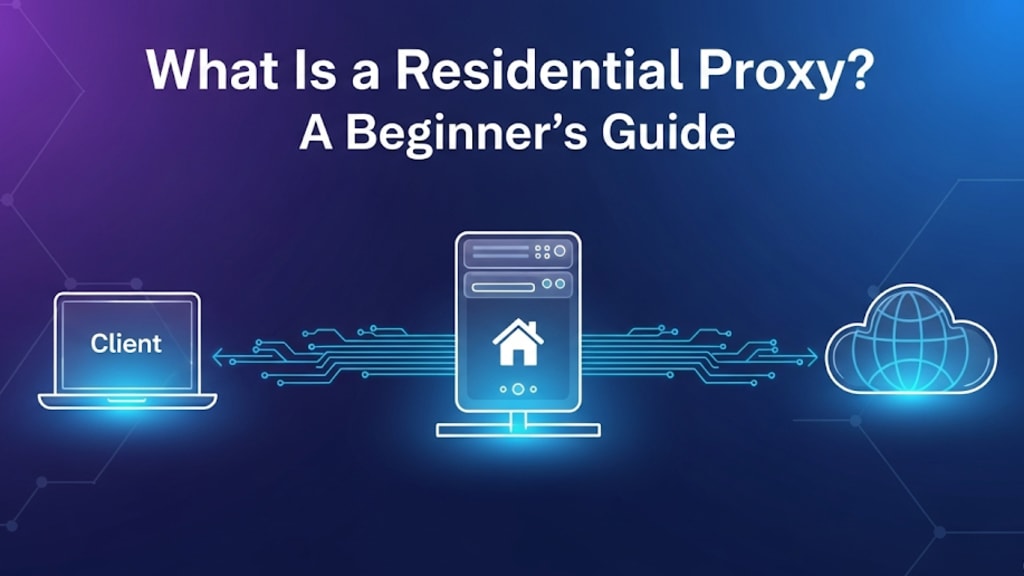
In today’s digital environment, proxies have become indispensable for marketers, developers, and businesses that need secure and reliable access to the internet. Among the many types available, residential proxies are especially valued for their authenticity and consistency. But what exactly are residential proxies, how do they work, and why are they so important in 2025? This guide breaks it down, from their functionality to real-world applications.
Understanding Residential Proxies
A residential proxy uses an IP address provided by an Internet Service Provider (ISP) to a household, rather than one generated in a data center. This means your internet requests are routed through genuine residential connections, making them appear as though they come from actual users.
Unlike datacenter proxies, which are fast but easily flagged as artificial traffic, residential proxies are trusted by websites. This makes them ideal for tasks where authenticity is critical, such as bypassing geo-restrictions, verifying ads, or conducting large-scale web scraping.
How Residential Proxies Work
Residential proxies operate by masking your real IP with one from a residential network. When you visit a site through a residential proxy:
1. Your traffic is routed through a real residential device.
2. The target site recognizes it as a legitimate user request.
3. You gain access without raising suspicion, reducing the chance of blocks.
They can be static (maintaining the same IP for consistency, useful for managing accounts) or rotating (changing IPs automatically, perfect for scraping at scale).
Key Benefits of Residential Proxies
Residential proxies come with several advantages:
- - Trust and Reliability – Seen as real users, lowering block risks.
- - Global Access – Bypass regional restrictions and test campaigns worldwide.
- - Improved Success for Scraping – Rotating IP allows bulk requests undetected.
- - Privacy Protection – Masking your original IP enhances anonymity.
For example, marketers checking ad performance across multiple countries often rely on residential proxies to get accurate, unbiased results.
Common Use Cases
Residential proxies are widely applied across industries, including:
1. Web Scraping – Extracting large datasets without hitting roadblocks.
2. Ad Verification – Confirming global ad placements and preventing fraud.
3. E-Commerce Monitoring – Tracking competitor prices and availability in real time.
4. Social Media Management – Safely running multiple accounts across regions.
5. Bypassing Geo-Restrictions – Accessing location-specific streaming or content libraries.
Residential Proxies vs. Other Proxy Types
To better understand the value of residential proxies, it’s useful to compare them with other common proxy types. Each option serves different needs, and choosing the right one depends on your goals.
Residential Proxies
Residential proxies route traffic through real devices with ISP-assigned IPs. Because these addresses look like they belong to everyday users, websites see them as authentic. This makes residential proxies harder to detect and block, even during high-volume activities like scraping or ad verification. They are especially suited for tasks where trust, accuracy, and reliability are more important than speed.
Best for: data scraping at scale, ad verification, e-commerce tracking, managing multiple accounts, and bypassing geo-restrictions.
Datacenter Proxies
Datacenter proxies, in contrast, come from servers in commercial data centers. They don’t rely on ISPs, which makes them much faster and usually cheaper than residential proxies. However, because they’re easy to identify as “non-residential,” many websites actively block or challenge them. For tasks that don’t require stealth—like testing speed, basic browsing, or low-risk automation—datacenter proxies may be sufficient.
Best for: quick tasks, speed-dependent operations, or when cost efficiency is the top priority.
Mobile Proxies
Mobile proxies use IPs assigned by mobile carriers. Since mobile networks constantly recycle IPs across many users, websites often find it harder to ban them without accidentally blocking legitimate mobile traffic. This makes mobile proxies highly resilient, but also more expensive and harder to scale compared to residential and datacenter options.
Best for: running sensitive campaigns, managing social media accounts that require maximum trust, or accessing platforms with strict detection systems.
Comparing the Three
- - Trust Level: Mobile > Residential > Datacenter
- - Speed: Datacenter > Residential > Mobile
- - Cost: Datacenter (lowest) < Residential < Mobile (highest)
- - Scalability: Datacenter and Residential scale well; mobile is limited.
- Detection Resistance: Mobile and Residential excel; datacenter lags behind.
Why Residential Proxies Strike a Balance
Residential proxies sit in the middle ground. They are more affordable and scalable than mobile proxies, while offering more legitimacy and reliability than datacenter proxies. For most businesses that need both flexibility and authenticity, residential proxies are the preferred choice.
Some providers, such as IPFLY, offer both static and rotating residential proxies, giving organizations the option to prioritize either stability or large-scale rotation depending on their use case.
Choosing the Right Provider
When evaluating residential proxy providers, consider these factors:
- - IP Pool Size – A larger and more diverse pool offers more flexibility.
- - Rotation Options – Automatic IP switching helps avoid bans during scraping.
- - Speed and Stability – Ensure consistent performance at scale.
- - Support and Uptime – Critical for business operations.
- - Compliance – Stick with providers that prioritize security and data protection.
Some companies, such as IPFLY, emphasize large IP pools and high reliability, making them a frequent choice for enterprises running global campaigns or automation tasks.
Conclusion
Residential proxies have become a cornerstone of modern digital operations. By blending real ISP-assigned IPs with flexibility and security, they support tasks ranging from data gathering to social media management and e-commerce monitoring.
In 2025, their importance will only grow as businesses demand more authentic, scalable, and secure online access. Providers like IPFLY play a role in meeting these needs, helping organizations maintain efficiency and privacy in an increasingly complex online world.
👉 For ongoing discussions and resources about proxies and online strategies, you can also join the IPFLY Telegram channel.
About the Creator
Keep reading
More stories from IPShiftDaily and writers in 01 and other communities.
How the Google Maps Scraper by Spylead Works and What You Should Know
When you're trying to find leads or business data online, platforms like Google Maps become essential. One tool that's been gaining attention in this space is the Google Maps Scraper by Spylead. Designed to extract public business information from Google Maps, this scraper offers a way to collect contact data quickly—without spending hours doing manual copy-and-paste work.
By IPShiftDaily6 months ago in 01
Top 10 Ecommerce App Development Companies in USA 2026
The ecommerce industry is no longer just growing — it is transforming at a pace that leaves unprepared businesses behind. Global ecommerce sales are projected to surpass six trillion dollars in 2026, and mobile commerce alone accounts for the lion's share of that growth. Whether you are launching a direct-to-consumer brand, building a multi-vendor marketplace, or digitizing an established retail business, the foundation of your success is the app you put in front of your customers.
By Samantha Blake4 days ago in 01



Comments
There are no comments for this story
Be the first to respond and start the conversation.