
What is 3D Printing and How does it work: Step by step process
3D Printing is one of the edge cutting technology in the world

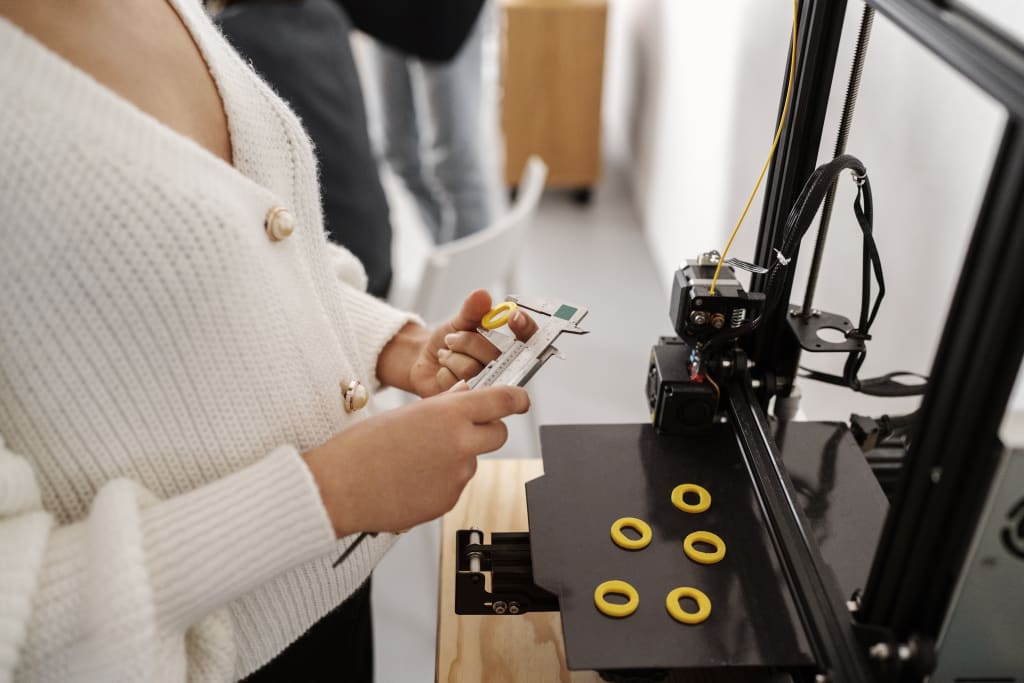
3D printing is a manufacturing process that creates a physical object from a digital model by building it up layer by layer. It is also known as additive manufacturing. 3D printing technology has been around since the 1980s, but it has become more widely available and affordable in recent years, making it a popular choice for prototyping, small-batch production, and even creating custom products on demand.
Here is a basic outline of how 3D printing works:
1. 3D model of the object is created using computer-aided design (CAD) software or scanned from an existing physical object
A 3D model of an object is a digital representation of the object that can be created using computer-aided design (CAD) software. The model is typically created by a designer or engineer who uses the software to create a virtual prototype of the object. The model is then saved in a digital file format that can be read by a 3D printer.
Alternatively, a 3D model can also be created by scanning an existing physical object using a 3D scanner. This captures the shape and dimensions of the object and creates a digital representation of it. The digital model can then be edited or modified using CAD software before it is sent to a 3D printer.
Once the 3D model is complete, it can be used to create a physical object using a 3D printing process.
2. The 3D model is then sliced into thin layers
Once a 3D model of an object has been created, it is typically sliced into thin layers in order to prepare it for 3D printing. The slicing process involves dividing the digital model into horizontal layers, around 0.1mm thick. These layers serve as a set of instructions for the 3D printer, telling it exactly where to place the material for each layer of the object as it is being built.
The slicing process is typically done using slicing software, which takes the 3D model and generates a set of instructions for the printer in a format that it can understand. The software also optimizes the model for 3D printing, taking into account the capabilities and limitations of the specific printer being used.
The sliced model is then saved as a file that can be sent to the 3D printer and used to create the physical object.
3. 3D printer reads the digital instructions for the object and begins to build it up layer by layer
Here 3D model of an object has been created and sliced into thin layers, the next step in the 3D printing process is for the printer to read the digital instructions for the object and begin building it up layer by layer.
The printer follows the instructions to deposit the material in the correct shape for each layer. As each layer is added, the object begins to take shape. The process can take anywhere from a few hours to several days, depending on the size and complexity of the object.
4. Time takes to complete a 3D printing job
The time it takes to complete a 3D printing job can vary greatly depending on the size and complexity of the object being printed. Simple objects with a small number of layers may take just a few hours to print, while more complex objects with hundreds or thousands of layers can take several days to complete.
Other factors that can affect the print time include the type of printer being used, the material being printed with, and the quality of the finished object. For example, using a faster printer or printing with a material that has a higher melting temperature may reduce the print time, but it could also affect the final quality of the object.
Overall, the time it takes to 3D print an object can range from a few hours to several days, depending on the specific circumstances of the print job.
5. Support structure trimming process
Once a 3D printing job is complete and the object has been removed from the printer, there may be excess material left over. This excess material, also known as support structure or scaffolding, is typically used to hold up the object during the printing process and prevent it from collapsing or distorting as it is being built.
The excess material is usually made of the same material as the object itself and is attached to the object in strategic locations to provide support. Once the object is complete, the excess material can be trimmed away using a variety of tools, such as scissors, pliers, or a knife.
The process of trimming away the excess material is also known as post-processing, and it is an important step in the 3D printing process. Removing the excess material helps to improve the overall appearance and functionality of the finished object and make it ready for use.
There are many different types of 3D printers available, each with its own set of capabilities and limitations. Some use extrusion techniques to print with molten materials, while others use lasers or electron beams to fuse powdered materials. 3D printing is used in a variety of fields, including engineering, architecture, art, and medicine.
There are many interesting and innovative applications of 3D printing in a variety of fields. Here are a few examples:
• Medicine: 3D printing is being used to create custom medical implants, such as replacement joints and bones, as well as to produce patient-specific surgical instruments and models for training and planning.
• Architecture: 3D printing is being used to create small-scale models of buildings and structures, as well as to produce full-scale building components and even entire houses.
• Aerospace: 3D printing is being used to manufacture lightweight and complex parts for aircraft and spacecraft, such as engines and satellite components.
• Education: 3D printing is being used in classrooms and maker spaces to provide students with hands-on experience with design and manufacturing concepts.
• Art: 3D printing is being used by artists to create sculptures and other works of art that would be difficult or impossible to create using traditional manufacturing methods.
These are just a few examples of the many interesting and innovative ways in which 3D printing is being used. As the technology continues to advance and become more widely available, it is likely that even more creative and groundbreaking applications will be developed.
About the Creator
AJITH KUMAR
I am a mechanical engineer with a passion for designing and developing innovative mechanical systems and devices.
Keep reading
More stories from AJITH KUMAR and writers in 01 and other communities.
The Line: The Vertical City of Future (2030)
The Line is a proposed city that aims to be at the forefront of technological innovation. The project, which is currently being developed by the government of Saudi Arabia, envisions a city built along a single, straight line, with advanced transportation systems, smart city infrastructure and cutting-edge technologies. Announced in 2017 by Crown Prince Mohammed bin Salman, the project is being developed by the Saudi government's Neom Company and is intended to be a hub for advanced technology and innovation. But what exactly is Neom and what makes it different from other cities?
By AJITH KUMAR3 years ago in Futurism
What Makes a Crypto Arbitrage Bot More Strategic Than Other Bots In 2026?
The cryptocurrency market in 2026 is more competitive, faster, and technologically advanced than ever before. Automated trading systems dominate the ecosystem, with bots executing trades across exchanges within milliseconds. Among these systems, the crypto arbitrage bot stands out for its structured and strategy-driven approach. While many bots rely on predictive signals, trend analysis, or momentum indicators, arbitrage bots operate on a fundamentally different principle: market inefficiency.
By smithtaylor6 days ago in 01
Exploring AI InsMelo: Revolutionizing Music Composition
Abstract AI InsMelo is an innovative artificial intelligence tool designed to transform the landscape of music composition. By leveraging advanced algorithms and machine learning techniques, InsMelo enables musicians, composers, and creators to generate unique melodies and harmonies, enhancing their creative processes. This article delves into the features, benefits, and implications of AI InsMelo in the music industry, highlighting its potential to democratize music creation and inspire new artistic expressions.
By Arslan Khan2 days ago in 01




Comments (1)
Thats a very good article