
What Does the Future Hold for AI in Mobile App Development?
Future of AI in Mobile Applications

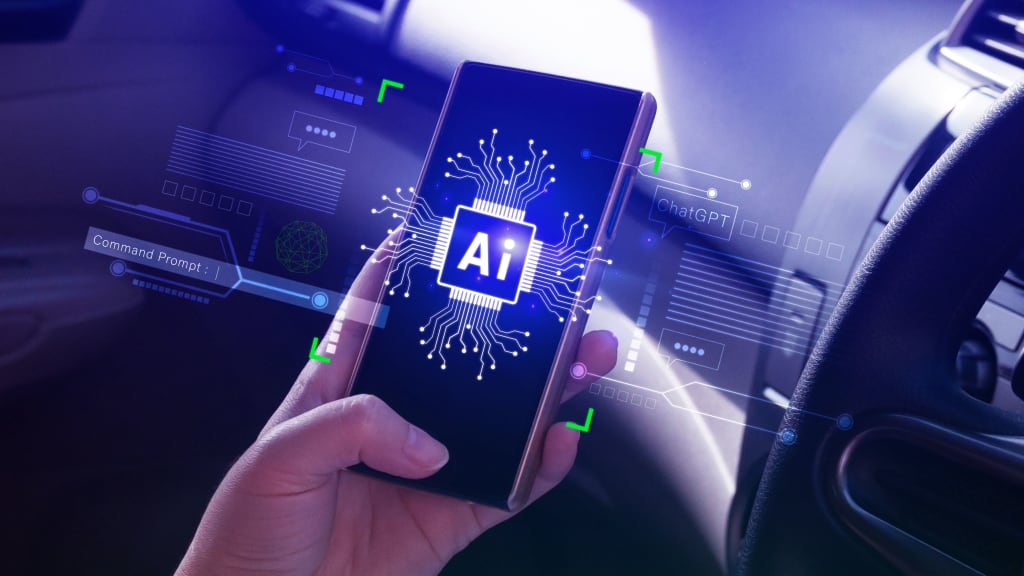
In the present era, smartphones have become more than just communication devices - they are our personal assistants, entertainment hubs, fitness coaches, financial advisors, and whatnot. Have you ever stopped to wonder how these apps seem to understand us so well and anticipate our needs and preferences?
The use of AI in mobile app development is the apt answer to this question. AI is a groundbreaking technology that is transforming the tech industry and making apps more advanced with each update.
But what exactly is AI, and how does it benefit mobile apps? Well, AI enables mobile apps to learn from interactions, recognize patterns, and make smart decisions on our behalf. Things don't end here! AI in mobile apps does a lot more than this. We have covered these usages in our blog.
Brief Overview of the Current State of AI in Mobile Apps
AI has played a pivotal role in digital transformation and new-age mobile app development. It has transformed the way we interact with mobile apps by enabling personalization, predictive analytics, natural language processing, image recognition, virtual assistants, health and fitness tracking, and enhanced security. The transformation is visible in the growth numbers. In just a few years, AI in mobile apps has turned revenues into manifolds.
In 2023, the global market size for Artificial Intelligence crossed the mark of $207 billion. According to Statista projections, this figure is forecasted to surge to nearly $740 billion by 2030, reflecting a robust compound annual growth rate of 17.3%.
As technology advances and more businesses adopt AI processes, the AI app sector is expected to experience significant growth, soaring from $2.5 billion in 2022 to a staggering $38.5 billion by 2028.
Emerging AI Trends in Mobile App Development
By 2025, spending on AI systems worldwide is anticipated to reach a staggering $126 billion, with mobile applications playing a pivotal role in driving this expansion.
By looking at these statistics, you can have an idea of AI’s growth potential in mobile app development. Now, let us talk about AI technology trends that will support the projected growth.
AI-driven Personalization and Recommendation Systems
The system collects data from various sources, including user interactions within the app, browsing history, demographic information, and previous purchase behavior. This data forms the basis for understanding user preferences and behavior patterns.
AI algorithms process and analyze the collected data to identify patterns, trends, and correlations. This analysis helps the system understand user preferences, interests, and intent. These insights will be used to generate personalized recommendations for content, products, or services that are likely to be relevant and interesting to each user. These recommendations can include articles, videos, products, events, or other app features.
Natural Language Processing (NLP)
Natural Language Processing (NLP) in mobile apps will enable devices to understand, interpret, and generate human language. Users interact with the mobile app by providing input in the form of text, including typing messages, entering search queries, or issuing voice commands. Moreover, NLP will facilitate language translation within mobile apps and help users communicate and access content in multiple languages.
Conversational AI and Gen AI
The generative AI market has experienced remarkable growth between 2023 and 2030, reaching around $45 billion at the close of 2023.
Conversational AI powers chatbots and virtual assistants that can provide customer support and assistance within mobile apps. These AI-driven assistants can answer frequently asked questions, troubleshoot issues, and guide users through complex processes, improving customer satisfaction and reducing support costs.
Moreover, it will analyze user input and behavior to provide personalized recommendations and suggestions. For example, a chatbot in a shopping app can recommend products based on a user's preferences, purchases, and browsing history.
Generative AI is revolutionizing app development by helping developers add advanced features. With Gen AI, mobile apps can generate a wide variety of content like text, images, music, social media posts, etc.
Within mobile apps, you can hire mobile app developers to create tools like photo editors and design assistants to ensure better content generation. These tools use AI algorithms to suggest edits, generate artistic effects, and assist users in creating visually appealing content.
Computer Vision and Image Recognition
Through computer vision, mobile apps can recognize and interpret visual input from the device camera. It allows users to interact with the app by pointing the camera at objects, QR codes, or barcodes, enabling features like augmented reality (AR) and interactive gaming.
On the other side, image recognition technology enables mobile apps to perform visual searches, allowing users to search for products, landmarks, or objects by simply taking a picture. It streamlines the search process and enables users to find information effortlessly.
Machine Learning
Machine learning algorithms will analyze user data to provide personalized experiences tailored to individual preferences. It includes personalized content recommendations, product suggestions, and customized user interfaces, leading to higher engagement and retention rates.
Furthermore, ML algorithms can detect patterns of fraudulent behavior and identify potential security threats within mobile apps. It helps prevent unauthorized access, protect user data, and ensure the security of financial transactions and sensitive information.
ML algorithms can analyze large datasets to extract valuable insights and inform decision-making within mobile apps. This includes customer segmentation, trend analysis, and predictive modeling, enabling businesses to make data-driven decisions and optimize performance.
Conclusion
With the integration of AI, mobile apps will become more than just tools for accessing information or performing tasks; they will become intelligent assistants, capable of understanding and anticipating user needs, providing valuable insights, and delivering personalized experiences in real time.
However, you may not know how to use AI in a mobile app. So, you must seek assistance from a reliable digital transformation company. Professionals will help you leverage AI to enhance app productivity and empower users in ways you might have never imagined. So, don't think much and go for the AI trend.
About the Creator
Mehul Rajput
Mehul Rajput is a CEO of MindInventory, a digital transformation & app development company. His role involves heading the operations related to business and delivery with strategic planning and defining road-map for the future.
Keep reading
More stories from Mehul Rajput and writers in 01 and other communities.
Everything You Should Know About Mobile App Design
The design plays a pivotal role in the success and failure of a mobile application. It is not the same as designing for magazines or posters. The app design allows a user to navigate across your portal. Your entire investment goes down the drain if it is clumsy and cluttered.
By Mehul Rajput5 years ago in 01
The Top 10 Reasons Why Hackers Target Facebook Accounts: A Complete Guide to Methods, Malware, and Protection
The Billion-Dollar Black Market of Stolen Identities A Facebook account is more than a social profile—it’s a digital identity, a repository of personal connections, memories, and often, a gateway to other online services. This immense value has made Facebook accounts a prime target for cybercriminals worldwide. But what truly drives hackers to invest time and resources in compromising these accounts? This in-depth article explores the top motivations, reveals the real methods and tools used, and provides a robust defense blueprint to protect your digital life.
By Alexander Hoffmann3 days ago in 01
The Duelist
The rays of a dying red sun flashed against the onrushing blade. The grey beards say the key to dueling lies in size, speed, reach, righteous fury, whatever the person in front of them pays them to say. Matteo knew better than any it was none of these and had an undefeated record on these sands to prove it.
By Matthew J. Fromm3 days ago in Fiction



Comments
There are no comments for this story
Be the first to respond and start the conversation.