
What are the Types of Cloud Computing?
Its Types, Benefits, and Uses in Different Industries

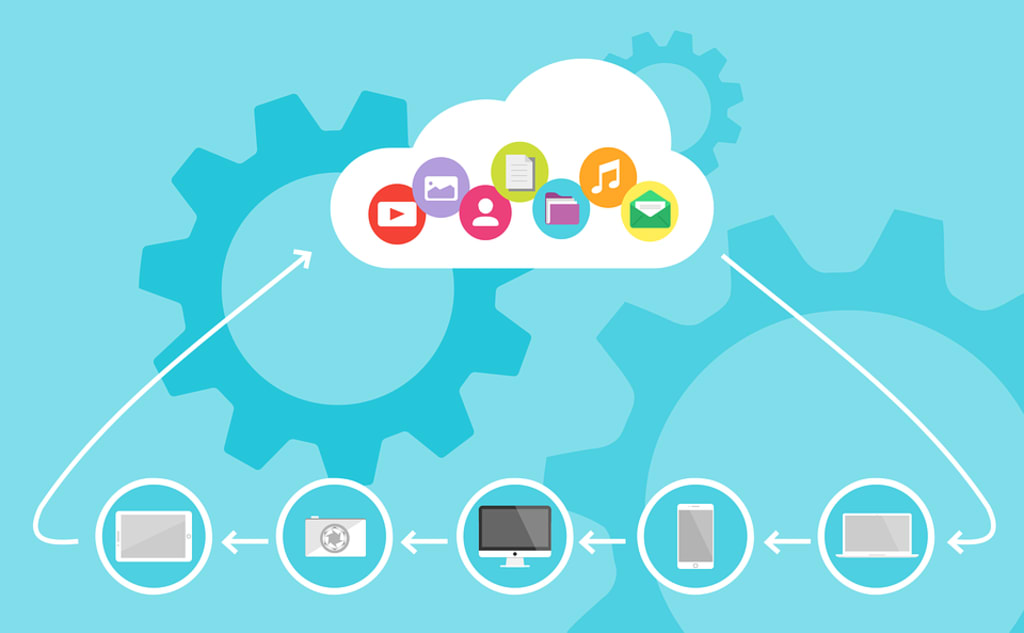
The cloud computing revolution allows developers and IT organizations to concentrate on what matters most instead of doing undifferentiated tasks like purchasing, maintaining, and capacity planning. With the rise in popularity of cloud computing, a variety of new models and deployment techniques have evolved to fulfill the various needs of users. You have varying degrees of management, flexibility, and control depending on the cloud service type and deployment technique. You can choose the correct collection of services for your purposes by being aware of the distinctions between Infrastructure as a Service, Platform as a Service, and Software as a Service, as well as the deployment techniques you can employ.
About Cloud Computing
Cloud computing in simple terms, is the supply of on-demand IT resources over the internet. It basically refers to Internet-based computing where a shared pool of resources is made accessible over a wide network and can be provisioned or released with little management work and service provider contact.
The companies that provide these services are called Cloud Service Providers (CSPs). CSPs charge users or organizations according to the amount of Cloud resources they consume. With the use of a hypervisor, cloud resources can be separated from the underlying physical hardware. However, because Cloud computing encompasses a variety of service kinds and deployment strategies, there is a great deal of uncertainty surrounding it. You can better understand the fundamentals of cloud computing by reading this article.
Types of Cloud Computing
Private clouds, public clouds, hybrid clouds, and Community clouds are the four basic varieties of cloud computing. Let’s dive in to know more about these services.
1. Public Cloud
Third parties who administer public clouds offer cloud services to the general public via the internet; these services are offered with pay-as-you-go pricing schemes.
They provide ways to reduce the expense of IT equipment and develop into a viable choice for managing peak demands on local infrastructure. Small firms, that can launch their operations without making sizable initial investments by relying solely on public infrastructure for their IT requirements, frequently choose public clouds as their preferred alternative.
Multitenancy is one of the essential properties of public clouds. A public cloud is designed to service many users, not just one particular client. A user needs a virtual computing environment that is distinct from other users and most likely isolated.
2. Private Cloud
Private clouds are distributed systems that operate on private infrastructure and offer consumers dynamic computing resource provisioning. In private clouds, there might be alternative models to the pay-as-you-go model that regulate cloud usage and proportionately charge various departments or parts of an organization. HP Data Centers, Ubuntu, Elastic-Private cloud, Microsoft, and others are private cloud service providers.
The following are some benefits of using a private cloud:
· Protection of Customer Information: Since client data and other sensitive information do not transfer outside the private infrastructure, security issues in the private cloud are reduced.
· SLAs for Ensuring Infrastructure: Private clouds are used to do specific tasks including reliable clustering, data replication, system monitoring and maintenance, disaster recovery, and other uptime services.
· Adherence to Customary Practices and Operations: When deploying and running applications in accordance with third-party compliance standards, specific procedures must be in place. Given the public cloud, this is not feasible.
1. Hybrid Cloud
Combining the resources of the public cloud and the private cloud results in a heterogeneous distributed system known as a hybrid cloud. They are also referred to as heterogeneous clouds for this reason.
The inability to scale on demand and effectively handle peak loads is a significant disadvantage of private deployments. In this case, we need public clouds. Consequently, a hybrid cloud benefits from both public and private clouds.
Benefits of utilizing a hybrid cloud include:
· Cost: Because it is made up of a distributed system, it is less expensive than other clouds.
· Speed: It is effectively quick and inexpensive, reducing the delay of the data transfer procedure.
· Security: Security is the most crucial factor. Because it uses a distributed system network, hybrid clouds are completely safe and secure.
2. Community Cloud
Community clouds are networked systems made by combining the functions of various clouds to meet the unique requirements of a particular industry, a group of people, or a particular market. It's challenging for the groups to split up the responsibilities, though.
The infrastructure of a community cloud is shared by groups with similar goals or responsibilities. An organization or outsider may be in charge of managing the cloud.
The following industry sectors can profit from cloud computing:
· Financial and Banking
· Government \sManufacturing
· Transportation
· Healthcare,
· Education, and
· Pharmaceutical
· Transport,
· Real Estate
· IT/ITES
Conclusion
According to a report by the International Data Group, 69% of firms are now utilizing cloud technology in some way, and 18% indicate they intend to do so in the future. At the same time, Dell notes that businesses that make investments in big data, cloud, mobility, and security grow their revenue up to 53% more quickly than their rivals. As evidenced by the data, a growing number of tech-savvy companies and business titans are realizing the many advantages of the cloud computing trend.
Despite evidence showing the business efficiencies, cost savings, and competitive advantages of cloud computing, which has been around for around 20 years, a sizable section of the corporate community still doesn't use it. According to the data mentioned above, it is clearly indicative that employing this technology help businesses operate more effectively, provide better customer service, and significantly boost total profit margins.
Interested to know more about how cloud computing can benefit your business?
With Webuters, you can get the best cloud computing solutions to integrate with your business infrastructure efficiently.
About the Creator
Keep reading
More stories from writers in 01 and other communities.




Comments
There are no comments for this story
Be the first to respond and start the conversation.