
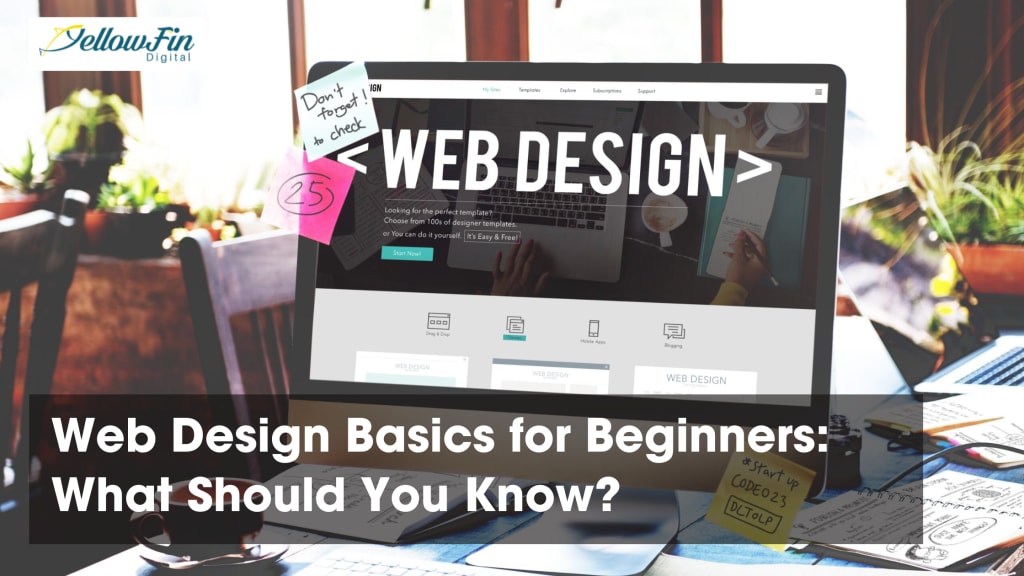
Web Design Basics for Beginners: What Should You Know?
Learn web design basics from the experts at a web design agency. Go through the basic requirements and best practices for effective web design.

If you're searching for web design, it means you have a curiosity and a desire to create something extraordinary in the digital world. And let me tell you, you don't have to be a tech genius to learn web design basics.
Sure, web designers may spend their fair share of time in manuals and software systems, but at the core, they are just ordinary individuals like you and me. They are people who sought better opportunities or saw a lifelong passion for computers at a young age.
So, are you ready to create your own website? Web design is the blend of art and functionality that allows you to craft visually appealing and user-friendly websites. But where do you start? Keep reading this guide on web design for beginners. From choosing fonts and colors to creating compelling layouts, experts at a web design agency will share the knowledge to bring your web design dreams to life.
What is a Web Design and Why is it Important?
Web design is all about creating websites and web pages that are both visually appealing as well as functional. It decides how the website will look, choosing colors and fonts, arranging the basic web design layout, and selecting images.
Web designers use HTML and CSS to bring a website to life, adding navigation buttons and text. They are responsible for designing everything from the overall appearance to small details like buttons and icons. They test the website with real users to ensure a seamless experience and make necessary adjustments.
Web design applies a combination of technical skills and creativity to craft websites that look great, provide a seamless and enjoyable experience for users, and effectively communicate the desired message.
Best Practices to Create a Web Design That Works
The field of web design is constantly growing as more people go online and the demand for information grows. To remain relevant in this dynamic industry, an excellent custom web design company stays updated with the latest trends. Here are some effective best practices that will help you stay on top and create websites that work well:
1. Clarify Your Website's Purpose
The first essential practice is to clearly define the purpose of your website. This will guide you in determining the content to include and the structure to adopt. By understanding the intended purpose of your site, you can choose the design elements that align with your goals.
2. Understand Your Target Audience
When designing a website, it's crucial to remember that various individuals with different preferences and needs may visit it. Identifying your target market is important to ensure you address all their requirements.
Start by asking yourself questions such as who you are trying to reach, what they like and dislike, and what their goals are. This knowledge will enable you to create content that resonates with your audience.
3. Strategize and Plan
Creating a solid plan is a fundamental step in effective web design. Define your goals for the website and determine the information you want to present on each page. Additionally, consider how much space each element will occupy on the screen. By investing time in strategic planning, you will streamline the website creation process and develop a site that meets both your needs and those of your customers.
4. Simplify Your First Site Design
When starting your first web design project, it's essential to keep things simple and enjoyable. Avoid getting overly ambitious and potentially discouraged. Instead, choose a basic and fun project to tackle. Save more complex designs, like an ecommerce site, for when you have more experience.
A blog is an excellent starting point as it provides a good design exercise and helps you know how a Content Management System (CMS) works, which is essential for future site designs. The best part is that you don't have to start from scratch, as plenty of blog templates are available to make the process easier. The basic web design templates are valuable learning tools, allowing you to observe how HTML, CSS, and Javascript elements are styled and combined. Use templates as a foundation and make changes and customizations to suit your preferences.
If a blog doesn't appeal, you can showcase your creativity or hobbies. For example, you can create a website to feature your photography skills or share your collection of short stories. Designing a site that highlights your passion will make your first project all the more enjoyable.
5. Find Inspiration for Your Design
You've likely come across websites with designs that have amazed you. If you're seeking inspiration for your own website, there are several places to look. Start by examining websites that excel in their design. These can be your competitors' sites or sites targeting a similar audience, or even websites from completely different industries.
If you need help deciding where to begin or what to focus on, start with the basics. Observe the colors used, the font sizes, any standout patterns or textures, the presence of animations or transitions, interactive elements, and the use of images or videos. All of these basic web design elements can spark creative ideas for your site's design.
6. Design with Real-Life Usability in Mind
Designing a website goes beyond just the digital screen; it should also work well in real life. Ensure the content is easy to read and understand and flows smoothly from page to page. The goal is to create an effortless user experience, so avoid excessive clicks or long scrolling pages. Make navigation as easy as possible for your users.
Remember, your website should be user-friendly and intuitive, providing a seamless experience. By designing with real-life usability in mind, you'll create a website that looks great as well as functions effectively for your audience.
7. The 5 Basic Web Design Principles to Consider
So, what are the basic web design principles? Web design contains various essential principles that contribute to the overall effectiveness and user experience of a website.
Here are the basic web design principles suggested by a web design service provider when designing a website:
- Typography Sets the Tone: Typography plays a crucial role in website design, as it not only influences the initial impression but also sets the overall tone of the site. By following best practices in typography, you can ensure that your site's typography effectively conveys the desired message and improves the user experience. For instance, understanding the terminology and guidelines for creating legible text is essential for crafting an appealing and professional-looking website.
- Streamlined Navigation: Navigation is a key aspect of web design, as it directly impacts how your users interact with and explore a website. Ensuring the navigation is intuitive is necessary, allowing the users to access the desired content quickly and effortlessly. Different navigation styles, such as hamburger, top, and footer navigation, serve distinct purposes and contribute to a seamless user experience.
- Visual Hierarchy for Emphasis: Visual hierarchy involves organizing elements on a page based on their reputation, guiding users' attention to the most critical content. By strategically arranging elements, you can effectively communicate the significance of various components on the page, enhancing user engagement and comprehension.
- Clear and Concise Communication: Precise and thorough communication through website content is a fundamental principle of web design. Clear and simple language, along with the use of bullet points and subheadings, ensures that the content is easily understandable for all users. Well-defined communication enhances the overall user experience and facilitates effective information delivery.
- Mobile-Friendly Design: Ensuring a website is mobile-friendly is essential in today's digital landscape. With the increasing usage of mobile devices, websites must be accessible across various screen sizes and devices. A mobile-friendly web design improves sales of your ecommerce products or services, user experience, and search engine rankings.
Using these fundamental web design principles, you can create a visually appealing, user-friendly, and effective website that precisely resonates with the target audience and achieves its intended goals.
8. Let The Art of Web Design Influence You
Allowing the fine arts to inspire your design decisions is essential when creating a website. Employ the principles of composition to craft a visually appealing website, ensuring that every element harmonizes with the others. Strive to incorporate balance and symmetry to achieve an aesthetically pleasing layout. To understand color theory, you can explore paintings from various historical periods or draw inspiration from nature, where vibrant and beautiful natural colors can guide the visual appeal of your website.
9. Learn Different Design Approaches
To stay updated in the rapidly evolving field of web design, it's essential to explore various design forms. Start by analyzing popular websites to understand their appeal. Use basic tools like Google Analytics 4 to gain insights into visitor behavior and origin to understand user navigation patterns on your site.
10. Plan Your Content Strategy in Advance
Before getting into the design process, establish a clear content strategy. Understand the type of information you intend to convey, your target audience, and the desired tone. By preparing content in advance, you can shape your design decisions and writing style accordingly. Having content ready beforehand provides a better sense of how the website will look and function, allowing for early adjustments and improvements.
11. Prioritize Simplicity in Design
Simplicity is key to effective web design. Cluttered designs can be confusing and challenging to navigate for users. By embracing a straightforward and simple design approach, users can quickly find the information they seek, whether it's in written content, navigation, or call-to-action elements. Your design should prioritize simplicity and logical order to guide users through the site with ease, thereby enhancing the user experience, also known as UX.
12. Knowledge of User Experience (UX)
Understanding user experience (UX) is crucial as it ensures a good grasp of what visitors seek when they land on your site. It also focuses on presenting content that visitors can consume and comprehend. A website is more than just text; elements like color scheme, content, typography, layout, and imagery work together to serve your audience and evoke emotion. UX revolves around understanding your audience's needs and ensuring that your design facilitates easy access to what they seek.
When tackling your first website, remember these guiding UX principles:
- Keep things simple and intuitive.
- Communicate concepts logically.
- Prioritize meeting your audience's needs over showcasing your skills at the expense of usability.
13. The Essentials of User Interface (UI)
User interface (UI) is a vital element in web design, serving as the means for users to interact and navigate your website. Whether designing for mobile or desktop, adhering to best practices such as using simple language, incorporating white space to improve readability, and employing concise links is essential. While UI focuses on the specifics of design, UX is concerned with the overall feel of a website design.
When building your first website, keep these UI principles in mind:
- The functionality of interactive elements is evident.
- Maintain uniformity for usability.
- Make design choices with a clear purpose.
Summarizing The Basics For Strong Web Design
To build a successful website, consider the following fundamental requirements for reliable web design:
- The web design is responsive for both desktop and mobile.
- The website is accessible to all users.
- The site is searchable and visible to search engines.
- The design prioritizes usability and improves user experience.
- The website is optimized for speed and performance.
Start on a Journey to Web Design!
Completing a web design project is an exciting journey. It's that moment when you look at your creation and think, "Wow, it looks great!" But there's also a bittersweet feeling when you hand over the final copy to your client, knowing that your design will be seen by millions of people.
Whether you're currently working on a web design project or not, the tips we've shared above for learning web design basics will help make your future projects more effective.
If you need expert help, you can always search for a web design agency near me. Don't put off a redesign any longer—now is the perfect time to take on that project. Embrace the potential impact of web design and see your ideas come to life online.
About the Creator
Elli Brice
Digital Marketer by Profession | Content Writer by Heart!
Reader insights
Nice work
Very well written. Keep up the good work!
Top insight
Easy to read and follow
Well-structured & engaging content
Keep reading
More stories from Elli Brice and writers in 01 and other communities.
SEO Robots.txt: Setting Rules to Allow or Block Website Access
Introduction: Search engines drive organic website traffic in the vast online landscape. To ensure maximum visibility and proper indexing of their websites, administrators, and website owners often seek the expertise of trusted Austin SEO services. These professionals employ various strategies, including using a robots.txt file to guide search engine bots, also known as web crawlers.
By Elli Brice3 years ago in 01
Five Steps to Turn Prospects into Lifetime Customers
Introduction Every business owner knows that acquiring new customers costs significantly more than retaining existing ones. Studies consistently show that it's five to twenty-five times more expensive to attract a new customer than to keep a current one. Yet many businesses focus their energy and resources almost exclusively on customer acquisition, treating each sale as a one-time transaction rather than the beginning of a potentially lifelong relationship.
By Start My Business5 days ago in 01
Best React Datetime Pickers for 2026: Top Libraries
Look, I get it. You're staring at your React project right now, wondering why picking a stupid date has to be this complicated. Should've been simple, yeah? But here we are in 2026, and somehow we've got more datetime picker options than there are days in a bloody year.
By Sherry Walker2 days ago in 01


Comments (1)
Amazing contents and thanks for the recommendation