
Web 3.0--What is it, how is it different from web 2.0, And its impact
What do artificial intelligence, the Internet of Things, and web browsing have in common? They all makeup what’s known as web 3.0, an exciting new version of the internet that’s set to revolutionize how we all live, work, and play. But, what exactly is web 3.0? And how is it different from web 2.0? Read on to find out!

What is Web 3.0
Web 3.0 is a term used to describe a future version of The Internet, It has been referred to as The Semantic Web or as The Information Web. It will likely be made possible by developments in artificial intelligence, peer-to-peer networks and electronic payments, combined with business models that allow for micropayments at low cost per transaction; allowing for greater automation of many things currently done online, reducing reliance on proprietary software applications and centralized control by commercial enterprises.
In terms of artificial intelligence and autonomous devices, The World Wide Web Consortium (W3C) was founded in 1994 to lead development of standards based upon universal connectivity. Their goal was to build systems that could exchange information over computer networks without requiring human intervention. In 2005 they released their semantic web stack which included RDF, OWL and SPARQL amongst others.
The technologies of Web 3.0
Despite being focused around machine-to-machine communications, Web 3.0, or more commonly known as The Internet of Things will rely on a few key technologies such as:
1.artificial intelligence (AI),
2.Internet of things (IoT),
3.Big Data Analytics, and
4.Blockchain Technology.
These technologies are already in use today but in their infancy. As these technologies mature over time they will be used to build out what we know as Web 3.0.
Web 3.0’s Impact on Society
Just like every new technology that has come before it, there will be both positive and negative impacts that come with The Internet of Things. One area where IoT can help improve society is by providing people with quicker access to information which would allow them to make better decisions faster than ever before. This could have an impact on areas such as healthcare where doctors could get real-time information about their patients allowing them to treat them better or possibly even save lives.
Major differences between Web 1.0 and Web 2.0 and Web 3.0
Web 1.0 was mainly used for surfing contents like news, views, insights etc;
Web 2.0 made a significant impact by helping users to create contents through discussion, collaboration, integration etc and by which individual became an authority of content, got accepted in information revolution;
What Web 3.0 holds in terms of advancement, what’s there in store for us?
The Internet of Things (IoT) technology has been evolving rapidly and will be at its peak soon as we are moving towards ‘smart living’. With IoT, people can connect any device with internet access to other devices or things in order to share data or control them remotely. This means that you could connect your refrigerator to internet so that you can know if you need more milk before going out. You could also program your thermostat so that it turns off automatically when you leave home.
In short, everything will become smart and connected with each other. This technology has already started influencing our lives significantly, but Internet of Things (IoT) together with web 3.0 will change our life completely over time.
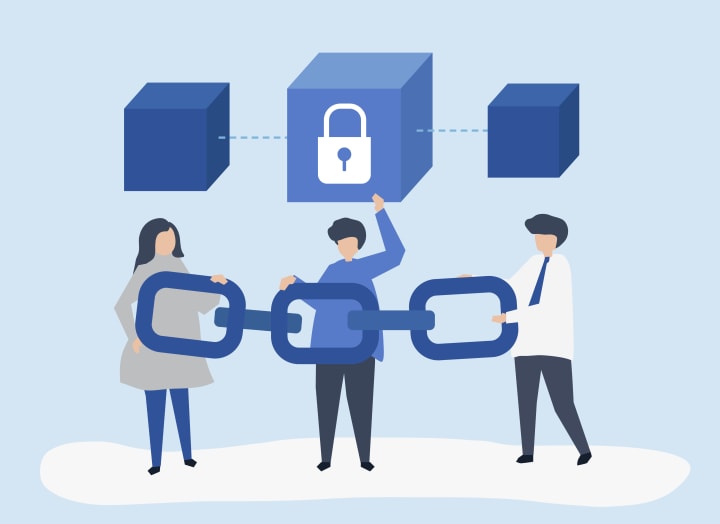
The Connection between Web 3.0 and Blockchain
The blockchain is essentially a distributed ledger that can record transactions between two parties efficiently, in a verifiable, permanent way. That could be an exchange of money, stocks or titles, or anything else that can be expressed in digital form. Blockchain’s potential uses go far beyond bitcoin. It has been called the trust machine because it allows people who don’t know each other to trust each other for all kinds of transactions. Blockchain technology can also help power smart contracts—automated computer programs that execute themselves when certain conditions are met. This type of trust machine may not seem like much compared with artificial intelligence (AI), but it could have a major impact on everything from banking to government records.
A world with Web 3.0 would be one where blockchains replace cloud storage systems as our primary platform for interacting with data, making them more transparent and trustworthy than ever before.
The future of the Internet in terms of web 3.0
For a corporation, 3D graphics are an excellent asset. If you run a product-based company, creating a 3D product model can help you attract customers and increase conversion rates.
You may also utilise technology to start a business from the ground up, make a digital clone of your online store, show off your production line, and much more. It's affordable, and the advantages are numerous.
Web 3.0 will also make firms more transparent and user-centric. It opens the door for blockchain, and in the future, applications and websites will use it to enable users to make purchases using cryptocurrencies and coins.

Web 3.0 and Metaverse
While Web 3.0 is primarily concerned with who will own and govern the internet in the future, the metaverse is concerned with how people will interact with it. Most of the users like us now use computers, cell phones and tablets to access websites and applications. Proponents of the metaverse believe that humans will utilise virtual reality (VR) technology to access the internet tomorrow, navigating between virtual realms as digital avatars.
Each of these virtual worlds is a metaverse, and you can already visit some of them online, such as Rec Room, Fortnite, Decentraland, and Horizon Worlds, a type of virtual gaming world established by Metaverse (the parent company of Facebook).
While the majority of today's metaverses are gaming platforms populated by pre-teens, advocates believe the concept has the potential to change the way we all work, interact, and more online.
Instead of using a video conferencing service like Zoom to communicate with your coworkers, you could put on a VR headset and interact with their avatars in a virtual area.
Instead of texting or messaging pals, your group can decide to meet up in the throng at a virtual music festival, where real-life performers play as digital avatars.
Even for a lot of people metaverse already acting as a new source of generating revenue through brand promotion and gaming and a lot more. What you are waiting for?
How it will be transforming the Digital era
Online 3.0 has the potential to bring in a consumer-centric, open-source future web that prioritises privacy and security.
It would let machines and people to exchange data and value across a peer-to-peer network.
Apart from that, the semantic web would open up a slew of new possibilities, including decentralised autonomous organisations (DAOS), global-scale decentralised autonomous enterprises (DACs), self-sovereign identities, and decentralised data markets.
It will fundamentally alter the way humans and robots interact by allowing them to communicate with one another.
Secure data transfers, automated cryptocurrency-based payments, and simple ownership transfers are all possibilities.
Ethereum is now laying the groundwork for a number of new Web 3.0 projects.
About the Creator
Keep reading
More stories from Aritra Dutta and writers in 01 and other communities.
Stay Safe on the Internet: 5 Tips for avoiding online threats
1) Keep your apps up-to-date The first way to stay safe is to have all of your software up-to-date. Keeping your apps updated helps you get security patches, bug fixes, and other enhancements that can make a huge difference in protecting your devices from malicious software. Staying up-to-date also ensures that you have new features when they're released. Sometimes developers change how their app works or what information it collects and if you don't update, you may be left with an outdated version that could put your personal information at risk.
By Aritra Dutta3 years ago in 01
Is Snapchat Premium Safe to Use as a Creator and User?
Snapchat is an American-based multimedia photo sharing and instant messaging app. Snapchat Inc developed it. One of the app's primary features is that text messages and images are available for a limited time. This is their unique selling point or what we popularly term as USP. However, the limitations were removed later on.
By Intelligent Creator7 days ago in 01
House Cleaning Scopes That Keep Results Consistent
A clean home feels simple until you try to keep it that way during a busy month. Work deadlines, school schedules, pets, and visitors stack up. Dust returns faster than expected. Bathrooms show water spots. Kitchen grease builds around the stove. Many homeowners hire cleaning help, then feel unsure about what to request and how to judge quality.
By Jared Benningabout 11 hours ago in 01



Comments
There are no comments for this story
Be the first to respond and start the conversation.