
Virtual Reality
Unleashing the Power of Imagination in the Technological Era

Introduction
In recent years, virtual reality (VR) has captured the imagination of technology enthusiasts and consumers alike. This groundbreaking technology has the power to transport users into entirely new worlds, allowing them to experience things beyond the limitations of the physical realm. With its ability to merge technology and imagination, virtual reality is revolutionizing the way we interact with computers and opening up endless possibilities across various industries. In this article, we will dive into the fascinating world of virtual reality, exploring its origins, current state, and future prospects.
The Origins of Virtual Reality
While virtual reality has gained significant attention in recent times, its roots can be traced back several decades. The concept of virtual reality can be attributed to Ivan Sutherland, who is often referred to as the "father of computer graphics." In 1968, Sutherland created a head-mounted display system called the "Sword of Damocles," which is considered one of the earliest examples of virtual reality technology. This system used a bulky headset and a computer-generated display to immerse users in a virtual environment.
Advancements in Virtual Reality Technology
Over the years, virtual reality technology has undergone significant advancements, thanks to the rapid progress of computing power, display technologies, and motion tracking systems. The introduction of affordable, high-resolution displays and powerful graphics processing units (GPUs) has played a crucial role in enhancing the visual fidelity and overall immersive experience of virtual reality.
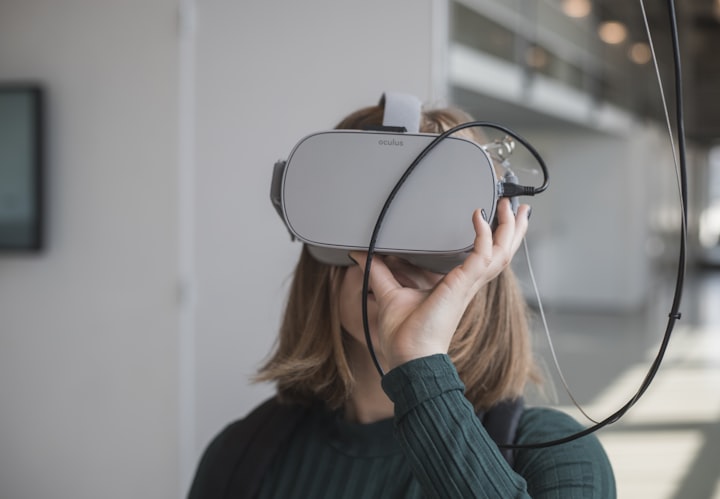
Moreover, the development of more compact and lightweight headsets, such as the Oculus Rift, HTC Vive, and PlayStation VR, has made virtual reality accessible to a broader audience. These headsets utilize a combination of motion sensors, cameras, and high-resolution displays to track the user's head movements and provide a seamless virtual experience.
Virtual Reality in Gaming
One of the primary areas where virtual reality has made a significant impact is the gaming industry. VR gaming offers a level of immersion and interactivity that traditional gaming platforms cannot match. With a VR headset and motion controllers, players can step into a virtual world and interact with objects and characters in a natural and intuitive manner.
Popular VR gaming platforms, such as the Oculus Quest and Valve Index, have attracted a growing number of gamers seeking a more immersive experience. From action-packed first-person shooters to immersive role-playing adventures, virtual reality gaming is pushing the boundaries of what is possible in interactive entertainment. As technology continues to evolve, we can expect even more lifelike graphics, haptic feedback systems, and improved motion tracking, further blurring the line between the real and virtual worlds.
Virtual Reality in Education and Training
Beyond gaming, virtual reality has also found applications in education and training. VR allows students to explore realistic simulations, historical reconstructions, and scientific concepts in an engaging and interactive manner. For example, medical students can practice surgeries in virtual operating rooms, while engineering students can experiment with complex machinery without the associated risks.
In the corporate world, virtual reality is being utilized for employee training programs. Companies can create immersive simulations that replicate real-world scenarios, enabling employees to practice their skills in a safe and controlled environment. This not only enhances learning outcomes but also reduces costs associated with traditional training methods.
Virtual Reality in Healthcare and Therapy
Virtual reality has also emerged as a powerful tool in healthcare and therapy. It is being used to treat various conditions, such as phobias, post-traumatic stress disorder (PTSD), and chronic pain. By exposing individuals to virtual environments that trigger their fears or anxieties, therapists can guide them through a process of desensitization in a safe and controlled manner.
Virtual reality can also help alleviate pain and discomfort by providing distraction and relaxation techniques. For instance, burn victims can immerse themselves in a snowy mountain environment while undergoing painful wound care, effectively reducing their perceived pain levels. Additionally, stroke patients can engage in virtual rehabilitation programs that promote motor skill recovery.
Challenges and Future Prospects
While virtual reality has made significant strides, several challenges still need to be addressed for its widespread adoption. One major challenge is the issue of motion sickness, which some users experience due to discrepancies between their real and virtual movements. Developers are continuously working on reducing motion sickness by improving motion tracking accuracy and minimizing latency.
Another hurdle is the high cost associated with high-end virtual reality systems. While prices have decreased over the years, premium VR experiences still require a significant investment. However, as technology advances and economies of scale come into play, we can expect more affordable and accessible virtual reality solutions.
Looking ahead, the future prospects for virtual reality are promising. As hardware becomes more powerful and compact, we can anticipate higher-resolution displays, wider field-of-view, and improved ergonomics. Furthermore, advancements in haptic feedback systems and the integration of other sensory inputs, such as smell and touch, will further enhance the immersive experience.
Conclusion
Virtual reality has unlocked a world of endless possibilities, where technology meets imagination. From gaming and education to healthcare and therapy, VR is transforming the way we interact with computers and the world around us. While challenges remain, the progress made in virtual reality technology is undeniable, and its future prospects are exciting. As we continue to push the boundaries of what is possible, virtual reality will undoubtedly shape the way we live, work, and play, opening up new avenues for creativity, exploration, and human connection.
About the Creator
Melodic Narrator
Introducing the voice that will enthrall your senses and redefine your perception of storytelling. Meet melodic narrator, the captivating maestro of Vocal.Media. Embark on a journey of enlightenment with melodic narrator.
Keep reading
More stories from Melodic Narrator and writers in 01 and other communities.
Understanding Cryptocurrencies
In recent years, cryptocurrencies have emerged as a revolutionary form of digital currency that has taken the financial world by storm. The most famous and widely recognized cryptocurrency is Bitcoin, but there are now thousands of other cryptocurrencies available in the market. If you are new to the world of cryptocurrencies and want to understand how they work, this beginner's guide will provide you with a solid foundation to start your journey into the world of digital currencies.
By Melodic Narrator3 years ago in 01
The Intersection of Quantum Computing and Blockchain
Blockchain and quantum computing seem to belong to entirely different worlds, and yet both have become inextricably linked. Blockchain relies on math, distributed systems, and a comprehensive encryption scheme that is hard to crack. Quantum computing, on the other hand, leverages quantum mechanics to smash through the limits of regular computers — and maybe, just maybe, to break a lot of the cryptography we use today.
By Mark Arthur3 days ago in 01
This Ain't Fiction!
To quote from the Challenge: Write this in whatever format and Vocal community you want, as long as you are not writing fiction. If a longing poem suits your needs, go for it. If half your reasoning is a memoir-style background to explain that all you want is a nice garden, it qualifies.
By Kendall Defoe about 9 hours ago in 01
Review of 'Man on the Run'
My wife and I saw Man on the Run, a nearly 2-hour documentary on Amazon Prime, about Wings, Paul McCartney's group that flew around the world from shortly after The Beatles broke up in early 1970 to shortly after John Lennon was murdered at the end of 1980, making a Beatles reunion forever impossible.
By Paul Levinsona day ago in Beat



Comments
There are no comments for this story
Be the first to respond and start the conversation.