
Unveiling the Power of Data Mining in Business Intelligence: Strategies, Methods, and Applications
Data is an asset, but only when it’s mined and used strategically. That’s why data mining in business intelligence is crucial, extracting information capable of making a difference.

The modern world is all about data and its utilization. Almost every business generates an enormous amount of data every day, and this growth is exponential in nature. But the question is — are businesses utilizing this data for any good?
Today, most companies only use at most 20% of the available business data for insights-driven decisions. That’s where data mining sweeps in. It’s a process by which organizations sort large data sets and solve problems with data analysis. These data mining techniques can be combined with business intelligence services to make optimal decisions.
For that, it’s important to understand data mining models, methods, and technologies. In this blog, we will discuss how data mining in business intelligence aids organizations in extracting the golden nuggets of information, ensuring seamless productivity and revenue flows.
Why Is Data Mining Important for Businesses? Data mining in business intelligence focuses on discovering patterns, trends, and insights from large datasets. Extracting valuable information from this enormous raw data helps businesses in informed decision-making.
Besides, data mining plays a crucial role in running analytics in a business. The insights it generates can be further used by the BI team to evaluate the current state of the business and plan strategies accordingly.
For instance, retail businesses can leverage market basket analysis to filter out the customers purchasing diapers. These consumers can later be recommended with baby food and other baby-related products, enhancing cross-selling opportunities.
Effective data mining in business intelligence can help in:
Managing customer-facing operations such as advertising, marketing, sales, and customer support Improving components of the supply chain such as manufacturing, inventory, logistics, and fleet management Strengthening digital security by fraud detection, risk management, and advanced cybersecurity planning How Does Data Mining in Business Intelligence Work? Based on your specific needs and objectives, the data mining process can significantly vary. However, here is the most prevalent step-by-step process of conducting data mining for business intelligence solutions:
Problem Identification This is the initial stage of business data mining where data scientists need to define the objectives of your project and how data mining can resolve the problems associated with it.
Data Collection The next step is to gather relevant data from all possible sources, such as data-driven APIs and databases. Expertise in recent trends in database technologies is needed for this purpose to prepare, manage, and integrate data for the further process.
Data Preparation The collected data needs to be cleaned and reprocessed in order to ensure data quality and suitability. This process involves several operations, like deleting irrelevant or duplicate data, fixing inconsistencies, and data transformation.
Data Understanding This is one of the crucial stages of data mining in business intelligence. It deals with understanding data with the help of several descriptive techniques, visualization methods, and data-intensive statistics.
Data Modelling Based on the nature of the problem and business objectives, you need to pick a specific data mining model. As per your requirements, the model could vary from as simple as linear regression to as complex as neural networks. The important task here is to train your selected model with the prepared dataset.
Data Evaluation Analyse the effectiveness of your trained model using cross-validation strategies. This stage is crucial as it ensures that the model is accurate, has strong predictive power, and is capable of meeting desired objectives.
Deployment Once your data science and analysis team is sure of your trained data mining model, you are all set to deploy it in the real-world environment. Make sure to continuously update it for enhanced performance and accuracy.
What Are Some Popular Data Mining Methods? Data mining in business intelligence encompasses various methods and techniques in order to derive valuable insights from enormous datasets. Below are some popular data mining methods used in the business domain.
Data Classification Data classification is one of the most basic data mining techniques. In this process, data analysts assign predefined labels to new data based on the existing trained datasets. This form of data mining method is often used for credit scoring and spam mail identification.
Clustering This process involves grouping similar data sets based on identifying features but without predefined categories. Companies use data clustering for anomaly detection and market and image segmentation.
Regression Analysis Regression analysis is prominently used for predicting and deriving numerical values based on the variables available in datasets. The significant areas of applications include sales forecasting, demand projection, and price estimation.
Anomaly Detection Data science teams often need an approach to determine data instances that differ from the existing norm, resulting in potential anomalies. Anomaly detection is one such data mining in business intelligence method used for fraud and fault detection in operational systems.
Neural Networks A neural network is a set of algorithms that imitate the functioning of a human brain to deduce complex patterns in datasets. Data mining applications associated with neural networks include natural language processing services, image recognition, and predictive modelling.
Sequence and Path Analysis Business data mining can also be performed by identifying specific patterns or sequence paths based on which a particular set of events occurs. User behaviour analysis and predictive maintenance are two major applications of this data mining technique.
Association Rule Mining Another crucial business intelligence data mining method is association rule mining which identifies connections between elements in large datasets. Association rule data mining is primarily used in market-based analysis and formulating cross-selling strategies.
Text Mining Text mining analyses and derives information from textual data. Sentiment analysis is the most popular application of data mining in business intelligence performed using text mining. Besides, information retrieval and document categorization are other use cases of this technique.
Decision Trees A decision tree helps businesses make informed decisions by analysing past data represented in a hierarchical tree-like structure. This data mining approach can facilitate data classification, feature selection, and market forecasting.
What Are the Major Data Mining Applications for Businesses? The way organizations leverage data mining for business intelligence varies from business to business. However, some common applications of data mining stay ironclad irrespective of the nature of the business.
Pattern Identification The primary role of data mining in business intelligence is to identify patterns, trends, and relationships within datasets that are not easily recognizable. This process of pattern discovery offers valuable insights to data analysts that further help in making productive business decisions.
Predictive Analysis In this competitive landscape, it becomes increasingly important to keep track of your performance. For this purpose, businesses often rely on tech-intensive predictive data analytics. Data science experts leverage data mining business analytics, creating predictive models forecasting future trends based on historical data.
Sentiment Analysis One of the prominent examples of data mining in business intelligence is sentiment analysis. By analysing textual data, such as customer feedback, reviews, and queries, businesses can understand the sentimental values of consumers to improve their product features and services.
Customer Segmentation Business data mining can also play a critical role in customer segmentation needed for strategizing marketing campaigns. By segmenting the consumer base, businesses can better understand customer behaviour. Consequently, they can perform targeted marketing to improve customer experience.
Risk Management Mining your business data can also help in evaluating and managing risks by determining potential errors or unusual patterns in datasets. This data mining application is more prevalent in the finance and insurance domain.
What Are Some Industry Examples of Data Mining? Data mining in business intelligence has diverse applications depending on the industries it is utilized. Below are some notable examples of data mining based on different domains.
Retail and E-commerce Technologies like big data and artificial intelligence in retail industry are transforming businesses with enormous data sources. However, this data needs to be segmented and analysed in order to acquire valuable insights. With data mining techniques, retailers can inspect consumer purchase history to determine patterns and associations
About the Creator
Sumit Chauhan
I'm Sumit Chauhan, a dedicated tech enthusiast with a keen interest in exploring the realms of mobile app development across Android and iOS platforms.
Keep reading
More stories from Sumit Chauhan and writers in 01 and other communities.
A Comprehensive Guide to Electric Vehicle Software Development
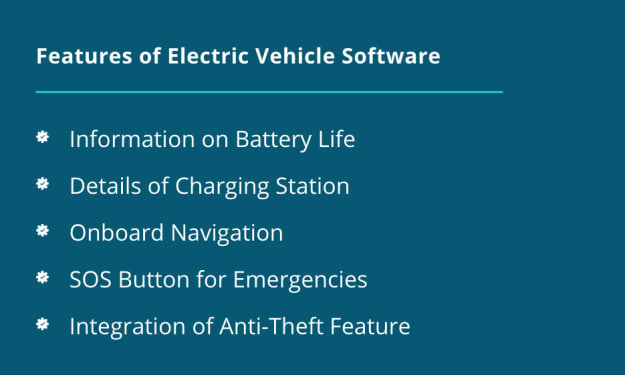
The automotive landscape is undergoing a profound transformation, with electric vehicles (EVs) emerging as a prominent choice for environmentally conscious consumers and businesses alike. Integral to this transition is the development of robust electric vehicle software, which encompasses a range of critical components such as battery management, charging infrastructure, and onboard navigation. In this comprehensive guide, we delve into the intricacies of Electric vehicle software development, exploring its core components, cost implications, development process, advanced features, latest trends, and the future outlook of the industry.
By Sumit Chauhan2 years ago in 01
Who’s Leading Fintech in 2026? Top App Development Companies
When it comes to building secure, scalable, and innovative financial solutions — from digital banking platforms and payment systems to AI-driven risk tools — picking the right partner can make or break your success. In 2026, fintech is evolving faster than ever, powered by AI, cloud-native architectures, blockchain, and embedded finance. Below are the foremost companies shaping the future of fintech technology.
By Aarti Jangid4 days ago in 01
Musk wants up to $134B in OpenAI lawsuit, despite $700B fortune
Elon Musk wants a jaw-dropping $79 billion to $134 billion in damages from OpenAI and Microsoft, claiming the AI company defrauded him by jettisoning its nonprofit mission, Bloomberg first reported. The figure comes from expert witness C. Paul Wazzan, a financial economist whose bio says he has been deposed nearly 100 times and testified at trial more than a dozen times in complex commercial litigation cases.
By Dena Falken Esq5 days ago in 01
The CEO of Everything
They say "jack of all trades, master of none," but they forgot to mention the part where the jack of all trades is also the camera woman, the makeup artist, and the person currently yelling at a tangled Wii microphone cable in a her own bathroom while recording herself singing and trying to make it look realistic and professional. (As professional as you can make it with nothing but a cell phone camera and a mic that doesn't work)
By Sara Wilson5 days ago in Humans


Comments
There are no comments for this story
Be the first to respond and start the conversation.