
Understanding WS2813 LED Strips and LED Strip Light Technology
An informational look at WS2813 technology and how addressable LED strip lighting works

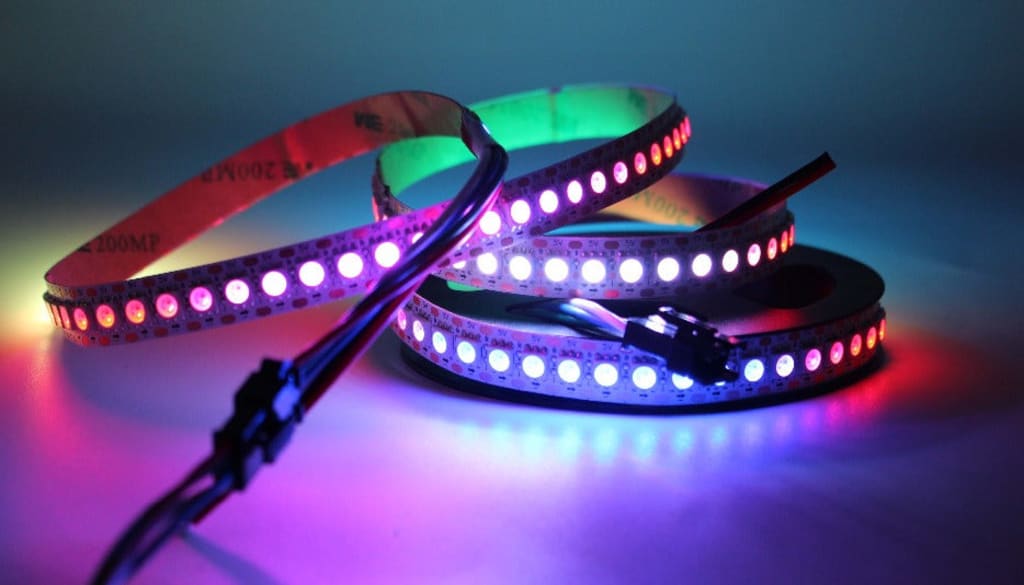
LED strip lighting is a widely used lighting format found in residential, commercial, and creative environments. Its thin profile, flexibility, and low power requirements have made it suitable for applications where traditional fixtures are impractical. Over time, LED strip light technology has evolved to include more advanced control methods, including digitally addressable systems such as WS2813.
This article provides overview of WS2813 LED strips and their place within the broader context of LED strip lighting, following a non-promotional and educational approach.
What Is an LED Strip Light?
An LED strip light is made up of multiple light-emitting diodes mounted on a flexible printed circuit board. These strips are designed to be installed in continuous runs or cut to specific lengths. LED strips are commonly used for accent lighting, indirect illumination, task lighting, and visual enhancement in architectural and display settings.
LED strip lighting exists in several forms, including single-color, white, RGB, and addressable variations. The differences between these types are primarily related to controllability and application requirements rather than brightness alone.
Introduction to WS2813
The WS2813 is a digital LED control type used in certain RGB LED strips. A WS2813 LED strip allows each LED along the strip to be controlled independently, enabling complex lighting patterns and animated effects. This separates it from non-addressable LED strips, where all LEDs typically display the same color and brightness simultaneously.
A technical characteristic associated with WS2813 designs is data signal redundancy. This means the control signal can continue along the strip even if one LED encounters a failure, which can improve functional reliability in longer lighting runs.
How WS2813 LED Strips Operate
WS2813 LED strips function by receiving digital data signals that instruct each LED on color and brightness values. These instructions are transmitted sequentially along the strip. Controllers or microcontrollers are commonly used to generate and manage these signals, allowing for precise and programmable lighting behavior.
Like most addressable LED strips, WS2813-based systems operate on low-voltage direct current power. Proper power distribution and signal management are important considerations, especially as strip length increases.
Common Uses of Addressable LED Strips
Addressable LED strips are often used in environments where visual variation or dynamic lighting is required. This includes decorative architectural elements, exhibition displays, media installations, stage lighting, and experimental or hobbyist projects. The ability to control individual LEDs allows designers to create motion effects, gradients, and responsive lighting behaviors.
However, such systems are generally more complex than standard LED strip lights and may require additional planning, compatible controllers, and technical knowledge to function correctly.
Manufacturing and Industry Context
The availability of advanced LED strip products is closely connected to global manufacturing networks. An LED strip manufacturer plays a key role in maintaining consistent electrical performance, color accuracy, and physical durability across production batches.
Large-scale production has supported the growth of LED strip lighting worldwide. China LED strip manufacturing, in particular, has become a significant part of the global lighting supply chain, contributing to the standardization and accessibility of LED strip technologies, including addressable formats.
Limitations and Considerations
While WS2813 LED strips offer advanced control capabilities, they are not always necessary for general lighting needs. For applications focused on simple illumination rather than visual effects, non-addressable LED strip lights may be more practical and easier to install. Addressable systems also introduce added complexity in terms of setup and maintenance.
Choosing the appropriate type of LED strip depends on the specific requirements of the space and the desired lighting outcome.
Conclusion
WS2813 LED strips represent a more advanced segment of LED strip light technology, offering individual LED control and improved signal continuity. Within the broader landscape of LED strip manufacturing and global production, including China LED strip supply networks, these systems illustrate how LED lighting has progressed from basic illumination toward programmable and adaptable solutions. Their value lies in thoughtful application rather than novelty or excess.
About the Creator
Keep reading
More stories from charliesamuel and writers in 01 and other communities.
Understanding Flexible LED Wall Washers and Wallwasher Lighting
Wallwashing is a well-established architectural lighting technique used to evenly illuminate vertical surfaces such as walls, facades, and large structural elements. The primary goal of wallwasher lighting is to create uniform brightness across a surface, reducing harsh shadows and visual distractions while enhancing the perception of space and texture.
By charliesamuel4 days ago in 01
How to Mask Your IP for Privacy and Security
Every click, every search, every download leaves a digital footprint, and websites, advertisers, and sometimes even hackers can trace you through your IP address. The good news is that you don’t have to stay exposed. Hiding your IP address is simpler than most people think, and doing it correctly can protect your privacy, secure your data, and even give you access to content that was previously unavailable. Next, we’ll take a look at the different ways to hide your IP and how to choose the method that works best for you.
By Swiftproxy5 days ago in 01
What Does the Empty Grey Chat Box Mean on Snapchat?
Have you ever been trying to message someone on Snapchat and noticed that your chat box is empty and grey instead of the usual blue color? It can be confusing and frustrating. But don't worry; you're not alone! This article will explore what the empty grey chat box on Snapchat means and how you can troubleshoot the issue.
By Intelligent Creator4 days ago in 01
If You Love Me, You'll Do It
I met Jason when I was five years old. I could say that I loved him from the moment I saw him. He was so handsome to me and I felt in awe by his presence. When they introduced him as the new kid in school, I wanted to be his friend right away. I remember it like it was yesterday. I remember his smile and how he didn't seem shy. He appeared confident and ready to learn. I waved at him and said "hello," before anyone else could even say a word. He sat next to me, and I asked him if he wanted to be friends. He looked so happy as he said, "Yes!"
By Sidney Smith (Sid Smith)6 days ago in Fiction


Comments
There are no comments for this story
Be the first to respond and start the conversation.