
Understanding the Use Cases of IoT in Industrial Automation
This blog will cover applications of IoT in industrial automation.

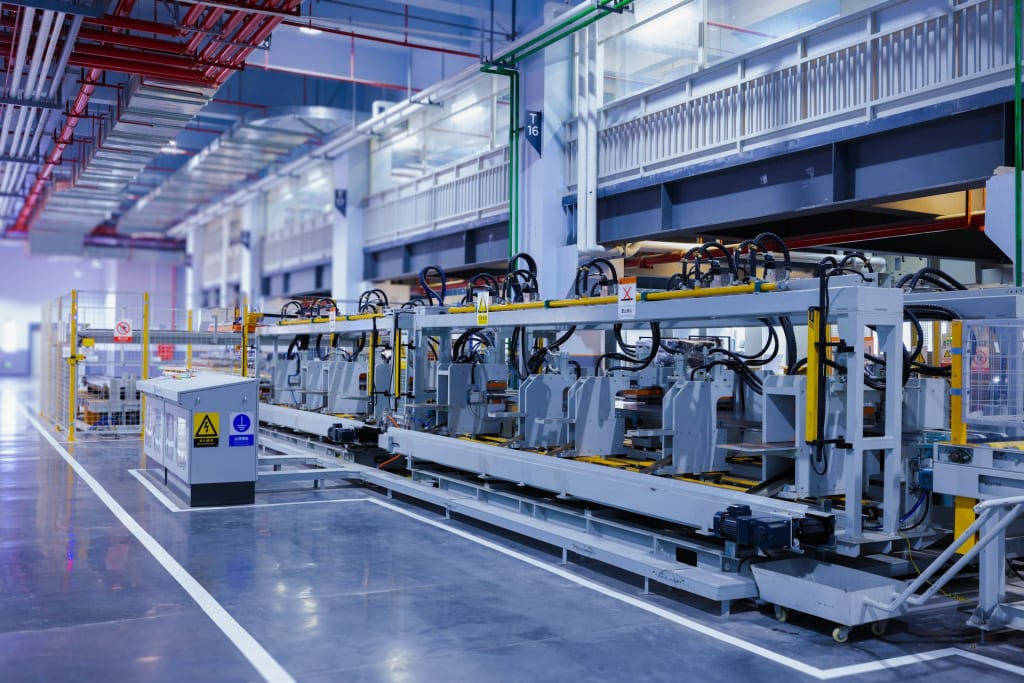
It has been for the world to see that the advent of advanced technologies completely transformed how we go about running businesses. A prime example of such a powerful technology is the Internet of Things. It has transformed many industries with its plethora of benefits. The impact of this technology in the context of industrial automation has been especially pronounced. Connecting physical devices to the internet via IoT facilitates real-time data collection and analysis. This results in significant increases in efficiency as well as safety. The interconnected network of devices allows for seamless communication and coordination among various industrial process components. Plus, IoT devices are critical components of industrial automation, collecting data from the physical world. This data is then processed with cloud-based analytics platforms and used to act based on the insights gained.
Now, I will help you further understand the immense potential of this technology. So, in this blog, I will discuss the various applications of IoT for industrial automation. This will demonstrate how this technology is transforming the manufacturing landscape.
IoT and Industrial Automation: What Is It About?
The concept is about using IoT to automate and improve industrial processes. Physical devices connected to the internet can collect and analyze data in real-time. The advantages of IoT in industrial automation are numerous, but basically, it enables businesses to make data-driven decisions and boost operational efficiency.
IoT + Industrial Automation: Key Use Cases You Ought to Know
- Asset management: IoT is conducive to detailed tracking and monitoring of assets throughout their lifecycle. Manufacturers can collect real-time data on factors such as the location and condition of their assets via sensors. This data can be used to optimize asset utilization and improve maintenance planning. Case in point: this technology can be used to track the location of valuable equipment. In fact, it can even help monitor the condition of critical components.
- Smart manufacturing: Smart manufacturing driven by IoT means integrating different technologies to build an automated factory. IoT technology enables real-time monitoring of production processes and identification of bottlenecks. Plus, it also helps optimize resource allocation. IoT, for example, can be used to monitor manufacturing lines and track material movement. Smart manufacturing can improve product quality by allowing for real-time data analysis and processing.
- Predictive maintenance: The analysis of sensor data means IoT can also be used to predict potential equipment failures before they happen. This allows manufacturers to schedule maintenance in advance and increase the lifespan of their assets. A possible real-life use for IoT is tracking the vibration and temperature of critical components and predicting when they will fail. It can also help manufacturers reduce maintenance costs.
- Quality control: IoT can also be leveraged for delivering top-notch product quality. Manufacturers can avoid defective products by collecting data from sensors at various stages of the manufacturing process. IoT can also be used to monitor product dimensions and weight and detect material defects. This helps make sure that quality standards are met. IoT also helps improve process control by facilitating real-time adjustments to production parameters.
- Industrial cybersecurity: Using IoT devices in this context increases the risk of cyberattacks. Hence, companies must defend IoT devices and networks against unauthorized access and malicious attacks. This includes putting in place security measures like firewalls and intrusion detection systems to maintain the integrity of industrial operations.
Final Words
The integration of IoT into industrial automation is transforming company operations. IoT provides dramatic benefits in asset management, predictive maintenance, smart manufacturing, and quality control. It enables businesses to make data-driven decisions, which improve productivity, safety, and product quality. However, with more connection comes the necessity for strong cybersecurity measures to protect against attacks. As the Internet of Things evolves, its potential to change businesses grows, propelling future automation developments. As you can see, IoT for industrial automation has enormous potential. All you must do now is put this technology to use for your organization.
About the Creator
Ryan Williamson
Tech-savvy professional with 13+ years of experience in app development, leveraging technical knowledge to build strategic partnerships and promote innovative solutions. Passionate about engaging with technical communities, and more.
Keep reading
More stories from Ryan Williamson and writers in 01 and other communities.
Challenges of Digital Transformation and Their Solutions
Thanks to the rapidly changing technological landscape, digital transformation has become essential for businesses of all scales and sizes. That is, if organizations wish to remain competitive and meet their customers' demands. Unfortunately, they face a slew of obstacles that impede their progress. These challenges are caused by technological complexity and the need for substantial investments. You see, adopting new technologies frequently requires complex implementations and integrations. This can disrupt existing processes and systems, causing technical issues and even operational disruptions. Additionally, organizational resistance to change can be a significant impediment. Employees may fear job loss or oppose the disruption.
By Ryan Williamsonabout a year ago in 01
Australia Thermal Camera Market Size & Forecast 2025–2033
Australia Thermal Camera Market: A Clear View into a Hot Technology The Australia Thermal Camera Market is entering a decisive growth phase as infrared imaging becomes a cornerstone of modern safety, automation, and surveillance. According to Renub Research, the market size is expected to reach US$ 137.6 million by 2033, up from US$ 80.69 million in 2024, registering a compound annual growth rate (CAGR) of 6.11% between 2025 and 2033. This steady expansion reflects a powerful combination of technological advancement, rising security needs, and the growing role of thermal imaging across industrial, healthcare, and public safety domains.
By Renub Researcha day ago in 01
Miss Persephone's Manual to a Seemingly Ordinary Life
Miss Persephone was found at the dining table, her blue eyes swollen, her tears arriving and retreating like the tides of the ocean. Earlier that day, her family had visited her in the retirement home where she had lived for eight years. It was her eightieth birthday.
By Imola Tóth2 days ago in Fiction


Comments
There are no comments for this story
Be the first to respond and start the conversation.