
Understanding SEER Ratings: What You Need to Know Before Buying an Air Conditioner
Learn About SEER Ratings
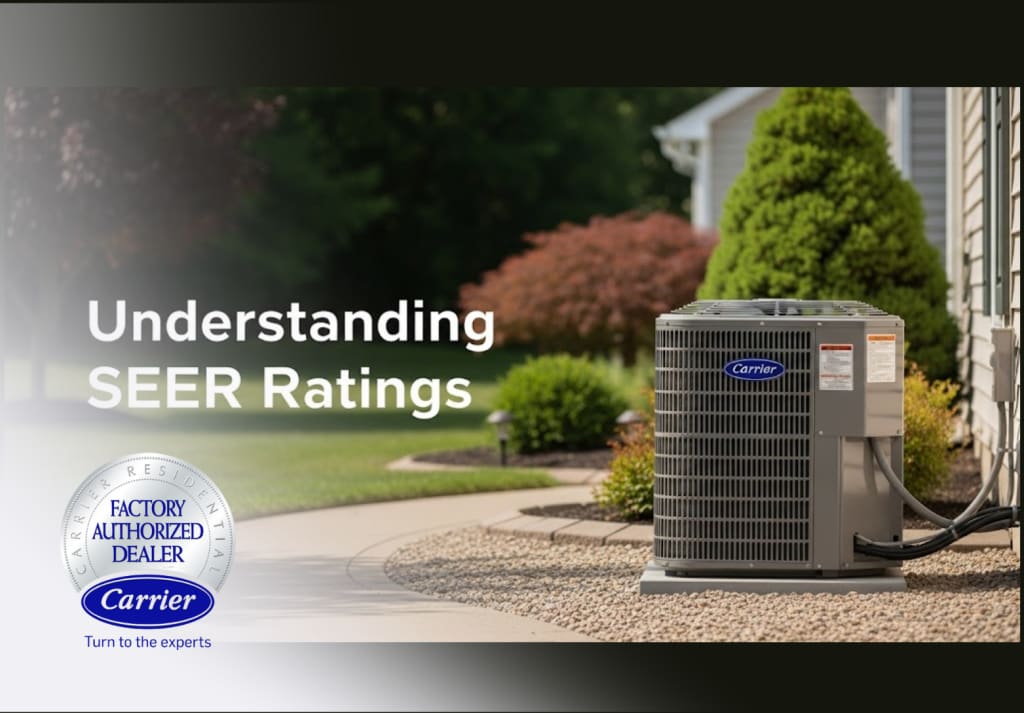
If you’re thinking about installing a new air conditioner, you’ve probably seen the term SEER rating pop up. But what exactly does it mean, and why should it matter to you?
In this article, we’ll break down what a SEER rating is, why it’s important, and how it can help you make a smart choice for your home and budget. Whether you're replacing an old unit or buying your first one, understanding SEER ratings is crucial for getting the most efficient and cost-effective system.
What Is a SEER Rating?
SEER stands for Seasonal Energy Efficiency Ratio. It’s a measure of how efficiently an air conditioner uses energy over a cooling season. Simply put, a higher SEER means the unit is using less electricity to cool your space, which can translate into lower energy bills.
Think of it as the fuel economy rating for your car: a car with better fuel efficiency uses less gas to go the same distance. Similarly, an AC with a higher SEER provides more cooling while consuming less energy.
Why SEER Ratings Matter
The SEER rating is more than just a number—it directly impacts your energy consumption and monthly bills. If you choose an air conditioner with a low SEER rating, it might cool your home, but it will cost you more in energy bills. On the flip side, a higher SEER rating means you’re getting more cooling for the same amount of electricity, which can add up to significant savings in the long term.
In addition to helping you save money, higher SEER-rated units are better for the environment. They reduce energy consumption and cut down on carbon emissions, making them a more eco-friendly choice.
What Is a Good SEER Rating in 2025?
Industry Standards and Legal Minimums
In Canada, the minimum SEER rating required for new air conditioners is 14. That’s the legal minimum, but many newer units you’ll come across are rated 16 SEER or higher, which gives you better efficiency.
If you’re looking for the highest level of efficiency, you can find models that go as high as 20 SEER. However, unless you’re cooling a very large space or are committed to the highest possible savings, a SEER rating of 16-18 is often the sweet spot for most homes.
The “Sweet Spot” for Most Homes
For most Canadians, an air conditioner with a SEER rating between 16 and 18 provides the best balance of upfront cost and long-term savings. If you live in a climate with hot, humid summers, like parts of southern Ontario or British Columbia, a higher SEER might be a good investment. But if your summers are shorter or milder, a mid-range SEER will still give you solid performance without the higher price tag.
How to Choose the Right SEER Rating for Your Home
Consider Your Climate and Usage
Climate plays a big role in choosing the right SEER rating. If you live in a region with long, hot summers (like Toronto or Calgary), your air conditioner will be running for months at a time. In this case, a higher SEER unit can pay off in energy savings.
However, if you’re in a cooler area and only need AC for a few weeks, investing in a higher-SEER unit might not be necessary. It all depends on how often you plan to use it and how much you’re willing to spend upfront.
Budget vs. Long-Term Value
While a higher SEER unit typically costs more to purchase, it can save you more money in the long run due to lower energy bills. If you’re staying in your home for several years, that extra investment can really pay off.
Also, don’t forget about any government rebates or incentives for installing energy-efficient systems. These can reduce your initial costs and make a higher-SEER model even more affordable.
The Role of Proper Installation
A high SEER rating means little if the air conditioner isn’t installed correctly. In fact, a poorly installed unit can waste energy, reduce comfort, and even shorten the life of your system. Proper sizing, placement, and installation are essential to ensure your unit runs at its optimal efficiency.
For reliable air conditioner installation, consider working with a professional team that can guarantee an efficient setup and ensure your system performs to its full potential.
Conclusion
Understanding SEER ratings is key to making an informed decision when buying an air conditioner. While it’s easy to get caught up in other features and specifications, SEER directly affects your energy costs and long-term comfort.
When choosing a new AC, think about how much you’ll use it, your local climate, and your budget. A higher SEER rating can mean greater efficiency, lower bills, and less environmental impact—but it’s all about finding the right balance. Don’t forget: a properly installed system is just as important as the unit itself.
By keeping these factors in mind, you’ll be able to select the best air conditioner for your home, ensuring comfort for years to come without breaking the bank.
About the Creator
Keep reading
More stories from Infiniti Home Comfort and writers in 01 and other communities.
The Ultimate Guide to Furnace Installation in Canada
If you live in Canada, you know that winters can be brutally cold. A properly installed and efficient furnace is essential for keeping your home warm and comfortable during the frigid months. Whether you're replacing an old unit or installing a furnace for the first time, understanding the process and key factors involved in furnace installation will help you make informed decisions.
By Infiniti Home Comfort12 months ago in Lifehack
A Complete Submissive Guide For Beginners: 8 Simple Steps To Being a Great Submissive
Do you get sexual pleasure from submitting or giving up control to your partner? Would you like to establish a full-time sub/dom relationship and become a perfect submissive? If so, you have landed on the right blog.
By Intelligent Creator7 days ago in 01
Generative AI Consulting Strategies for Complex Business Processes
Enterprises today face a different kind of complexity than they did even three years ago. Business processes are no longer linear. They span fragmented systems, global teams, regulatory boundaries, and massive volumes of structured and unstructured data. Traditional automation and analytics tools struggle to keep pace with this level of operational depth.
By Fenil kasundra3 days ago in 01
Why Black History Matters in America?
The United States of America is celebrating their 250th anniversary in 2026. I'm proud to be an American and as someone who was born here, I wouldn't imagine myself living anywhere else. This is a country where opportunities are possible. Where anyone can be successful in anything they desire to do. Equality, community, and togetherness are the backbones of what America is and should be about. However, we have an administration who wants to erase and disregard those who have made positive, meaningful impacts in our country, specifically Black figures, such as Martin Luther King, Jr., Rosa Parks, and Maya Angelou. President Trump and his administration have been constantly complaining and fighting against what they call the "Woke agenda". They use this excuse as a distraction from other issues they refuse to address, such as the high cost of living, climate change, and inflation. That equality is dividing America, when in reality, it's bringing us together. Being woke is not tied to a specific political party. No matter where you stand on the political spectrum, you can still care about other people and their plights. Compassion and empathy for others isn't tied to a political party, either. We were taught as children to treat others the way we want to be treated and not judge others because they're different from us. Caring about others isn't a personal attack on your beliefs. It doesn't make you any less of a person. People who are easily offended over African American figures, past or present, or anything related to it, are grasping at straws. Current and future generations need to know who people like Harriet Tubman and Shirley Chisholm were, especially in the classroom. Black History is part of American History. It should be recognized, not hidden or forgotten. Besides, you can't shield children from everything, just because your feelings are easily hurt.
By Mark Wesley Pritchard 3 days ago in The Swamp




Comments
There are no comments for this story
Be the first to respond and start the conversation.