
U2S Dragonlady - a Solid Elint Workhorse
Still flying at 70 years old and 70,000 feet - how's that for 'right first time'?


The U-2 Dragon Lady is a high-altitude reconnaissance aircraft that was developed by Lockheed Martin in the 1950s. It was designed to fly at altitudes of up to 70,000 feet, making it difficult to detect by radar and air defenses. The U-2 has played a vital role in the U.S. military’s intelligence-gathering efforts for over six decades, and it remains an important part of the U.S. Air Force’s fleet even today.
One of the most distinctive characteristics of the U-2 is its ability to fly at extremely high altitudes.
Engine
The original U-2 was powered by a single Pratt & Whitney J57 engine, which allowed it to reach altitudes of up to 70,000 feet. The J57 was a turbojet engine that was widely used in a variety of military and civilian aircraft in the 1950s and 1960s, rated at a maximum thrust of 10,000 pounds. This thrust rating was an important factor in the U-2’s performance.
In addition to its high thrust rating, the J57 engine was also known for its reliability and durability and it proved to be a reliable powerplant for the U-2. The U-2’s high-altitude capabilities are made possible by its high aspect ratio design, which includes a long, narrow wingspan and a lightweight fuselage.
Later versions have a General Electric engine.
Performance
In addition to its high-altitude capabilities, the U-2 is also known for its impressive (although subsonic) speed and endurance, capable of flying at speeds of up to 575 mph with a range of over 3,000 miles. The U-2’s endurance is due in part to its large fuel capacity, which allows it to stay aloft for extended periods of time.
Given its outstanding flight characteristics, the U-2 is a challenging aircraft to fly. Its narrow wings and high-altitude capabilities make it difficult to maneuver, and it requires a highly skilled pilot to operate. The U-2’s cockpit is unpressurized — everything that could be sacrificed for altitude, was, which means that pilots must wear specialized suits and helmets.
Three modified U2Cs were built, designated U2G. These had strengthened airframes, arrester hooks and lift dump spoilers. And yes, they could take off and land on aircraft carriers!
In the 1960’s and ’70s France had scheduled several hydrogen bomb nuclear tests on Mururoa Atoll in French Polynesia. The US wanted to monitor them using the modified U-2Gs. An aircraft carrier, the USS Ranger was tasked with getting two U-2Gs into the vicinity of French Polynesia undetected and launching the planes — and retrieving them. They succeeded.
Stealth
The U-2 was developed during the height of the Cold War, as the United States sought ways to gather intelligence on Soviet military activities. It was designed to have a low RCS (radar cross-section) in order to make it more difficult to detect by enemy radar, making it arguably the first ‘stealth’ aircraft. The U-2’s high-altitude capabilities, combined with its long, narrow wingspan and lightweight fuselage, helped to reduce its RCS. The U-2’s engine was also mounted in the rear of the aircraft, which helped to further reduce its RCS.
Despite these design features, the U-2 was not completely immune to radar detection. Its RCS was relatively low compared to other aircraft of its time, but it could still be detected by radar under certain conditions. The U-2’s RCS increased at lower altitudes, making it more visible to radar.
Overall, the U-2’s low RCS was an important part of its design and helped to make it a valuable asset for intelligence-gathering missions.
Cameras
The U-2 was equipped with a range of advanced sensors and cameras, which allowed it to gather detailed information on enemy military assets and activities. Images were outstanding for the time, but even the early US Corona satellites could not match the U2 for camera resolution.
Hycon model 732 cameras created much more detailed images than earlier cameras. Their lenses could “see” and record objects as small as two feet across from a height of more than 12 miles. This allowed photo interpreters to identify different types of vehicles, weapons, aircraft, missiles, and buildings. Earlier typical aerial cameras had much lower resolution and had to be used at lower altitudes — they could only see objects 20–25 feet across at 33,000 feet (about six miles), half the U-2’s operating altitude.

Each of the three cameras in the A-2 set could carry 1,800 feet of Eastman Kodak’s latest lightweight Mylar-based film, which made 9-inch-by-18-inch negatives. They provided stereoscopic images with redundancy.
Incidents
USSR
Gary Powers was a U.S. Air Force pilot who was shot down while flying a U-2 spy plane over the Soviet Union in 1960. Powers was on a mission to gather intelligence on Soviet military activities when his plane was hit by a surface-to-air missile and he was forced to eject. He was captured by the Soviet authorities and charged with espionage.
The incident, which became known as the “U-2 Incident,” caused a major international crisis and strained relations between the United States and the Soviet Union. The U.S. government initially denied that Powers was on a spying mission, but the Soviet Union produced evidence that proved he was on an intelligence-gathering mission. The incident sparked a backlash in the United States and led to calls for the U.S. government to be more transparent about its intelligence-gathering activities.
Cuba
But probably the most significant uses of the U-2 occurred during the Cuban Missile Crisis in 1962. The Cuban Missile Crisis was a major turning point in the Cold War, as it brought the United States and the Soviet Union to the brink of nuclear war. The crisis began when the United States discovered that the Soviet Union was secretly installing nuclear missiles in Cuba, just 90 miles off the coast of Florida.

In response to this threat, President John F. Kennedy ordered a naval blockade of Cuba and demanded that the Soviet Union remove the missiles. The United States also began flying U-2 reconnaissance missions over Cuba to gather intelligence on the missile installations. The U-2’s high-altitude capabilities allowed it to fly over the island undetected, providing valuable information to U.S. officials.
The U-2’s role in the Cuban Missile Crisis was vital, as it provided the United States with the information it needed to make informed decisions about how to respond to the crisis.
The plane’s intelligence-gathering capabilities had arguably helped to prevent a nuclear war, and it remains one of the most significant uses of the aircraft in its long history.
And there were other costs.
Major Rudy Anderson, a U. S. Air Force pilot of a U-2 overflying Cuba’s north coast on a photoreconnaissance mission was killed early on the morning of Saturday, 27 October 1962. Major Anderson’s U2 was shot down by a pair of Soviet SA-2 Guideline missiles fired by Major Ivan Grechenov from the Banes naval base.
Vietnam
The U-2 was also used extensively during the Vietnam War to gather intelligence on North Vietnamese military activities. However, the aircraft was vulnerable to enemy air defenses as missile technology and radars had improved, and several U-2s were shot down during the conflict. Despite these risks, U-2 pilots continued to fly reconnaissance missions over Vietnam.
China
A Taiwanese U2 was downed on 10 January 1965, southwest of Beijing by a S-75 Dvina missile.
Non Military Use
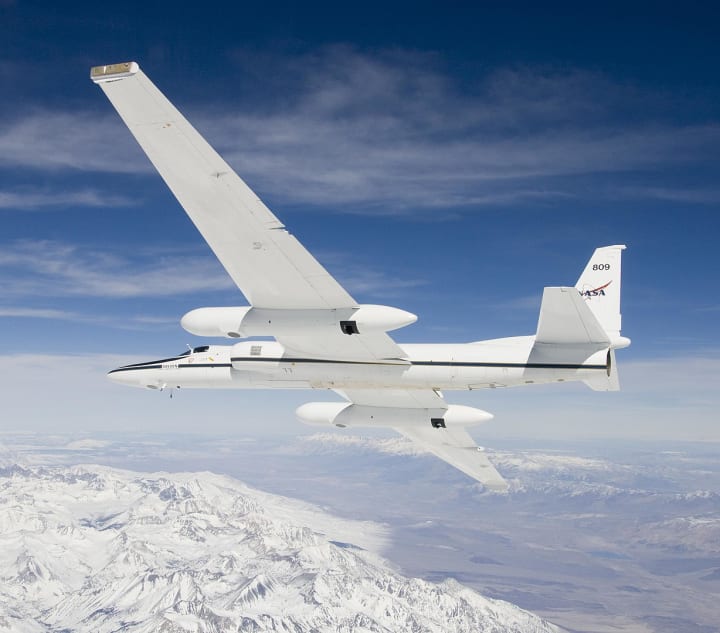
In addition to its military uses, the U-2 has also been used for scientific research and other civilian purposes. NASA has used the U-2 for atmospheric research and other scientific missions, and the U-2 has also been used by the National Oceanic and Atmospheric Administration (NOAA) for environmental monitoring and disaster response.
Superseded?
Despite its capabilities, the U-2 is expensive to operate and maintain. It requires a highly skilled pilot to fly it. In the 1970s, the U-2 was replaced by more advanced aircraft, such as the SR-71 Blackbird and the Predator drone, for many of its intelligence-gathering missions.
But superseded? Not really.
Today
Equipped with the latest in digital camera, elint sensor technology and real-time datalinkage, the U-2 Dragon Lady remains a key part of the U.S. military’s intelligence-gathering capabilities. Less used now for overflight surveillance but more often for standoff, look-in, surveillance.
The U2S has an updated General Electric F118 engine, improved sensors, and a GPS receiver, with state of the art ECM.

Its service ceiling is currently quoted as 80,000 feet plus. It is still used by the U.S. Air Force for high-altitude reconnaissance missions in certain circumstances and it is likely to continue playing a vital role in intelligence-gathering efforts for years to come.
Update February 2023
She’s in the news again — taking close in photographs of the Chinese spy balloon that caused such a furore before being shot down by the US.
High-resolution imagery provided by U-2 spy planes that flew past the balloon revealed an array of surveillance equipment that was inconsistent with Beijing’s claim that the balloon was a weather device blown off course, the official said in a statement provided on condition of anonymity. — SCMP
Chinese Weather Balloons — WTF?
Additional sources:
“U-2 Dragon Lady” by National Museum of the U.S. Air Force (https://www.nationalmuseum.af.mil/Visit/Museum-Exhibits/Fact-Sheets/Display/Article/196027/u-2-dragon-lady/)
“The U-2 Spy Plane: A Brief History” by Joe Pappalardo (https://www.popularmechanics.com/military/aviation/a26588044/u-2-spy-plane-history/)
“U-2 Spy Plane: Cold War Icon” by Dave Majumdar (https://www.nationalinterest.org/blog/buzz/u-2-spy-plane-cold-war-icon-148938)
https://www.nationalmuseum.af.mil/Visit/Museum-Exhibits/Fact-Sheets/Display/Article/197566/powerful-new-cameras-for-the-u-2/
Author’s note: The concept, structure, style and creative content in this story are all my own and I hope that is obvious to a reader. I do not employ third party writers. However, I do occasionally use an AI assistant to research and present small sections of factual content and data. All facts are checked where possible and sources quoted.
***

Canonical link: This story was first published in Medium on 28 January 2023
About the Creator
James Marinero
I live on a boat and write as I sail slowly around the world. Follow me for a varied story diet: true stories, humor, tech, AI, travel, geopolitics and more. I also write techno thrillers, with six to my name. More of my stories on Medium
Keep reading
More stories from James Marinero and writers in 01 and other communities.
Top 10 Dating App Development Companies in New Jersey (2026)
Finding love in the digital age is a billion-dollar industry — and building the technology that powers it requires a partner who truly understands both the craft of app development and the nuances of human connection. Whether you're an entrepreneur with a disruptive matchmaking idea or an established brand looking to modernize your dating platform, choosing the right dating app development company in New Jersey can make or break your product.
By Sherry Walker6 days ago in 01
A Knight of the Seven Kingdoms Series Review (Season 1)
As one of the biggest properties in fantasy, A Song of Ice and Fire remains immensely popular with audiences. After reaching far into the past with House of the Dragon, a second spin-off was on the cards. A Knight of the Seven Kingdoms serves up a bite-sized slice of action and drama, but it still claims a spot among the best small-screen titles.
By Robert Cain4 days ago in Geeks


Comments
There are no comments for this story
Be the first to respond and start the conversation.