
Trump Expected to Sign Landmark Crypto Bill — Bitcoin and ETH Set to Become “Digital Commodities”
The bill aims to prevent another FTX-style collapse with tighter rules for exchanges.

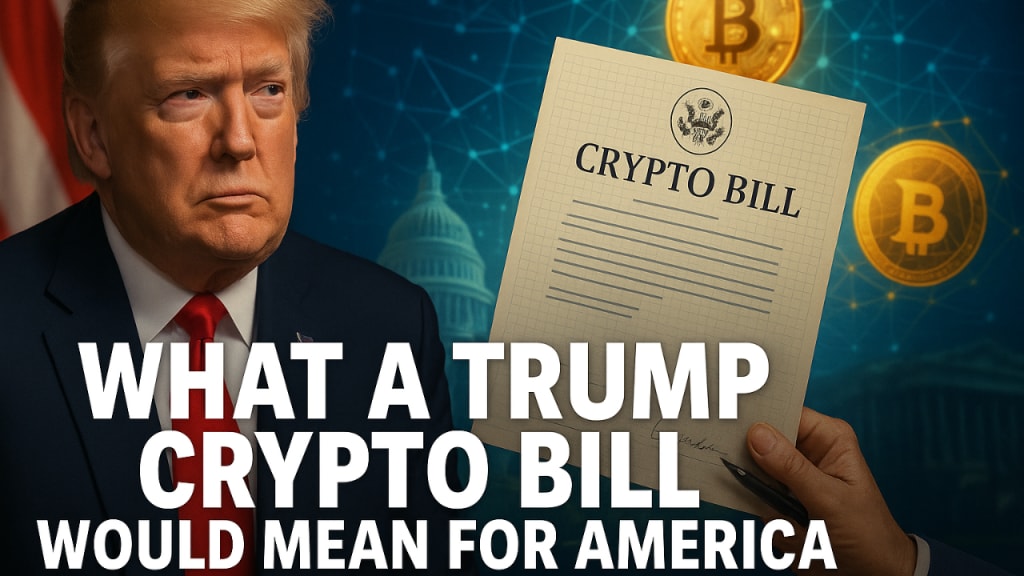
For the first time in years, the United States is on the brink of passing a true, comprehensive crypto law — and President Donald Trump is expected to sign it.
According to Senate Banking Committee Chair Tim Scott, a critical vote is scheduled for December 2025, setting up the most ambitious regulatory overhaul the digital asset industry has ever seen.
If the bill passes committee — and legislative forecasts say it will — the full Senate will take it up in early 2026.
And the White House is already preparing for a signature.
This is the moment the crypto industry has been waiting for.
Bitcoin and Ethereum Finally Get an Official Identity
At the core of the bill is something that’s been missing for a decade:
clarity.
Bitcoin and Ethereum would be formally designated as digital commodities, putting them under the jurisdiction of the Commodity Futures Trading Commission (CFTC) — not the SEC.
This resolves one of crypto’s most painful gray areas:
Who regulates what?
For years, the SEC and CFTC have battled over digital assets.
Lawsuits.
Contradicting statements.
Whiplash-inducing enforcement actions.
This bill ends the turf war.
With Bitcoin and ETH labeled as commodities, exchanges can finally operate with predictable rules instead of bracing for surprise enforcement.
The Bill Targets the FTX Problem: Exchanges Run Like Casinos
Lawmakers didn’t forget the collapse of FTX — and they’re responding directly to it.
The bill requires exchanges to:
segregate customer funds
implement conflict-of-interest controls
increase transparency and disclosures
prevent internal self-trading and hidden liabilities
In short:
no more SBF-style shenanigans in the U.S. market.
These rules mirror the protections used in traditional commodities and securities markets — but modernized for digital assets.
If implemented, the U.S. would finally have a regulatory framework built for the crypto era instead of patchwork enforcement.
DeFi Is the Last Major Battleground
One section of the bill remains hotly contested:
regulating decentralized finance protocols.
Democrats argue DeFi can enable:
money laundering
hidden leverage
systemic vulnerabilities
Republicans warn that overregulation could choke innovation and drive startups offshore.
Behind closed doors, committees are fighting over:
whether DeFi developers can be held liable
how to classify liquidity pools
whether smart contracts count as financial intermediaries
if on-chain activity must be surveilled or reported
This is the ideological fight that could define the next decade of crypto law.
The outcome will determine whether the U.S. becomes a center of DeFi innovation — or a spectator watching other nations lead.
Why This Bill Matters Now
The timing is not accidental.
Crypto ETFs have exploded across the U.S. — covering:
Bitcoin
Ethereum
Solana
XRP
Dogecoin
Litecoin
HBAR
Institutional adoption is accelerating.
Treasury firms now hold tens of billions in digital assets.
And American investors are pouring record volumes into crypto products.
Regulators can no longer pretend the industry is fringe or temporary.
This bill is Washington’s acknowledgment that digital assets are here to stay — and the government must keep up.
Final Line
If passed and signed, this bill won’t just regulate crypto — it will legitimize it. For the first time, the United States is preparing to define the rules of the digital asset economy instead of fighting it from the sidelines.
Author’s Note
This article was created with the assistance of advanced AI — a tool I will continue using to interpret regulation, decode political shifts, and deliver clear insights as crypto enters its next era of legitimacy.
About the Creator
Crypto Robot
Welcome to Crypto Robot! 🤖
Stay ahead of the game with the latest crypto news, financial advice, and actionable investment insights. Whether you're a trader or just starting your crypto journey, Crypto Robot is here to guide you.
Keep reading
More stories from Crypto Robot and writers in 01 and other communities.
BitMine Unveils Annual Dividend Amid Massive Unrealized Losses and Market Turbulence
In a crypto market defined by volatility, one move stood out on Friday: Tom Lee’s BitMine Immersion Technologies will pay an annual dividend — even as its Ethereum treasury drops below mNAV parity.
By Crypto Robot2 months ago in 01
On Snapchat, If I Unfriended Someone But Did Not Block Them How Can Befriend Them?
Are you wondering what could happen if you unfriended someone but didn't block them on Snapchat? Now, you won't have to add that removed friend again on your Snapchat Friend List. So, is it possible to add them again?
By Intelligent Creator5 days ago in 01
Handbags, Style, and the Cultural Context of Christian Dior Bags
Handbags have long been part of everyday life, serving practical needs while also reflecting changing ideas about style and identity. Historically, handbags developed as functional accessories when clothing offered limited storage. Over time, they evolved into carefully designed objects that balance usefulness with aesthetic appeal. Today, handbags are often discussed not only as fashion items, but as cultural markers shaped by history, craftsmanship, and social trends.
By charliesamuelabout 10 hours ago in 01
📢 Raise Your Voice Thread: 01/08/2026
Our “Raise Your Voice Threads” are hosted most alternating Thursdays at 12PM ET to offer creators more avenues to uncover exceptional stories on Vocal. As we are continuously searching for fresh creators and inspiring stories, this thread provides an opportunity to exchange and discuss the stories that have moved and motivated us on Vocal.
By Raise Your Voice by Vocal4 days ago in Resources


Comments
There are no comments for this story
Be the first to respond and start the conversation.