
Tracker for Dementia Patients Singapore: Best 2025 GPS Options
From Location Dots to Predictive AI: The 2025 Guide to Secure, Subsidized Dementia Tracking in Singapore.

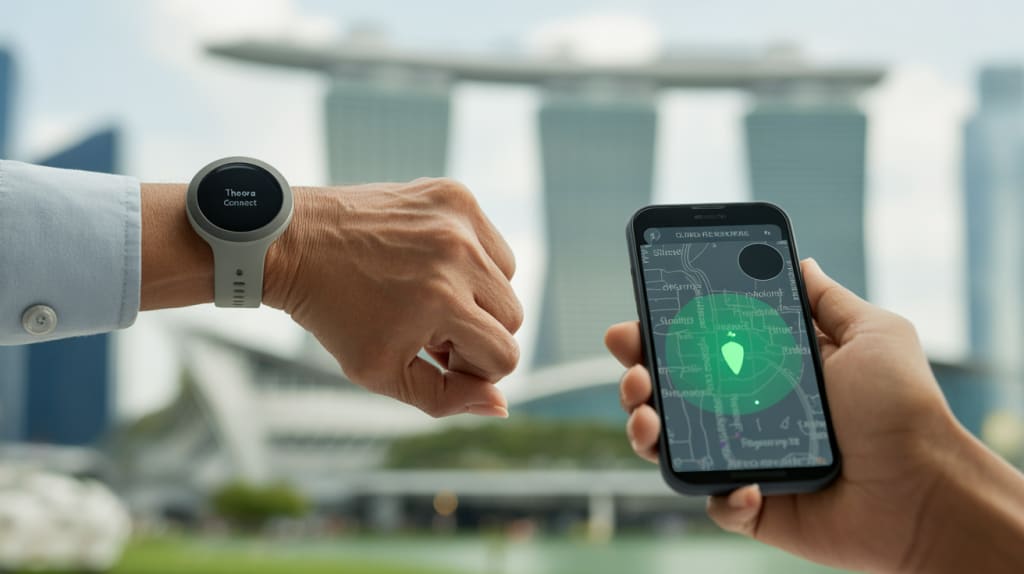
When you are managing the day-to-day care of a loved one with dementia, a reliable GPS tracker moves from being a convenience to an absolute requirement. In a densely populated environment like Singapore, where wandering can quickly become a high-risk situation involving complex public transport and towering apartment blocks, having the best tracker for dementia patients Singapore is key to safety. We are in 2025, and the technology has rapidly advanced beyond simple pendants and basic location dots. This definitive guide cuts through the marketing speak to provide an authoritative analysis of the top-performing, most reliable GPS options available on the market today, focusing only on solutions built for the unique demands of modern elder care.
The urgency here is real. While the prevalence of dementia among adults aged 60 and above in Singapore saw a non-significant reduction over the last decade, dropping to 8.8% according to the Well-being of the Singapore Elderly (WiSE) 2023 study (published 2025), the sheer number of affected individuals still demands robust caregiving solutions. Furthermore, the same study showed that more than 51.5% of cases remain undiagnosed, meaning many families are managing wandering risks without professional support. To address this, expert solutions combine high-precision location data with predictive analytics and essential communication features.
The 2025 Ecosystem: Why Off-the-Shelf Trackers Fall Short
The biggest shift in 2025 is away from basic tracking chips toward integrated smart caregiving platforms. Generic GPS trackers often struggle with two critical issues in an urban setting: poor signal indoors and short battery life. A device that requires daily charging is guaranteed to fail when a caregiver forgets the routine just once. This is why caregivers in Singapore need solutions built for consistency and high accuracy among tall buildings and underground transport links.
The top-rated devices in 2025 are those built specifically for elderly care, offering features that go beyond simple location. The Family1st Senior GPS Tracker, for instance, has demonstrated exceptional accuracy with sub-12-foot ranges in real-world tests. Another market leader, the AngelSense device, is favoured for its secure, tamper-proof straps and its intelligent alerts, which detect unusual changes in the wearer’s routine, not just a breach of a safe zone. This focus on behavioural change is a game-changer for wandering prevention.
Actionable Takeaways
- Focus on Battery Redundancy: Prioritise devices offering a minimum of three to five days of battery life to mitigate risks associated with charging lapses.
- Verify Multi-Network Capability: Ensure the dementia tracking devices Singapore relies on use a combination of GPS, Wi-Fi triangulation, and 4G LTE to maintain signal stability across the island.
- Check Geo-fence Speed: Choose a tracker where geofence breach notifications arrive within ten seconds to allow rapid response, especially near roads or public areas.
Core Solution Strategy: Integrating GPS, Communication, and Fall Detection
The most effective GPS watch for elderly Singapore combines three core functions into one seamless package. None of these functions can stand alone. A great GPS device with a useless speaker is only a partial solution, just as a superb panic button on a watch that loses signal indoors is inadequate.
The Critical Role of Two-Way Voice
Wandering is stressful, but confusion is dangerous. The ability to instantly activate a two-way voice call—ideally with an auto-answer function—allows a caregiver to calm the person, confirm their surroundings, and guide them to a safe spot while the caregiver or an emergency service team is en route. This feature is paramount for de-escalation. The Theora Connect watch is popular because it resembles a normal timepiece, reducing resistance, but maintains a clear, auto-answer voice communication channel for immediate contact during an emergency.
The Importance of Secure Wearing
A frequent frustration for families is the patient removing or hiding the device. High-quality devices designed for dementia patients, like those from AngelSense, now include tamper-proof straps or sensory-friendly sleeves that are nearly impossible for the wearer to remove without the caregiver’s special key. If wrist-wearing is not possible, discreet options that clip inside clothing or belt loops are the next best choice for secure real-time location tracking.
Actionable Takeaways
- Test Speaker Volume: Ensure the device's speaker and microphone are loud and clear enough to be heard over typical Singapore street noise (traffic, crowds) before committing.
- Secure the Device: If your loved one tends to fidget or remove items, insist on a tracker with a secure, lockable wearing mechanism or a non-obtrusive placement option.
- Assign Response Roles: Within the companion app, clearly define who receives the alert first, second, and third to avoid confusion and delay when the SOS button is pressed.
Addressing Challenges: Cost, Subsidies, and Device Acceptance
When selecting caregiving technology Singapore, two practical challenges often arise: the financial cost and the patient’s willingness to wear the device. Caregivers need to be smart about both to ensure the safety net is deployed effectively.
Navigating Singapore’s Financial Assistance
The cost of reliable GPS trackers, often with a monthly subscription for data service, can strain a family’s finances. Fortunately, the Singapore Government offers support through the Seniors' Mobility and Enabling Fund (SMF). This fund provides subsidies of up to 90% for assistive devices for eligible Singapore citizens aged 60 and above who require support for daily independent living. Crucially, the eligibility threshold for the SMF will be enhanced from January 2026, raising the monthly per capita household income limit to $4,800. Caregivers should contact the Agency for Integrated Care (AIC) to confirm if the chosen fall detection watches or GPS devices are covered as eligible assistive aids.
The Strategy for Device Acceptance
Never introduce the device as a monitoring or tracking tool. Instead, introduce the GPS watch as a helpful accessory: a "smart watch for the family," a "medical alarm button," or a "gift from the grandchildren." The design is critical; devices that mimic regular digital watches, like the Theora Connect, have a much higher rate of sustained wear than bulky medical pendants. Consistency is your friend here; once introduced, the device must be worn every day without fail.
Actionable Takeaways
- Check SMF Eligibility Now: Review the criteria for the Seniors' Mobility and Enabling Fund (SMF) through AIC to see if you can receive a significant subsidy on the device cost.
- Involve a Doctor: Ask the patient’s primary care physician to introduce the device as a mandatory safety measure for their health, lending it greater authority.
- Simplify the Interface: If using a GPS watch, ensure the screen displays minimal information (time, date) to prevent confusion or distraction for the wearer.
Future Trends: AI and Integrated Monitoring in 2025
The trajectory for 2025 and beyond is clearly pointing toward predictive AI and remote patient monitoring (RPM). The top-performing wandering prevention tools are no longer just reacting to an event; they are using machine learning to anticipate it.
The Power of Predictive Analytics
AI-driven systems now establish a baseline of normal behaviour—the patient wakes at 7:30 am, takes a walk at 11 am, and is sedentary between 2 pm and 4 pm. If the device detects sudden, irregular movement at 3:00 am, or if a regular walk is extended far beyond the usual time limit, the system alerts the caregiver before the patient even crosses a geofence. This focus on "change in routine" represents the most important advancement in AI monitoring for seniors.
While consumer-grade apps are becoming smarter, larger care organizations, hospitals, or families with highly specific needs often find that mass-market apps fall short on customisation and data security, especially when integrating with Electronic Health Records (EHR) systems. For these enterprise-level demands, a highly secure, bespoke software platform is the only way to ensure compliance and seamless data flow across multiple systems, patient devices, and institutional guidelines. The technical expertise required to build these scalable digital health platforms is often outsourced to specialized firms. If you are a healthcare business looking to develop a secure, integrated caregiving platform, collaborating with experts in custom mobile app development in Virginia can provide the necessary architectural depth and compliance knowledge.
Expert Quote
"The biggest development in elder tech for 2025 is the integration of predictive AI. Devices that simply track location are obsolete; the future is about recognizing subtle behavioural shifts—a change in gait, an unusual wake-up time—that signal distress or cognitive decline, allowing for intervention hours before a crisis," notes Ms. Wei Ling, a Singapore-based Gerontology Technology Specialist.
Actionable Takeaways
- Look for Multi-Sensor Integration: Choose a tracker that actively monitors vital signs (heart rate, activity level) alongside location, as these are strong secondary indicators of a patient's well-being.
- Demand Secure Data Handling: Verify that any app you use for monitoring meets high standards for data privacy and encryption, especially when collecting health metrics.
- Plan for the Future: When selecting a system, ensure the platform is open and flexible enough to integrate with future smart caregiving platforms like smart home sensors and automated medication dispensers.
The Implementation Roadmap: A Step-by-Step Guide
Deploying a new tracker for dementia patients singapore effectively requires a clear roadmap. Do not rush the setup; proper implementation ensures long-term reliability.
- The 'Test Drive' Period: Before the patient wears it, a caregiver should wear the device for a full 48 hours. Test battery life, signal in known trouble spots (supermarket, underground carpark), and the speed of geofence alerts.
- Establish Geofences: Define clear boundaries for the home, familiar parks, and necessary medical centres. Also, set up early warning zones around high-risk areas like bus stops or busy intersections.
- Program Emergency Contacts: Ensure the SOS button connects directly to two or three assigned caregivers, followed by emergency services or a dedicated monitoring centre.
- Introduce the Routine: Introduce the charging time (e.g., during the daily nap or while bathing) and stick to it religiously. Keep the charger in the same, highly visible location.
The devices that earn the title of "Best 2025 Options" are the ones that have solved these logistical challenges for the caregiver, providing seamless data and reliable alerts day in and day out. This allows the focus to shift back to quality interaction and care, which is what matters most.
Actionable Takeaways
- Set Up Medication Reminders: Use the tracker's app to set up automated reminders for medication times for both the patient (if applicable) and the caregiver.
- Use Route History for Insights: Regularly review the device's route history logs to spot emerging wandering patterns or a new area of fixation, allowing for proactive redirection.
- Conduct a 'Drill': Practice responding to a simulated SOS alert with the family response team to ensure everyone knows the protocol, minimizing panic during a real event.
FAQs: Quick Answers for Singapore Caregivers
How reliable is fall detection in 2025 devices?
Fall detection has improved significantly in 2025. Modern devices use sophisticated sensors to differentiate between a patient sitting down hard and a genuine fall. Reliability is high, but we recommend you select a device that allows you to adjust the sensitivity based on the patient's mobility level.
Do I need a separate SIM card for the GPS watch for elderly Singapore?
Most reputable GPS watches come with an embedded SIM or require a subscription that includes data connectivity, meaning you do not need to buy a separate SIM. The subscription covers the cellular data needed to transmit location data to the app.
What is the minimum IP rating I should look for?
An IP rating of IP67 or IP68 is essential. IP67 means the device is dust-tight and can handle immersion in up to one meter of water for 30 minutes, which is necessary for accidental drops into the toilet or prolonged exposure to rain.
Can the tracker monitor activity levels?
Yes. Almost all 2025 dementia tracking devices Singapore includes step-counting and activity monitoring. This provides a valuable metric for caregivers to monitor the patient's overall health and energy levels.
Are there local Singaporean tracking solutions?
Yes. Companies like Tack One, which developed the Tack GPS Location Tracker, are based in Singapore. This may offer an advantage in terms of localized customer support and optimal network performance across the local network providers.
Final Thoughts: A Proactive Approach to Peace of Mind
The pursuit of the best tracker for dementia patients Singapore is ultimately about preserving independence while ensuring absolute safety. In 2025, that means choosing a device that thinks ahead—one with reliable GPS, clear two-way voice, and AI that learns the routine. By conducting careful research and taking advantage of available financial support schemes like the SMF, you can deploy a digital safety net that works every hour of every day. This allows the focus to shift back to quality interaction and care, which is what matters most.
Actionable Takeaways
- Set Low-Battery Alerts: Configure the low-battery notification to ping you when the device hits 20%, giving you ample time to get it charged before a critical failure occurs.
- Maintain Documentation: Keep all device guides and app log-in details organized and accessible for all members of the care team.
- Stay Connected to CARA: Utilise the CARA App by Dementia Singapore as a community resource alongside your tracking device for local support and relevant updates.
What specific feature of the tracker for dementia patients singapore solutions do you believe will become indispensable by 2030?
About the Creator
Keep reading
More stories from Devin Rosario and writers in 01 and other communities.
Understanding Chain of Responsibility Pattern with Examples
If you've ever built a complex software system, you know the code can quickly turn into a tangle of if/else statements. When a single request needs to pass through multiple checks—like authentication, logging, validation, and caching—you often end up with one massive, messy function that's almost impossible to maintain. Here's a scary thought: every time you add a new check, you risk breaking all the existing ones.
By Devin Rosario3 months ago in 01




Comments
There are no comments for this story
Be the first to respond and start the conversation.