
Top AI Agent Builders in 2025: Powering the Future of Autonomous Systems
Leading Innovators Shaping the Next Generation of AI Autonomy


TL;DR
In 2025, AI agent builders are shaping the future of automation by enabling intelligent, self-governing systems across industries. This article explores the Top AI Agent Builders, their core features, and how enterprises are leveraging them to unlock next-gen autonomy in operations, decision-making, and customer engagement.
Introduction: The Rise of AI Agents
AI agents are no longer just an experimental concept—they’re quickly becoming mission-critical in enterprise automation. From autonomous customer service agents to decision-making bots in logistics and finance, intelligent agents are transforming how businesses operate. Behind this revolution lie powerful AI agent builders—platforms that offer the infrastructure, tools, and logic layers to design, train, and deploy these self-directed digital entities.
2025 marks a pivotal year as enterprises demand more scalable, reliable, and customizable agent-building solutions to meet rising expectations for autonomy, personalization, and performance.
What Are AI Agent Builders?
AI agent builders are platforms or frameworks that enable the creation of autonomous agents capable of perceiving environments, making decisions, and executing actions—often without human intervention.
These builders combine:
- Perception Modules (for understanding inputs)
- Reasoning Engines (for decision logic)
- Memory Systems (for long- or short-term context)
- Communication Layers (for interactions across systems or users)
- Action Executors (to trigger workflows, responses, or operations)
Top AI Agent Builders in 2025
1. Auto-GPT
A pioneer in autonomous GPT-based agents, Auto-GPT enables agents to chain thoughts, plan actions, and execute tasks via API calls. It’s particularly popular among developers and startups building experimental agents.
- Strengths: Open-source, community-driven, fast-evolving
- Use Cases: Task planning, content generation, research bots
2. LangChain
LangChain provides modular components to build AI agents that reason and act based on LLMs (Large Language Models). It’s ideal for developers who want flexibility in constructing agent workflows with custom tools and memory.
- Strengths: Extensible, strong ecosystem, multi-model compatibility
- Use Cases: Document summarization, customer service agents, multi-agent systems
3. CrewAI
CrewAI stands out by enabling multi-agent orchestration—where agents collaborate and share responsibilities. It’s perfect for enterprises needing layered or distributed AI logic across departments.
- Strengths: Multi-agent management, team-style architecture
- Use Cases: Product development agents, market research crews, autonomous project teams
4. OpenAgents by Microsoft
A robust enterprise-grade AI agent framework built by Microsoft. It integrates with Azure AI and offers tools for secure deployment, memory storage, and cross-platform interaction.
- Strengths: Enterprise security, Azure integration, analytics
- Use Cases: Enterprise workflow agents, productivity automation
5. Meta's LLaMA Agents
Meta’s open models now support agent workflows that can reason, cite sources, and respond across multiple contexts. Its agent toolkits are especially relevant for social media and personalization tasks.
- Strengths: Multi-lingual support, personalization focus
- Use Cases: Content moderation, personalized recommendations
6. Hugging Face Transformers + Agents
Hugging Face has extended its transformer ecosystem with agent-building tools. It’s ideal for developers wanting to leverage open models with modular toolkits.
- Strengths: Open-source, vast model zoo, community support
- Use Cases: Educational bots, code assistants, health chatbots
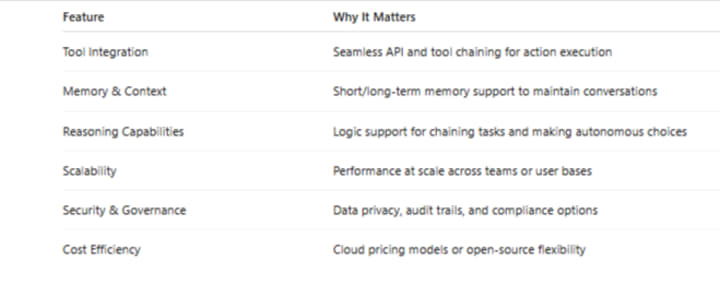
Key Features to Look For in an AI Agent Builder
When selecting an AI agent builder, enterprises should evaluate:
Industry Applications of AI Agent Builders
🚚 Logistics & Supply Chain
AI agents can monitor inventory, predict supply disruptions, and automatically reroute shipping plans in real-time.
🏦 Banking & Finance
Agents help automate KYC, fraud detection, and personalized financial advice through secure decision logic.
🏥 Healthcare
Medical AI agents streamline patient intake, suggest treatment plans, and schedule follow-ups based on historical data.
🛒 Retail & eCommerce
Autonomous shopping assistants personalize product suggestions, handle returns, and upsell—without human oversight.
Challenges Ahead
Despite their potential, AI agent builders still face hurdles:
Over-Reliance on LLMs: Without control layers, agents can hallucinate.
Security Concerns: Autonomous actions must be sandboxed and auditable.
Cost & Complexity: Some builders require deep technical expertise and cloud resources.
What’s Next?
By 2026, we expect:
Multi-agent ecosystems to dominate—networks of agents collaborating on enterprise tasks.
On-device agent deployment for privacy and latency-sensitive applications.
Industry-specific agent builders offering pre-trained agents tailored to sectors like legal, HR, and pharma.
Conclusion
AI agent builders are not just tools—they’re becoming the foundation for a future of autonomous enterprise operations. As companies navigate the shift toward AI-driven workflows, choosing the right agent-building platform will be critical to unlocking speed, precision, and innovation.
Whether you're a CTO, developer, or innovation strategist, now is the time to explore and invest in these transformative technologies.
FAQs
1. What is an AI agent builder?
An AI agent builder is a framework or tool that helps create intelligent systems capable of autonomous decision-making and action execution.
2. How do AI agents differ from chatbots?
Chatbots follow pre-set flows; AI agents reason, remember, and take independent actions based on goals.
3. Can businesses use multiple agent builders together?
Yes. Multi-agent architectures often combine tools like LangChain for logic and OpenAI APIs for language.
4. Are open-source agent builders reliable for enterprises?
Many open-source builders are production-ready, but may need added security and customization.
5. Which industries benefit most from AI agents?
Logistics, finance, healthcare, and customer service see the highest ROI from AI agent adoption.
6. What’s the biggest challenge in building AI agents?
Ensuring agents make accurate, secure decisions without human oversight remains the top challenge.
About the Creator
Vitarag Shah
Vitarag Shah is an SEO expert with 7 years of experience, specializing in digital growth and online visibility.
Keep reading
More stories from Vitarag Shah and writers in 01 and other communities.
AI-First Enterprises in 2025: Why Custom AI Solutions and Strategic Platforms Are Redefining Innovation
TL;DR: By 2025, AI-first enterprises are driving innovation and competitive advantage through tailored AI solutions and robust platform strategies. This article explores how partnering with the right Enterprise AI development company enables businesses to move beyond generic tools and build scalable, secure, and future-ready systems.
By Vitarag Shah6 months ago in 01
How to Choose the Best Mobile App Development Company in Canada 2026
Choosing the right app development partner in 2026 isn’t just a procurement decision—it’s a strategic move that can define whether your digital product scales or stalls. The Canadian tech ecosystem has matured rapidly, with agencies offering everything from rapid MVP builds to enterprise-grade platforms powered by AI and cloud-native architectures.
By alan michaela day ago in 01
Replica Designer Handbags and Luxury Designer Purses: A Cultural Perspective
Handbags are among the most consistently used personal items in modern life. While often discussed in relation to fashion, their significance extends far beyond visual appeal or brand recognition. Handbags function as everyday tools, supporting routine activities such as work, travel, and social engagement. Within this broader context, conversations around Replica Designer Handbags and Luxury Designer Purses reflect changing attitudes toward access, value, and practicality rather than simple questions of trend or status.
By charliesamuel6 days ago in 01



Comments
There are no comments for this story
Be the first to respond and start the conversation.