
Top 15 Airdrop Marketing Tactics Driving Massive Participation in 2026
Proven Strategies to Maximize Community Engagement, Reward Quality Users, and Accelerate Sustainable Token Growth

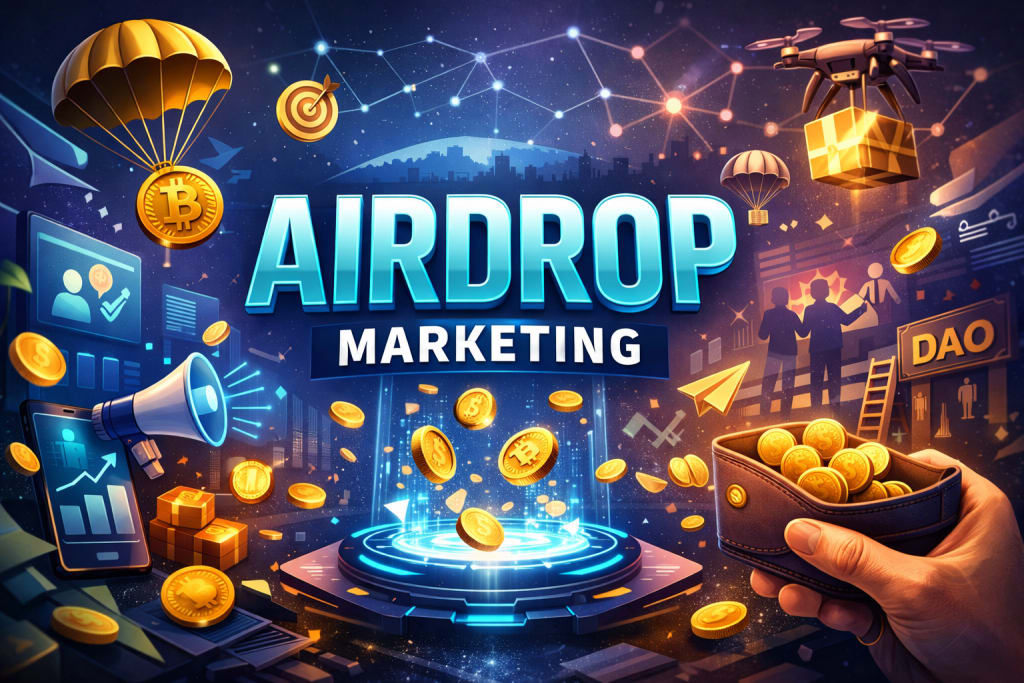
Airdrops have matured into one of the most powerful user acquisition and community expansion tools in Web3. In 2026, they are no longer random token giveaways designed to create short-term hype. Instead, they are precision-driven growth strategies engineered to attract high-value participants, encourage ecosystem engagement, and build sustainable token economies.
With increasing competition across DeFi, NFTs, gaming, AI-powered protocols, and Layer-2 ecosystems, projects must design airdrop campaigns that prioritize quality over quantity. Participation alone is not enough. The real objective is meaningful participation users who stake, vote, build, provide liquidity, and stay. Below are the top 15 airdrop marketing tactics driving massive participation in 2026, explained in detail to help projects design impactful and sustainable campaigns.
1. Multi-Phase Airdrop Campaign Structures
Single-day token drops are losing effectiveness. In 2026, multi-phase airdrops dominate because they create ongoing engagement. Instead of distributing tokens all at once, projects design structured campaigns with progressive milestones.
The first phase often focuses on awareness and community onboarding through quests or social engagement. The second phase requires on-chain actions such as staking, liquidity provision, or governance participation. The final phase rewards long-term holders or active ecosystem contributors. This approach reduces immediate token dumping and builds sustained momentum across months rather than days.
2. Quest-Based Participation Systems
Quest platforms have become central to high-engagement airdrop strategies. These systems reward users for completing meaningful tasks such as interacting with smart contracts, testing features, bridging assets, or contributing content.
Quest-based models filter out passive participants and reward genuine ecosystem users. They also educate participants about the protocol’s functionality. When users understand how the product works, they are more likely to remain active after token distribution.
3. Activity-Based Reward Allocation
Equal distribution models often fail because they reward low-effort participation. In 2026, activity-based scoring systems dominate. Wallets are ranked based on transaction history, liquidity provision, governance activity, and ecosystem involvement.
Users who contribute more receive higher token allocations. This tiered system incentivizes deeper engagement and encourages participants to move beyond surface-level interactions. It also reduces the impact of bot-driven farming operations.
4. Advanced Anti-Sybil Protection Mechanisms
Sybil attacks continue to threaten fairness in token distribution. To prevent exploitation, projects now integrate AI-driven wallet clustering analysis, behavioral scoring models, and reputation tracking systems.
Wallets with organic transaction patterns and consistent multi-protocol activity receive higher trust scores. Newly created wallets or suspicious activity clusters are filtered out. Strong anti-Sybil protection preserves token value and ensures rewards reach legitimate participants.
5. NFT-Gated Airdrop Eligibility
NFT integration has become a powerful tactic in 2026. Instead of directly distributing tokens, projects issue NFTs that unlock future token rewards, staking multipliers, or governance rights.
These NFTs act as digital badges representing contribution levels or early supporter status. NFT gating creates exclusivity, strengthens community identity, and encourages participants to stay engaged beyond the airdrop event.
6. Staking-Linked Airdrop Rewards
Immediate unlocks often lead to selling pressure. To encourage retention, many projects now link airdrop rewards to staking programs. Participants must stake tokens for a defined period to unlock full allocations.
This structure supports network security, stabilizes token supply, and increases holding duration. Staking-linked rewards align participant incentives with long-term ecosystem health rather than short-term profit.
7. Liquidity Provision Incentives
Liquidity planning plays a crucial role in successful airdrop campaigns. Projects reward users who provide liquidity to decentralized exchanges during or after the distribution period.
Liquidity incentives reduce volatility and create healthier trading environments. They also encourage active participation in decentralized markets, strengthening token stability in the early launch phase.
8. Cross-Protocol Collaboration Campaigns
Strategic partnerships expand reach and credibility. Cross-protocol airdrops allow projects to tap into established communities with aligned interests.
For example, DeFi protocols may collaborate with NFT ecosystems, Layer-2 networks, or DAO communities. Participants from partner ecosystems receive eligibility bonuses. This tactic reduces acquisition costs while increasing exposure to high-quality users.
9. Testnet Participation Rewards
Testnet airdrops continue to drive massive participation because they reward early believers and contributors. Users who test features, report bugs, provide feedback, or simulate network activity are prioritized.
This tactic ensures the product is battle-tested before mainnet launch while building a loyal community. Testnet participants often become long-term advocates who support governance and ecosystem growth.
10. Gamification and Leaderboard Strategies
Gamification enhances engagement significantly. Leaderboards ranking participants based on task completion, staking amounts, or transaction volume create healthy competition.
Reward multipliers for top performers incentivize deeper engagement. Badges, tiered status levels, and milestone achievements make participation more interactive and community-driven rather than transactional.
11. Social Proof and Community Recognition Models
Recognition has become a powerful motivator in 2026. Instead of focusing solely on token value, projects publicly recognize contributors through social shoutouts, ambassador titles, or contributor spotlights.
Community recognition strengthens emotional attachment to the ecosystem. When participants feel valued, they are more likely to remain engaged long term.
12. Time-Based Scarcity and Claim Windows
Scarcity mechanisms create urgency without manipulation when executed carefully. Limited claim windows encourage users to take action quickly.
Some projects introduce bonus rewards for early claimers or progressive unlocks tied to participation timelines. These mechanisms drive participation spikes while maintaining fairness and transparency.
13. Governance Participation Bonuses
Airdrops often introduce users to decentralized governance. In 2026, many campaigns reward participants who vote on proposals or submit governance suggestions.
This tactic accelerates decentralization and increases protocol engagement. Users who participate in governance are statistically more likely to hold tokens longer and contribute meaningfully to ecosystem development.
14. Regional and Community-Specific Targeting
Precision targeting has replaced mass distribution. Projects now segment campaigns based on geography, language, ecosystem familiarity, or sector specialization.
For instance, targeting DeFi traders in Asia, NFT collectors in Europe, or AI-driven protocol communities in North America allows tailored messaging and higher engagement rates. Localized campaigns create stronger connections and expand global adoption.
15. Data-Driven Optimization and Real-Time Analytics
Data analytics has become indispensable for airdrop success. Projects monitor wallet activity, retention rates, transaction patterns, and engagement metrics in real time.
AI-powered dashboards help identify high-value users, predict sell pressure risks, and optimize reward allocation mid-campaign. Continuous optimization transforms airdrops from static events into adaptive growth engines.
Why These Tactics Are Driving Massive Participation in 2026
The common thread across these tactics is alignment. Successful airdrop strategies align user incentives with ecosystem growth. They reward meaningful participation, protect token value, and encourage long-term engagement.
Modern participants are more sophisticated. They evaluate token utility, governance structures, roadmap transparency, and community credibility before committing. Campaigns that integrate utility, fairness, and data-driven optimization naturally attract higher-quality users.
At the same time, advanced anti-Sybil protections and precision targeting ensure that resources are not wasted on inactive wallets or farming bots. Efficiency has become just as important as reach.
The Future of Airdrop Strategies Beyond 2026
As Web3 matures, airdrops will become even more personalized and intelligence-driven. On-chain identity systems and decentralized reputation scores will refine reward allocation further.
AI will continue to enhance segmentation, predict behavior patterns, and optimize incentive structures. Gamified, utility-driven, and governance-integrated models will replace speculative token drops entirely. The next generation of airdrops will not feel like promotions. They will feel like onboarding experiences into thriving digital ecosystems.
Conclusion
Airdrop marketing in 2026 is a sophisticated discipline requiring strategy, analytics, and community understanding. The top 15 tactics outlined above demonstrate that massive participation comes from meaningful design rather than token volume alone.
Multi-phase structures, quest-based engagement, staking incentives, NFT integration, governance rewards, and real-time analytics collectively drive higher-quality participation. Projects that implement these strategies thoughtfully can transform airdrops into sustainable growth engines.
When executed with precision and long-term vision, airdrops become more than distribution events they become foundational pillars of token adoption, ecosystem expansion, and community-driven success in the evolving Web3 landscape.
About the Creator
Jack santo
I am a Blockchain, Crypto, NFT, Metaverse, etc., enthusiast.
Keep reading
More stories from Jack santo and writers in 01 and other communities.
How Can Cryptocurrency Token Marketing Build a Strong Investor Funnel in 2026?
In 2026, cryptocurrency projects are competing in a more mature, more analytical, and more regulated environment than ever before. Investors are no longer driven purely by hype or social buzz. They evaluate fundamentals, token utility, leadership credibility, community strength, and long-term sustainability before committing capital. This shift means that token marketing must evolve from simple promotion to structured funnel building.
By Jack santo3 days ago in 01
Luther Vandross
When people ask who is Luther Vandross, the answer goes far beyond chart positions or award counts. Luther Vandross was one of the most emotionally precise vocalists in modern music history, a singer whose voice carried intimacy, restraint, and deep emotional intelligence. Decades after his peak, his influence continues to echo—especially during Grammy season, when conversations about legacy, excellence, and artistry dominate the cultural space.
By Saboor Brohi 5 days ago in 01




Comments
There are no comments for this story
Be the first to respond and start the conversation.